
 Shawn Griffiths
Photo: Elise Amendola
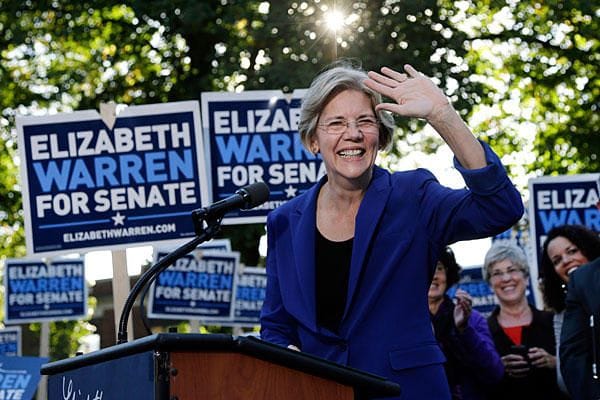
Republican Senator Scott Brown ran a very thorough campaign against Democratic challenger Elizabeth Warren. Brown started off ahead in the polls in the early stages of the campaign season, but Warren gained significant ground on the incumbent during the last couple of months before Election Day.
The fact that Scott Brown, considered by many to be a moderate Republican, took the seat that belonged to the late Ted Kennedy still confounds political analysts and pundits to this day. Massachusetts is a Democratic strong hold and Republicans typically do not stand a chance in statewide elections. This is a state Barack Obama carried with sixty-two percent of the vote in 2008, Jon Kerry captured in 2004 with sixty percent of the state electorate, and Al Gore ran away with in 2000.
Massachusetts is not a GOP-friendly state. The last time voters in the state elected a Republican senator before Scott Brown was in 1966. Even though Sen. Brown has the name recognition and the race for his Senate seat is still considered a “toss up,” the Democratic challenger was still considered the odds-on favorite to win. Even some GOP strategists have admitted that the party would likely not be able to hold on to the briefly captured seat.
Democrat Elizabeth Warren, a Harvard law professor specializing in bankruptcy law, ran on a platform that catered to the middle class, with the aim of getting workers back on their feet in aftermath of the recession. Even on Election Day, Warren’s supporters were campaigning for votes. Former US Representative Patrick Kennedy said,
“If you loved my father, Senator Edward Kennedy, you’re going to love the champion of working people that Elizabeth Warren is going to be for the commonwealth of Massachusetts.”
The most current polls leading up to Election Day held Warren at 50 percent and Brown at 47, in what is probably the largest spread throughout the race. The Republicans are struggling to gain a majority in the Senate and could not afford to lose this race. The GOP needed a net gain of four seats to take majority control in the Senate. The party struggled to gain seats so they needed to keep the seats it held.
Right before the polls closed in Massachusetts, The New York Times reported:
"So many people have jammed the polling stations that officials here are predicting a record turnout in Massachusetts of 73 percent — higher, even, than the 3.1 million people who voted in the 2008 presidential race."
Record turnouts in races like this highlight the importance of this election, as well as frustration by citizens who want change.