
This election, an estimated five million eligible voters will be disenfranchised from the political process due to new voter identification laws. These de-facto voter suppression laws not only make it harder to register to vote, but also place restrictions on voting, creating an obstacle to eligible voters who lack government issued identification.
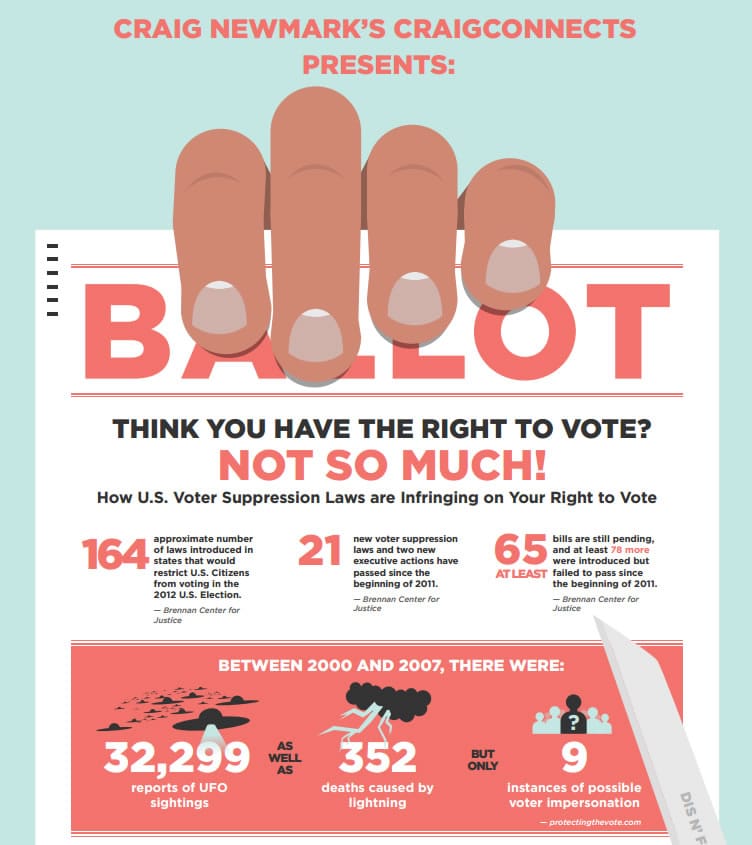
The Brennan Center for Justice released a study in which they outlined the changes in voting laws we face in the 2012 election and the adverse affect on voter participation.
Here's how the Brennan Center for Justice arrived at the number 5 million:
5: The number of states where new photo ID laws will be in effect (Kansas, South Carolina, Tennessee, Texas, Wisconsin)
3: The number of states where new proof of citizenship laws will be in effect (Alabama, Kansas, Tennessee)
240,000: The number of potential voters in Alabama that do not have documentary proof of citizenship
2: The number of states that passed laws restricting voter registration drives, causing all or most of those drives to stop (Florida and Texas)
176,000: The number of people who registered to vote via drives
5.13: The percent of voters in Texas that registered via drives
60,000: The number of Maine citizens who registered and voted on Election Day in 2008. Since Maine abolished Election Day registration, the number of potential voters adversely affected in 2012
3: The number of states where the early voting period was cut by half or more (Florida, Georgia, and Ohio)
8,000,000: The number of Americans who voted early in the above states
2: The number of states that made it substantially more difficult or impossible for people with past felony convictions to get their voting rights restored (Florida and Iowa)
1,000,000: The number of people in Florida who could have benefited from the prior practice
5: The number of battleground states that have already cut back on voting rights (and may pass additional restrictive legislation)
171: The number of electoral votes belonging to the state that have already cut back on voting rights
270: The number of electoral votes needed to win the presidency
63: The percent of the total number of electoral votes affected by restrictive voter laws