
While most Republicans, according to recent polls, are adamantly opposed to a brokered convention, given the new party nominating rules it is highly unlikely that the primary process will be wrapped up quickly.
Newt Gingrich predicted at this weekend's California Republican Convention that the presidential primary season may well extend to California, putting the state's 172 delegates into play in June.
2012 could host an unusually prolonged primary season for a presidential race in recent history, mostly due to the procedural rule changes found in many state Republican parties. As Super Tuesday quickly approaches, here is some important primary race information to keep in mind.
What rule changes?
Those paying attention may have caught the media stating how the Republican Party has moved away from a winner-take-all process for the 2012 Primary Elections. A more accurate statement is that the party has moved away from a statewide winner-take-all process. Instead, the Republicans have moved primary races towards either a statewide proportionate winner or a winner-take-all by congressional district, a scheme which usually still awards a few delegates to the broader statewide winner. And if you weren't confused yet, just for fun, there are a few other states with some combination of both.
An example of the dynamics of these new rules will be on full display in the next Republican primary in Michigan on February 28th. Michigan hosts an open primary where any registered voter, regardless of party preferences, can participate. The state has a total of 30 delegates. The statewide winner will get two. The remaining 28 Michigan delegates will be chosen 2-by-2 in winner-take-all by individual congressional district contests.
This means rather than a sole “Michigan Primary”, there are more like fifteen (15) discreet primaries within the state. It also means it's possible for the candidate who wins the Michigan statewide vote to end up with less delegates than the runner up.
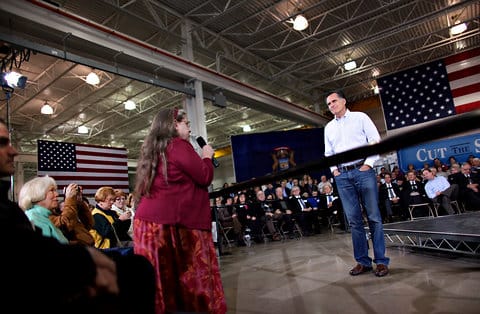
No Go For Gov. Romney, Once Again
Various insiders believe Gov. Romney could win statewide by piling up large margins in the Detroit metropolitan area, particularly among middle and upper middle class woman, Catholic and otherwise, who resent former Sen. Rick Santorum’s strict religious beliefs and stance on related public policy.
The latest polls out of Michigan show Sen. Santorum and Gov. Romney in a statistical tie, 13% for Dr. Paul, and 9% for former Speaker Newt Gingrich.
Sen. Santorum has double digit leads with groups including Protestants, union members, evangelicals, Tea Partiers, “very conservative” voters, and men.
Gov. Romney is leading the field with women, seniors, moderates, “somewhat conservative” voters, and Catholics. One political consultant claims Gov. Romney needs to get his female support up to double digits to win.
Even if Gov. Romney wins the statewide vote, he might win at most five congressional districts. Dr. Paul is projected to come away with two districts, with Sen. Santorum getting the rest. In terms of delegates, it would break down to fourteen (14) Santorum delegates, four (4) for Paul, and twelve (12) for Romney.
GOP Establishment Reaction
In speculating reaction, for the Republican Party establishment not to freak out over a Michigan result, they would like Gov. Romney to get something close to 20 delegates. Which is not very likely to happen. As consolation is Arizona, which lost a substantial number of delegates and has a traditional statewide winner-take-all breakdown. Gov. Romney should get all 29 delegates there.
Around the corner is Super Tuesday.
Changes to the nominating process will further be on display in Ohio, where 66 delegates are won, three of which are the so-called “Super Delegates”. Of those, 48 district delegates are to be allocated to candidates based on the primary results in each of the sixteen (16) congressional districts. Each congressional district is assigned three delegates and the candidate receiving the greatest number of votes in a chosen district will receive all three. The remaining fifteen (15) at-large delegates will be allocated to Republican candidates based on the statewide primary vote.
For the candidate receiving a majority of the statewide vote (more than 50%), all at-large delegates will be allocated to them. If none of the candidates receive a majority of the statewide vote, each candidate receiving 20% or more of the statewide vote are allocated delegates. These will be chosen based on their percentage of the vote total. Delegate allocations are rounded to the nearest whole number.
Simply put, Ohio is likely to result in a split delegation.
While the delegates are not legally bound to a candidate, they are chosen by each campaign, so they are assumed to be absolutely loyal. However, in Ohio, Santorum does not have delegates in three different congressional districts.
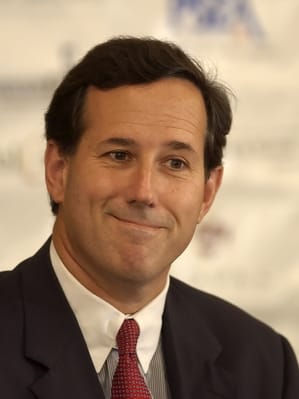
Non-binding Delegates
Other states do not fit into neat categories. Such states may use non-binding primaries or other forms of contests in which delegate allocation is not specified. In these states, the delegates are not allocated based on the voting that takes place in the primary or caucus held in that state. Rather, the delegates may be allocated based on votes at the state or territorial Republican convention. Delegates may be elected in some primaries or some conventions without ever being bound.
States and territories using other rules: American Samoa, Colorado, Guam, Illinois, Iowa, Maine, Minnesota, Missouri, Montana, Nebraska, North Dakota, Northern Mariana Islands, Pennsylvania, Virgin Islands, Washington, West Virginia, Wyoming.
These states total 449 delegates. Always consistent with winning sizable allotments of delegates is Dr. Paul, who could get possibly 280 delegates out of this mix. This would spell big problems for Sen. Santorum.
For starters, Sen. Santorum is not likely to get many delegates out of his prior “wins”, given Dr. Paul’s delegate accumulation strategy. Also, he has major problems in his home state of Pennsylvania, which holds 72 delegates.
In Pennsylvania, 59 congressional district delegates are directly elected by primary voters. Eighteen (18) congressional districts with three (3) delegates each, comes to 54. The remainder are district bonuses. There are five (5) bonus delegates allocated to those congressional districts that have best supported GOP candidates over the last four years. Each of those districts receives one (1) extra delegate.
All 72 of the Commonwealth's district delegates will go to the Republican National Convention officially “unpledged”.
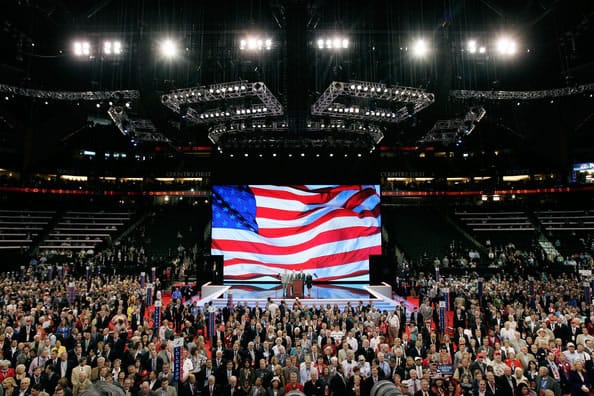
So...What About This Brokered Convention?
If there was a brokered and/or deadlocked scenario, it could only occur if none of the candidates were less than 75% of the delegates away from getting the nomination. One issue that would arise immediately at such a convention is the awarding of all of Florida’s 50 delegates to Gov. Romney over an alleged violation of RNC rules. The same challenge would probably follow for the winner of the Arizona primary, as well as Puerto Rico's.
Another issue would be Dr. Paul’s role in all of this given he could have 300-400 delegates going into the Convention, despite not winning the beauty contests in those states. In 2008 the Nevada Republican Party played games with Dr. Paul, which resulted in lawsuits and a very bad response for the party. Dr. Paul is playing by the RNC rules. Any maneuvers with Dr. Paul on delegates he won “fair and square”, could lead to a major Republican explosion in Tampa.