Complexity in Stock Market Favors Non-Partisan Solutions

 Jacek Popiel
Credit: themaroontiger.com
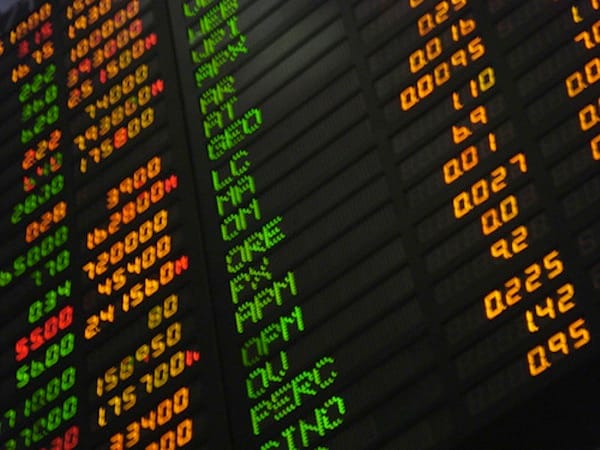
Last week the Dow Jones Industrial Average declined by 280 points – its worst week since June 1. The drop wiped out all the gains made since the Federal Reserve announced its “Quantitative Easing 3” program of open-ended money creation in mid-September.
Last week the Financial Times published an article by Mohammed El-Erian, CEO and co-Chief Investment Officer of PIMCO, the world’s largest mutual fund, on the potential risks of the Fed's new policy.
Mr. El-Erian warned investors of the risks of ongoing money creation, which has created a large gap between current stock market valuations and what would be justified by the true state of the economy.
The Fed strategy, pursued since 2009, aims at jacking up the markets through injections of printed money by exploiting the “wealth effect.” It is based on the assumption that combining low interest rates and large-scale money printing creates a demand for assets to invest in and thereby drives up stock prices. Since the top 15% of American earners own roughly 80% of all stocks, the rise in valuations give a perception of increasing wealth, leading to higher spending.
Under normal circumstances this attitude should spread down the income pyramid, increasing consumer outlays and boosting the economy. In the current situation, however, the lower income brackets are loaded with debt and restrained by stagnant income and high unemployment. Repeated money infusions from the Fed have jacked up the stock markets, but the overall economy still lags behind, creating the gap that Mr. El-Erian warns about.
The point he makes is that the market-to-economy disconnect has now reached a level where the risk of a significant “correction” has become real. In other words, we are seeing a stock market “bubble” that could pop as soon as a sufficient number of investors decide to take their profits and bail out. This is the stuff that market crashes and panics are made of.
The global “recovery” from the 2008 crash has now stalled, from China to Brazil to Europe to Japan. The United States appears to still be growing, at least according to official statistics. A significant market drop could unleash a landslide, both domestically and globally.
This would have a significant political impact for the US. So far, both Republicans and Democrats have outlined their policies in conventional terms: cut taxes and government spending and tax “the rich” and maintain spending, respectively. These are simplistic positions derived from the parties respective ideologies rather than from a well elaborated plan that actually deals with the underlying causes of our economic weakness.

A stock market downturn would both expose the fragility of the US economy and raise demand for practical, workable solutions. This would favor challengers and independents - which are open to new approaches - over established incumbents who are locked into the party line. Current campaign strategies and established positions would be thrown into disarray, a situation which true independents would be able to take advantage of even while the confidence and certitudes of the party faithful are weakened.
Can this happen even before the elections? It can happen any time. Ideally, investors should objectively assess risks and get out of the market when risk reaches a potentially dangerous level. In reality it is difficult to resist the urge to wait for one more market rise. That is why crashes and panics are irrational affairs. This is the danger Mr. El Erian points to.
You Might Also Like