Federal Court Rules Against Texas Redistricting Maps

 Shawn M Griffiths
Credit: texastribune.com
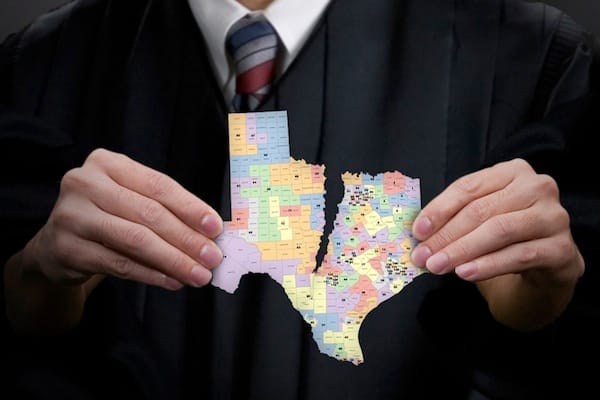
The U.S. District Court in Washington tossed out Texas redistricting maps drawn by the 82nd Texas Legislature because they don’t comply with the Voting Rights Act of 1965. Evidence of intentional discrimination was uncovered in several redrawn districts.
From 2000 to 2010, the population of Texas grew by over four million people. It was determined after the 2010 census that the state would pick up four additional congressional seats. The Texas Legislature was responsible for remapping the state’s political landscape and drew out redistricting plans during the 2011 legislative session.
However, Texas is required, by law, to submit any changes to state voting laws or political maps for federal approval because the state has a history of discriminating against minority groups. State officials circumvented the U.S. Department of Justice (DOJ) and opted to bring their three redistricting maps before a federal appeals court in a process known as “preclearance.”
Federal judges concluded that Texas failed to provide sufficient evidence to show that the congressional and state legislative district plans drawn by state lawmakers do not intentionally infringe on the voting rights of minority groups and their ability to elect officials that represent them. The three-judge panel highlighted problems with several state House districts along with the 23rd and 27th congressional districts.
In the 154-page opinion, Judge Thomas Griffith wrote:
"Texas ... seeks from this court a declaratory judgement that its redistricting plans will neither have 'the purpose nor will have the effect of denying or abridging the right to vote on account of race or color, or . We conclude that Texas has failed to show that any of the redistricting plans merits preclearance."
The legal battle over the Texas redistricting maps is not over. Texas Attorney General Greg Abbot vowed to appeal the court’s ruling to the United States Supreme Court. He immediately announced his intentions to take the matter to the high court on Twitter after the decision was handed down.
https://twitter.com/GregAbbott_TX/status/240526422630862848
He elaborated on his reaction to the ruling in a press release.

"Today's decision extends the Voting Rights Act beyond the limits intended by Congress and beyond the boundaries imposed by the Constitution. The Attorney General's Office will continue defending the maps enacted by the Texas Legislature and will immediately take steps to appeal this flawed decision to the U.S. Supreme Court. The Washington, D.C., court's decision applies to the maps originally enacted by the Texas Legislature — so the November elections will proceed as planned under the interim maps drawn by the federal court in San Antonio."
The reaction across Texas has fallen on partisan lines for the most part. Republican leaders in the state are angered by the court’s decision. Lt. Governor David Dewhurst stated that the federal court has “turned its back on the rights of Texas voters.” U.S. Rep. Lloyd Doggett (D-25) disagrees with Mr. Dewhurst.
“Today’s ruling is a victory for voting rights and all those who believe in fair elections,” Doggett said. “Three judges, including two appointed by President George W. Bush, have upheld our contention that this crooked map was intentionally discriminatory.”
The hearing over the redistricting maps began back in November. While the judges deliberated, a federal court in San Antonio drew interim maps for the current election year. They were used during the Texas primaries and will likely be used in the general election. As the maps drawn by the Legislature are tied up in court, the fate of congressional and state legislative districts in Texas for future elections is uncertain.
There is a possibility that Texas will be ruled in violation of the Voting Rights Act twice this year. The DOJ blocked a voter ID law back in March that the Obama administration argues disenfranchises thousands of voters in the state, including Hispanic and black constituents. Texas sued the agency and the matter was brought to federal court. It is expected that a ruling on the matter will be handed down as early as next week.
You Might Also Like