
 Cara Brown McCormick
Impeachments. Wave elections. Gerrymandered maps. A stolen election that never was. Frustration with leadership. A health care bill that went too far. A president they loved. A president they could not defend. The reasons House members abandon their parties mid-term are as varied as the members themselves.
Most land safely in the other major party. But a handful have done something far rarer, walking away from both of the two major political parties and declaring themselves independent in a system built to make it nearly impossible to survive. In the past quarter-century, only ten members have made any kind of switch. Here they are, starting with the most recent.
#1 — Kevin Kiley (California) | Republican to Independent, March 9, 2026
On March 9, 2026, Rep. Kevin Kiley of California announced he was leaving the Republican Party and registering as an independent, making him the sole independent currently serving in the U.S. House. His stated reason: California's mid-decade redistricting had redrawn his district to favor Democrats, and he argued that fighting partisan gerrymandering meant taking partisanship "out of the equation" himself.
He says he will continue caucusing with Republicans through the end of the 119th Congress, but his long-term alignment is an open question. His switch shifted the House majority to 217 to 214, with three vacancies. He is already running in a different district, California's 6th, as an independent in 2026. Whether he can win without a party apparatus behind him will be one of the defining independent-voter stories of the election cycle.
 Cara Brown McCormick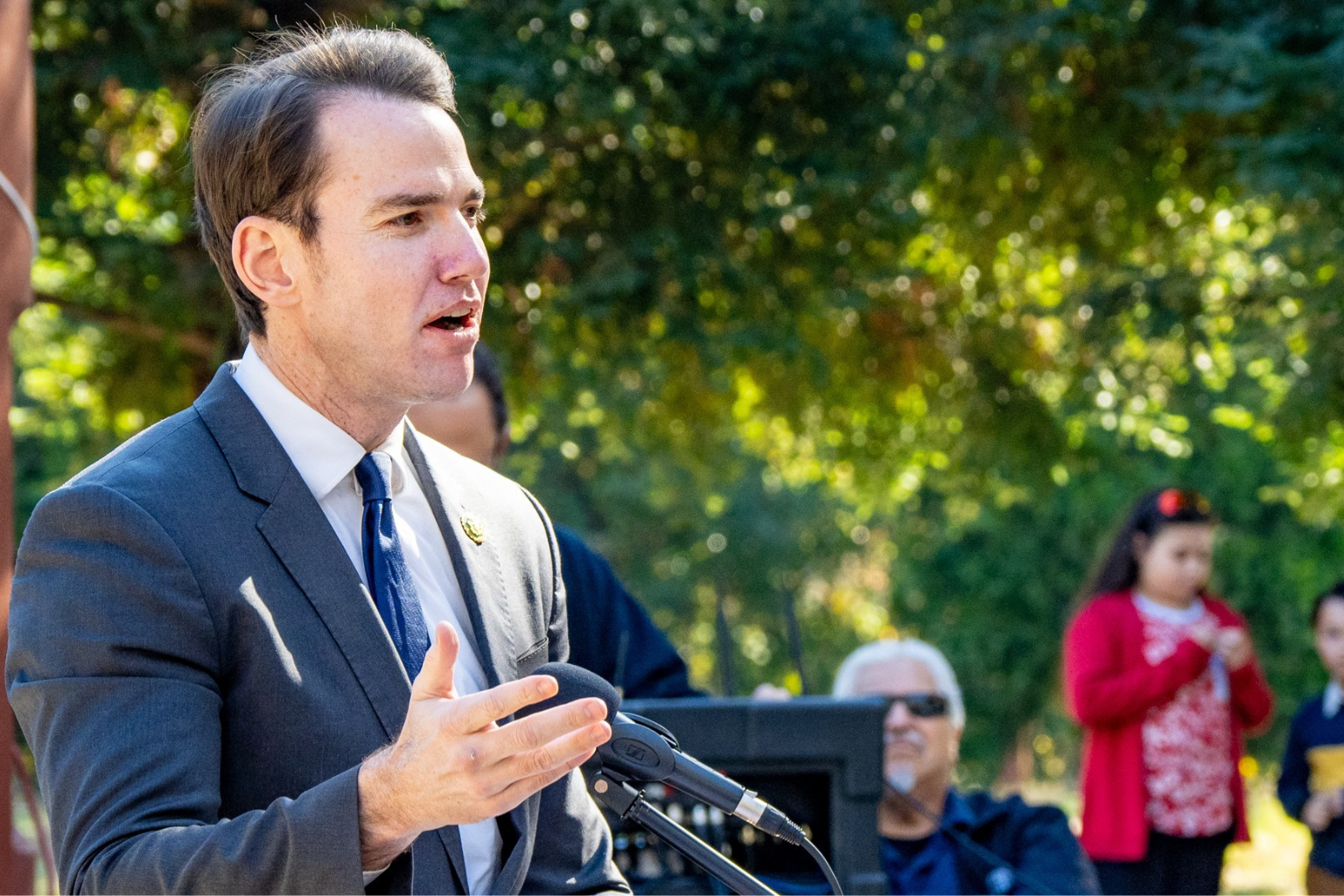
#2 — Paul Mitchell (Michigan) | Republican to Independent, December 14, 2020
Mitchell's story stands apart from many on this list because his switch was an act of principle rather than political ambition, and he knew it would cost him nothing since he had already announced his retirement. Disgusted by the Republican Party's support for efforts to overturn the 2020 election results, he formally left the GOP and served out his final weeks in Congress as an independent. He left office on January 3, 2021, less than three weeks after his switch.
#3 — Justin Amash (Michigan) | Republican to Independent, July 4, 2019; then Independent to Libertarian, April 29, 2020
A libertarian-leaning Republican, he was the only GOP House member to publicly call for Trump's impeachment in 2019, publishing a detailed argument on social media. On July 4, 2019, he left the Republican Party to become an independent. Then on April 29, 2020, he took another step no sitting House member had ever taken – he joined the Libertarian Party, becoming the first Libertarian (party member) ever to serve in Congress. He briefly considered a presidential run but did not seek re-election.
#4 — Jeff Van Drew (New Jersey) | Democrat to Republican, December 19, 2019
Van Drew was elected in the 2018 Democratic wave, but his opposition to Donald Trump's first impeachment put him at odds with his own caucus. On December 19, 2019, he walked into the Oval Office and told Trump he had his "undying support" and then announced he was a Republican. At least five of his staffers resigned in protest the same day. Unlike most party switchers, Van Drew's gamble paid off politically. He won re-election as a Republican in 2020, and again in 2022 and 2024. His South Jersey district moved with him.
#5 — Parker Griffith (Alabama) | Democrat to Republican, December 22, 2009
Griffith's switch came at the height of the battle over the Affordable Care Act, just days before the Senate's Christmas Eve vote on the bill. He cited his opposition to the ACA and what he called a Democratic Party that had abandoned the values of his conservative Alabama district. His calculation failed badly. Republican primary voters did not trust him, and he lost his own primary to Mo Brooks in June 2010. He later returned to the Democratic Party to run for governor in 2014, winning the nomination but losing the general election decisively.
#6 — Rodney Alexander (Louisiana) | Democrat to Republican, August 9, 2004
Alexander waited until the final hour of the Louisiana candidate filing deadline to switch parties, leaving Democrats no time to recruit a replacement. He won re-election easily and served as a Republican until 2013, when he resigned to become Louisiana's Secretary of Veterans Affairs.
#7 — Ralph Hall (Texas) | Democrat to Republican, January 5, 2004
Hall had served Texas as a Democrat since 1980, but his voting record was so aligned with Republicans that the switch was widely seen as a formality. His close friend and Texas ally, President George W. Bush, welcomed the move. Hall won re-election easily as a Republican and served until 2015, eventually becoming the oldest-serving member of Congress in American history. He was defeated in a 2014 primary runoff by John Ratcliffe at the age of 91.
#8 — Matthew G. Martinez (California) | Democrat to Republican, July 27, 2000
Martinez had served California as a Democrat since 1982, but after losing his Democratic primary in 2000 to Hilda Solis, he changed his registration to Republican on July 27 while still serving out his term. It was widely seen as a parting shot from a politician whose views had drifted rightward over the years. He chose not to run as a Republican and left office without returning to Congress.
#9 — Virgil Goode (Virginia) | Democrat to Independent, January 27, 2000; then Independent to Republican, August 1, 2002
Goode is the only person on this list to switch parties twice while serving. The Virginia Democrat walked away from his party in January 2000, becoming an independent who caucused with Republicans and was overwhelmingly re-elected that year. He then formally joined the Republican Party in August 2002. His journey from Democrat to independent to Republican previewed the ideological sorting that would define the next two decades of American politics. He served until 2009, when he was defeated by Democrat Tom Perriello by just 727 votes.
#10 — Michael Forbes (New York) | Republican to Democrat, July 17, 1999
Forbes represented a Long Island district as a Republican from 1995, but by 1999, he had grown openly critical of the GOP's national leadership, accusing them of being "tone deaf" to the needs of average Americans. On July 17, 1999, he switched to the Democratic Party, becoming one of the rare House members to cross from Republican to Democrat. He was embraced nationally by President Bill Clinton and Democratic leaders, but his new party couldn't protect him at home. In the 2000 Democratic primary, Republicans secretly funneled $250,000 to his opponent, a 71-year-old librarian named Regina Seltzer, who defeated Forbes by just 35 votes. He left Congress without winning another term under either party label.