

Photo credit: Charlie Neibergall(AP)
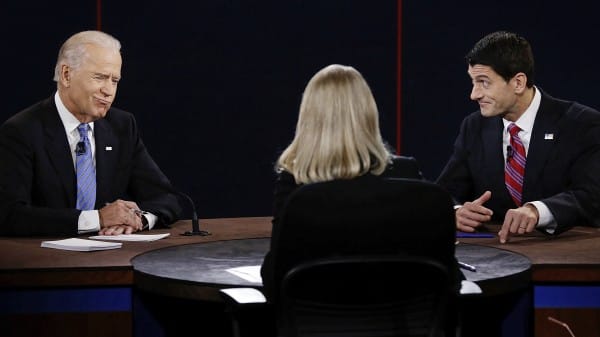
Thursday's vice presidential debate got off to a heavy start, with moderator Martha Raddatz's first question posing the recent Libyan turmoil at the US embassy. The debate did not slow down from there. Social media was afire with vice presidential debate conversations and many media sources provided a play-by-play fact check of the candidate's claims.
Biden was vivacious and, at times, vicious in his remarks. No doubt, this is the Obama camp's response to the President's listlessness in the first debate. Paul Ryan, who is a new comer to the national stage, seemed much more composed and fiesty than Biden and delivered his answers methodically rather than passionately.
Most publications and TV networks were reporting a "draw," although University of Wisconsin communications professor Kathryn Olson told Reuters that Biden dominated the conversation and commanded the debate.
The vice presidential debate certainly served as an entertaining confrontation, especially compared with the uncomfortable bout between Romney and Obama last week. However, the vice presidential candidates did not cover questions with any more depth than their running partners.
Vice President Biden offered a substantial amount of detail in his responses on Medicare, foreign affairs, and the budget, and served well to highlight his extensive experience in public office, but still seemed easily distracted from his point. Ryan seemed more rehearsed and rigid in his answers, often firmly repeating his answers despite the moderator's request for ellaboration. Yet, both candidates threw out personal bait to their audience, in an irrelevant cry for emotional appeal on each issue.
No novel political tactics were at play here, but the candidates' performance was surprising, surely entertaining, and offered an enticing preview of the next presidential debate. If anything, the debate furthers the interesting developments in social media and journalism. Voters have, at their fingertips, an unprecedented amount of discourse to participate in and information available to research. The incredible impacts of these conversations on this presidential race are already being felt, and with an eye towards future of electoral processes, will be imperative to track.
Let us know what you think! Did the vice presidential debate matter? Did it change your vote?
Some additional fact check resources: