Voting Systems And Their Consequences

 Alex Gauthier
European Parliament
After millions of Americans headed to the polls and voted for the next President of the United States and their local representatives its important to take a step back and look at how the national election process is structured and how that impacts not just who appears on the ballot, but how voters decide which candidate they favor.
Different voting systems have different consequences. If one knows that his/her candidate won't have enough votes to win, or come close to winning, one is more likely to vote outside their immediate interest in favor of the lesser of two evils. This is most often the choice that voters are faced with in a plurality voting system.
The plurality system entails a 'first past the post' or 'winner take all' process where the single highest vote-getter wins. This can be via majority rule (50% + 1 of the vote) as is the case for the presidential race, 270 votes in the electoral college. Or simply the candidate with the highest number of votes. This is typically the case when Americans elect representatives for the Senate and House of Representatives where a candidate can win with less than 50% of the vote provided that his/her opponent does not receive more votes. This process reduces the diversity of representation, often resulting in two party races, because single constituencies are required in order to earn a large enough percentage of the vote to beat every other candidate.
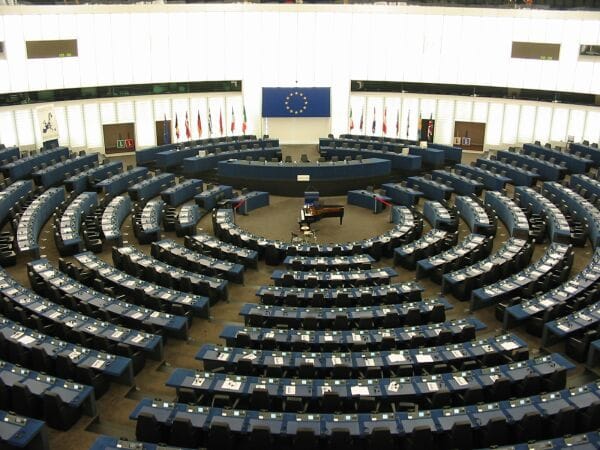
The primary competitor to the plurality voting system is the proportional representation system, though it takes many different forms. This system is utilized at least in part in many countries including most European countries, India, Russia, Israel, and many others. In general, proportional representation assigns designated percentages of representation that translate to a number of representatives. For example, if a legislature has 100 seats, and 20% of the population votes Democrat, 20 out of the 100 seats will be held by Democrats. This allows for a larger pool of representation because even if a party is unable to beat every other party in numbers, they will still receive at least some representation in the government, provided they meet whatever the minimum threshold may be.
This system also provides a basis for strong party membership, however other iterations of proportional representation allow for voters to choose by specific candidate within a party. These top vote getting candidates then fill the apportioned seats in order of highest votes to lowest. In order for governments made up of proportional representation to function coalitions between competing or like-minded parties are essential to pass legislation because no single party has the majority necessary to pass laws.
The strength of the two parties in America is undeniable, but it very well could be primarily the result of how our electoral system works. Different systems promote different outcomes, so it should come as no surprise when partisanship becomes problematic within a system that promotes partisanship.
You Might Also Like