The Substance of Presidential Debates, Then and Now

 Zachery Abramson
Credit: blog.americanhistory.si.edu
The presidential debates have become a staple of our current electoral process, featuring the candidates of the two major parties in a showdown regulated by a single moderator. However, the substance of presidential debates has deteriorated and this familiar format has changed dramatically since the first televised debate between Nixon and Kennedy in 1960.
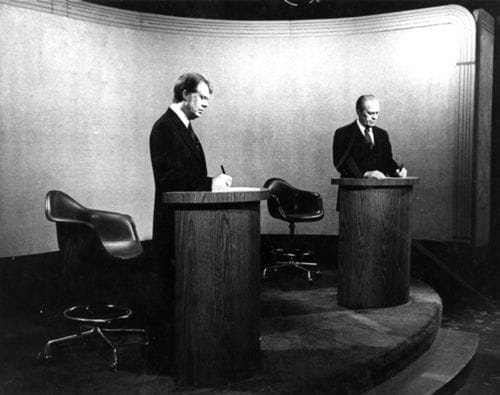
It would be another sixteen years before presidential candidates agreed to confront each other on national television. The 1976 debates were sponsored by the League of Women Voters, and pitted Gerald Ford against Jimmy Carter in a series of three televised events. The LWV would continue to sponsor the presidential and vice presidential debates until the 1988 election. The presidential debates that ran under the LWV featured a panel of seated reporters and journalists who took turns posing questions to the candidates. In turn, the debaters had a few minutes to answer question, at which point the inquirer could ask a follow up question.
This format was designed to get past rehearsed party rhetoric and put the candidate's political views and policy in the spotlight. While the topics for the first two rounds were agreed upon ahead of time, the last debate was open and allowed the panel to address subjects outside the set topics.
This is in direct contrast to the format later developed by the Commission on Presidential Debates, which allows the two respective campaigns to negotiate contracts behind closed doors. As a result, the format guideliens have grown increasingly long and complex.
The debate contract, or “Memorandum of Understanding,” grew from three pages in 1984 to twenty one in 2012. The candidates' campaigns also get to choose the format and topics of the debate, who attends, what the dress code is, and the time of the event. It was the increasing pressure from the Republican and Democratic campaigns to gain more control of formatting that led to the LWV withdrawing its sponsorship in 1988. The League of Women Voters issued a statement condemning the CPD:
The League has no intention of becoming an accessory to the hoodwinking of the American public... The campaigns' agreement is a closed-door masterpiece," Neuman said. "Never in the history of the League of Women Voters have two candidates' organizations come to us with such stringent, unyielding and self-serving demands.
In 1992 the CPD introduced a town hall-style debate to encouraged civilian participation and increase the spontaneity of questions posed. The town hall debate of 1992 featured unrestricted questions put forth by the American public. These questions were accompanied by follow up responses from the moderator, Carole Simpson, who pushed the candidates to remain on topic and go beyond their rehearsed platforms.
By 1996, the follow up questions were banned and by 2000 the moderator was screening questions that were written on index cards. These controversial restrictions were addressed this year when moderator Candy Crowley said she planned to ask both candidates follow up questions.
The current form of the CPD has removed the debate aspect from Presidential elections. As we saw with this year's debate series, they seem to further partisan rhetoric and make politics an entertaining popular spectacle. The CPD-run debates allow candidates to dispense rehearsed partisan talking points, and attack each other's platforms without questioning the specifics of policy. The intended purpose of the debates was to inform the American voter, but this mission seems hindered now.

You Might Also Like