Ted Cruz Scores Ron Paul a Win in Texas Senate Primary

 Wes Messamore
Photo: Gage Skidmore
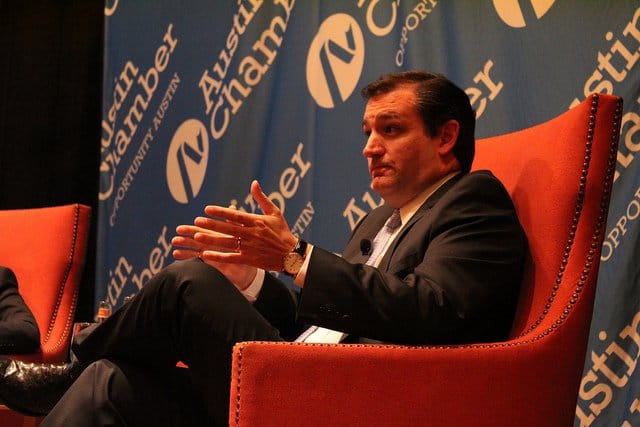
Texas lawyer and Tea Party candidate, Ted Cruz, scored an easy and unexpected victory in Tuesday's Republican primary runoff election against the party-anointed, establishment candidate, Lt. Gov. David Dewhurst. As the Houston Chronicle reports:
"Cruz once was considered a long shot to take down well-heeled Lt. Gov. David Dewhurst – the favorite of the party establishment and Hutchison's heir apparent. But he steadily gained in the polls during their bare-knuckles campaign brawl, and his lead opened up as soon as the earliest returns were posted. By 8:30 p.m. the Associated Press had named Cruz the winner, and within an hour Dewhurst called Cruz to concede."
Cruz's victory bears strong parallels to that of US Senator Rand Paul of Kentucky, who won his 2010 Senate primary bid in what was called a "Randslide," and would go on in the general election to take the Senate seat vacated by retiring US Senator Jim Bunning.
Like Ted Cruz, Rand Paul was considered a "long shot" candidate; ran an uphill campaign against Kentucky Secretary of State Trey Grayson, a well-known state official with major support from the party establishment; and won an easy victory with the support of both the grassroots Tea Party and Congressman Ron Paul's determined and well-organized national political machine-- groups that have been known to both overlap and clash.
By way of comparison to other Tea Party candidates in US Senate races, there is a discernible pattern of Tea Party successes and defeats. In 2010, many of the Tea Party's picks for US Senate failed to win primaries, and of those that did, many would lose in their general elections, even to vulnerable opponents across the aisle, as with Sharron Angle, who lost her 2010 US Senate bid to an embattled Harry Reid in Nevada. There was also Christine O'Donnell, who lost Delaware's open US Senate seat to her general election opponent by 17% in 2010.
What they both had in common was their focus on social issues like abortion, homosexuality, pre-marital sex, and alarmism over Islamic Sharia Law being instituted in the United States, issues that are essentially foreign to the original Tea Party protests and nationwide political movement launched in 2009 after Rick Santelli's CNBC rant against the federal government's taxpayer subsidized bailouts of toxic securitized mortgages.
When the Tea Party strays off message into the well-worn talking points of political figures once lampooned by the Daily Show's Jon Stewart as "moral majorities in a tri-cornered hat," winning primaries has been hit and miss, and winning general elections has been all miss. But in the cases of Rand Paul, Ted Cruz, and Utah Senator Mike Lee, by focusing more attention on fiscal and economic issues, these candidates were able to unite an electorally robust and winning coalition of Tea Party voters and Ron Paul-style libertarian voters.
The formula then, for the Tea Party to remain relevant and electorally viable as a movement, is discernible: Tea Party Senate candidates win when they do not share a primary nor general election ballot with an incumbent, when they focus more intently on economic and fiscal issues (and even on civil liberties issues more than typical Republican candidates, as the aforementioned three have done), and when they can secure the endorsement and support of both the Tea Party and the Ron Paul movement, which was instrumental in Cruz's victory Tuesday.
The Tea Party scored a big win with Ted Cruz's upset in Texas, but it may not have been possible without the endorsements of Ron and Rand Paul, and the attendant flood of volunteers and thousands of small donations from the Ron Paul movement's activists throughout the nation. Tuesday's results were just the latest of many instances this year in which the maturing Ron Paul movement has flexed its organizational muscle, youth-driven activism, and grassroots crowd-funding prowess to spectacular effect.

You Might Also Like