
Supreme Court Punts on Partisan Gerrymandering Decision

Supreme Court Punts on Partisan Gerrymandering Decision

Published: 18 Jun, 2018
1 min read

The Supreme Court refused to weigh in on the issue of partisan gerrymandering in two cases out of Wisconsin (Gill v. Whitford) and Maryland (Benisek v. Lamone). The justices sent Gill v. Whitford back down to a lower court, while Maryland was dismissed unanimously.

In Benisek v. Lamone, the justices upheld a lower court's decision not to issue a preliminary injunction to block the 2011 congressional maps drawn by the Democratic-controlled state legislature. The high court is sticking with a decision it made it 2004 (Vieth v. Jubelirer) that there is too much legal uncertainty on the issue, and there is no metric for the court to determine what constitutes "too partisan" when lawmakers draw maps.

In the Wisconsin case, the high court ruled that the Democratic voters who brought the lawsuit failed to prove they had been injured by State Assembly maps drawn by the Republican-controlled legislature. However, these voters will have another opportunity to make their case before lower courts.

Stay tuned for more developments on this story.

You Might Also Like
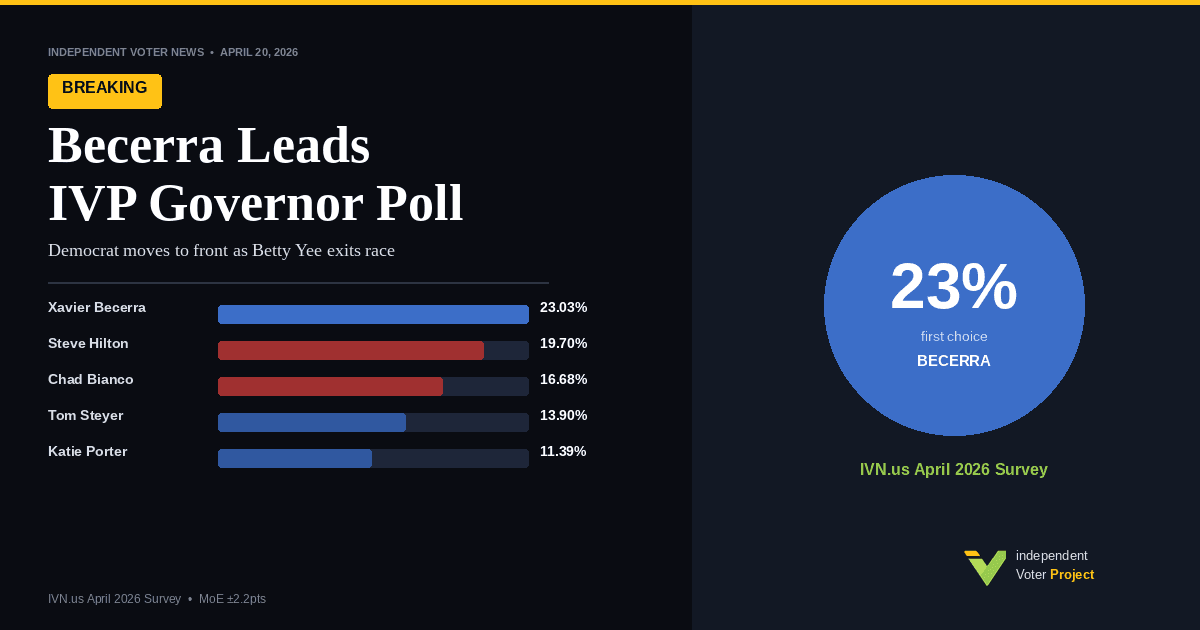
New IVP 2026 California Governor Poll: What the Toplines Don’t Tell You
Using verified California voter file data, IVP surveyed high-propensity voters from February 13 through 20. The poll tested first-choice ballot preferences alongside issue intensity on affordability and the cost of living, immigration enforcement, more choice reform, and more....
23 Feb, 2026
-
10 min read
81% of Americans Say Money Controls Politics – Can a Constitutional Amendment Fix It?
Polls consistently show that nearly all Americans across the political spectrum agree that there is too much money in politics – whether from foreign sources, corporations, or so-called “dark money” groups. ...
23 Feb, 2026
-
13 min read
10 Reasons Why the Congressional Stock Trading Ban Will Never Pass
The overlap between committee assignments and stock ownership is not automatically illegal. Because the current legal framework permits this proximity as long as disclosure rules are followed, lawmakers are not operating under a system that forces change....
20 Feb, 2026
-
4 min read