Supreme Court Decision on Affirmative Action Needed

 Lucas Eaves
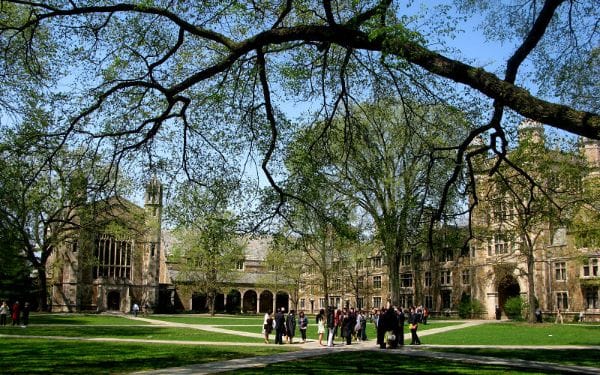
Credit: University of Michigan
On Thursday, the 6th Circuit Court of Appeals ruled that the Michigan ban on affirmative action was unconstitutional. This decision contradicts the 9th Circuit's decision to uphold the California ban, demonstrating a Supreme Court decision on affirmative action is needed more than ever.
Michigan passed a ban on affirmative action in 2006 for government hiring and contracting, and for admission to public universities by amending its constitution.
The decision was not based on racial discrimination, but on a violation of the Fourteenth Amendment -- the right to equal protection. The court ruled 8-7 on the ban.
The court considered that people who want to change other elements of a university admission process have several ways to do so: lobby the admissions committee, petition university leaders, attempt to influence the college’s governing board or take the issue to a statewide initiative.
However, the only means proponents of affirmative action have to achieve their goals is through the constitution. Amending a constitution is a long and costly process. “The existence of such a comparative structural burden undermines the equal protection clause’s guarantee that all citizens ought to have equal access to the tools of political change,” ruled Judge R. Guy Cole Jr.
This isn't the first time the University of Michigan's affirmative action policies have come into question. In 2003 the US Supreme Court upheld the law school's admission policies in Grutter v. Bollinger. The court ruled that considering race as one element to determine admission was constitutional as long as it did not result in quotas.
What was once a more widely accepted policy, affirmative action has now been banned in public school admission in seven states, making the policies increasingly contested and controversial. Last week's decision highlights the diversity of opinion on the issue and states' need for clarification by the Supreme Court.
The Supreme Court is set to rule on affirmative action next year. In October, the court heard arguments in the case of Fisher v. University of Texas. Three outcomes are expected from that decision: a complete ban on race-conscious admissions, a tightening of the current limitations on use of race and ethnicity in the admissions process or a decision that maintains the status quo.

You Might Also Like