Supreme Court: Citizens United Applies to Montana

Supreme Court: Citizens United Applies to Montana

Published: 25 Jun, 2012
1 min read

In a 5-4 decision, the Supreme Court ruled on the side of three corporations, reversing Montana's 1912 limit on corporate campaign spending.  Today's decision not only strengthens the 2010 Citizens United decision, but also affirms that it applies to the state of Montana. In defense of the corporations, lead attorney James Bopp stated:

"If Montana can ban core political speech because of Montana's unique characteristics, free speech will be seriously harmed. Speakers will be silenced because of corruption by others over a century ago."

The decision was split along ideological lines, with the 4 liberal justices dissenting, asking the court to reconsider the 2012 ruling because of the huge impact corporate finance has played in the electoral process since the January 2010 ruling.

Justice Breyer wrote the dissent, arguing that the political landscape in Montana gives the state a "compelling interest" in limiting independent expenditures by corporations:

Thus, Montana’s experience, like considerable experience elsewhere since the Court’s decision in Citizens United, casts grave doubt on the Court’s supposition that independent expenditures do not corrupt or appear to do so.

The Supreme Court's decision can be found here.

You Might Also Like
New IVP 2026 California Governor Poll: What the Toplines Don’t Tell You
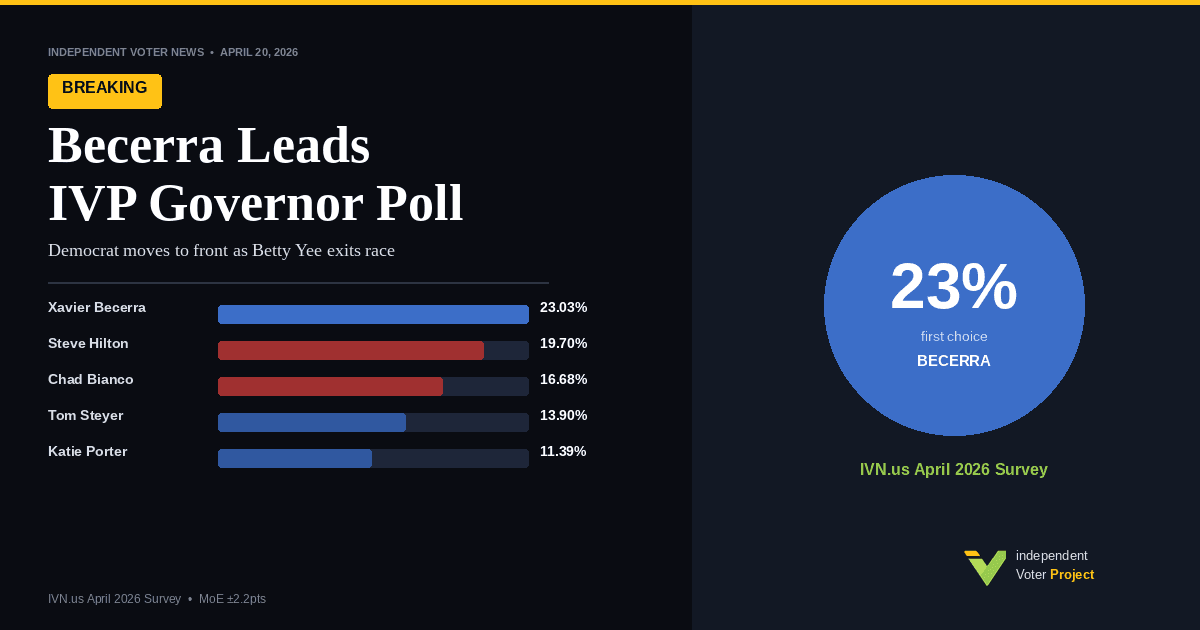
Using verified California voter file data, IVP surveyed high-propensity voters from February 13 through 20. The poll tested first-choice ballot preferences alongside issue intensity on affordability and the cost of living, immigration enforcement, more choice reform, and more....
23 Feb, 2026
-
10 min read
81% of Americans Say Money Controls Politics – Can a Constitutional Amendment Fix It?
Polls consistently show that nearly all Americans across the political spectrum agree that there is too much money in politics – whether from foreign sources, corporations, or so-called “dark money” groups. ...
23 Feb, 2026
-
13 min read
10 Reasons Why the Congressional Stock Trading Ban Will Never Pass
The overlap between committee assignments and stock ownership is not automatically illegal. Because the current legal framework permits this proximity as long as disclosure rules are followed, lawmakers are not operating under a system that forces change....
20 Feb, 2026
-
4 min read