Raising the Minimum Wage Ignored by Romney, Obama
 Mark Reynolds
Official White House Photo / Pete Souza
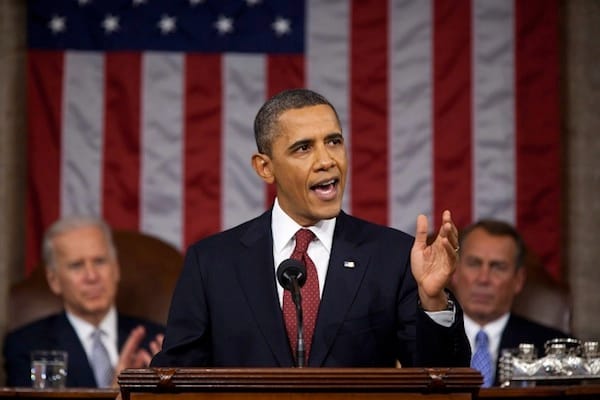
When Barack Obama was elected president in 2008, he pledged to raise the federal minimum wage to $9.50 per hour by 2011. As he runs for re-election with the federal minimum wage still at $7.25 per hour, the rate in 2009, President Obama has yet to keep his promise.
Meanwhile, Republican challenger Mitt Romney initially supported indexing the minimum wage to the Consumer Price Index (CPI) so that it would automatically rise with inflation. After some conservative backlash to that position, however, he reversed course and said a change to the minimum wage was unnecessary.
Many small business advocates, economists, and politicians oppose raising the federal minimum wage because they argue it has a minimally positive net economic effect on the individuals whose pay rises. Additionally, a higher minimum wage means increased labor costs for small businesses which, in turn, could cause job loss when businesses are forced to outsource work and limit job creation.
Yet, there is a group of more moderate economists and politicians that does support a higher minimum wage. Prominent liberal-leaning economists such as Joseph Stiglitz, Jeffrey Sachs, Laura Tyson, and Robert Reich sent a letter to Congress in July urging them to pass legislation that would raise the minimum wage.
The economists write:
The increase to $9.80 would mean that minimum wage workers who work full-time, full-year would see a raise from their current salary of roughly $15,000 to roughly $20,000...This policy would directly provide higher wages for close to 20 million workers by 2014. Furthermore, another nearly 9 million workers whose wages are just above the new minimum would likely see a wage increase through 'spillover' effects, as employers adjust their internal wage ladders...At a time when persistent high unemployment is putting enormous downward pressure on wages, such a minimum wage increase would provide a much-needed boost to the earnings of low-wage workers.
Additionally, legislation was introduced this year by Democratic Congressman George Miller and Democratic Senator Tom Harkin to raise the federal minimum wage to $9.80 per hour by 2014. Progress on that initiative has stalled in Congress and the Obama administration has done little to push for action on the matter.
The real value of the federal minimum wage has declined by 30 percent since 1968 because it has not kept up with the rising cost of goods. Raising the minimum wage could have a net positive impact on the economy, but it's a solution that neither mainstream presidential candidate has discussed much recently.
For President Obama, supporting a bill that doesn't have much chance of passage is not a good political move because the benefits are minimal compared to the risk of being labeled anti-small business or a job-killer. For Governor Romney, the backlash from his position to tie the minimum wage to inflation during the primary was severe enough to cause him to avoid further discussion of the issue. In the end, Governor Romney supported a change to the federal minimum wage before he was against it, and President Obama campaigned on an increase in 2008 before he decided it was politically risky.

Open discussion on raising the minimum wage would be a valuable conversation for the American public, as concrete solutions to economic hardships are needed for economic recovery.
You Might Also Like