Private Bradley Manning Leaks Case Continues
 Carl Wicklander
(Credit: wikileaks-press.org)
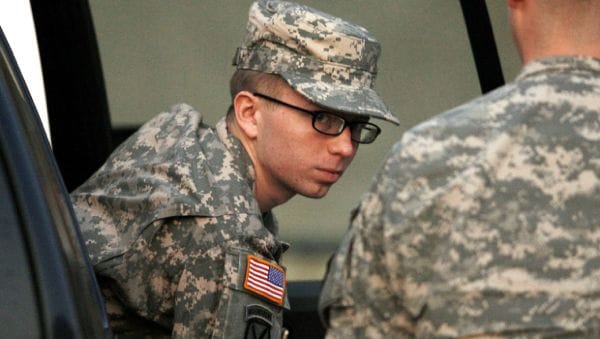
Since 2010, US Army Private Bradley Manning has been one of the figures at the center of the biggest security leaks case in American history. Alleged to have been working with Julian Assange, the creator of WikiLeaks, Manning is accused of leaking hundreds of thousands of diplomatic cables and other reports to the pro-transparency website.
Although Manning was arrested in 2010, he was not officially charged until February 2012. The charges against him now include "aiding and abetting the enemy."
The charges against Manning, under the auspices of the 1917 Espionage Act, are capital offenses, but the government is only seeking life imprisonment.
In November 2012, Manning made a plea offer, called "Exceptions and Substitutions," where he ceded his right to a jury trial and will be tried by a military judge.
Last Tuesday, that judge reduced Manning's sentence by 112 days, a sentence he has not yet received, by ruling that Manning "was subjected to excessively harsh treatment in military detention." Speculation that Manning was tortured during his indefinite detention dates back to his 2010 arrest.
President Obama, who pledged a highly transparent administration at the time of his election, said shortly after Manning's arrest that the private's treatment was "appropriate" and "meeting our basic standards. [Pentagon officials] assure me that they are."
Watergate-era whistleblower Daniel Ellsberg describes Manning's treatment during his detention as reminiscent of "enhanced interrogation," which included "prolonged isolation, sleep deprivation," and "nudity." The "prolonged isolation" included keeping Manning alone in a cell for as many as 23 hours a day.
Elsewhere in the case, the government presented new evidence that Manning aided the enemy by introducing information that terrorist leader Osama bin Laden sought and obtained cables leaked via WikiLeaks.

The prosecution has not divulged the contents of the cables bin Laden received, nor is it precisely clear how the al Qaeda leader obtained them, but utilization of WikiLeaks appears to be the answer.
According to prosecutor Captain Joe Morrow, bin Laden "requested and received from another al Qaeda member military reports and US State Department cables Manning allegedly provided to WikiLeaks."
The Bradley Manning leaks case fascinates Americans today because it illuminates the tension between governments' prosecution of modern wars and how easily information can be disseminated in a computer age, as well as the detainment practices of the last two presidential administrations.
The New Yorker's Amy Davidson noticed the tension in this case by rhetorically asking, "Can anyone aid the enemy by giving information to a reporter?" This is what the government's prosecutors seem to allege. "Are reporters aiding the enemy if they publish it - and who, by the way, is 'the enemy?'"
Manning's defenders insist that leaking information to news sources has never before constituted "aiding the enemy."
Manning's trial has not yet begun. It was scheduled to begin in February, was moved to March, and is currently scheduled to begin in June to consider whether classified information can be used in the trial.
You Might Also Like