Georgia Health Insurance Costs Up 198%?

 Dave Emanuel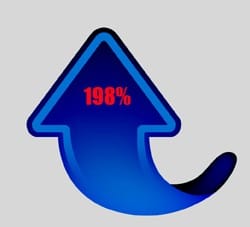
A recent trend in the naming of legislation is to include the purported benefits in the title, hence, the “Patient Protection and Affordable Care Act”—aka Obamacare. Unfortunately, experience has shown that legislation titles tend to be diametrically opposed to reality, as in the “paperwork reduction act”.
Consequently, it came as no surprise that Ralph Hudgens, Georgia’s Insurance Commissioner, has asked for a 30 delay in approving plans submitted by seven insurance companies. In his request to Kathleen Sebelius, Secretary of the US Department of Health and Human Services, Hudgens stated, “In complete contradiction to every promise made by the President with regard to the Patient Protection and Affordable Care Act ("PPACA"), insurance companies in Georgia have filed rate plans increasing health insurance rates up to 198 percent for some individuals.
Georgia consumers cannot afford these massive rate increases. For their protection, I am requesting that you grant an emergency 30 day delay of the July 30, 2013 deadline for our department to approve these increases. In addition, I am requesting that your Department show cause why these massive requested rate increases ate not justified under PPACA. I am asking that you answer this emergency request by close of business, July 30, 2013.”
Georgia Senate President Pro Tem David Shafer also voiced concerns about the Obamacare-instigated rate increases. Shafer noted, "Notwithstanding the President's many assurances to the contrary, I have always suspected that Obamacare would lead to higher health insurance rates," Shafer said. "But the rate increases pending before the Georgia Insurance Department are absolutely staggering in magnitude."
Shafer isn’t a Johnny-come-lately to health insurance issues. Previously, he served as Deputy State Insurance Commissioner and Vice Chair of the Senate Insurance and Labor Committee.
According to ACA proponents, Hudgens and Shafer are wrong about the legislation creating massive increases in premium costs. As proof, they cite a Washington Post headline, “Maryland issues insurance rates that are among the lowest in the U.S.” What the headline fails to address is the fact that in spite of the comparatively lower rates (compared to other states) health insurance premiums in Maryland would increase up to 25% compared to 2013 rates.
That increase was noted in a Baltimore Sun article, which stated, “Marylanders who buy health insurance on a state exchange under health reform could see their premiums jump as much as 25 percent under rates approved by state regulators, but those increases are less than insurers sought.
Maryland Insurance Commissioner Therese M. Goldsmith approved premium increases Friday for nine insurance companies who applied to sell plans to individuals through a state exchange, called Maryland Health Connection, established under health reform.
The rates were significantly lower than what insurance companies had requested, but still higher than the 6 percent to 7 percent annual premium increase that is typical across the country. Insurers said they were seeking the increases to cover the uncertainty of new costs associated with health care reform.”

When you cut to the chase, you find that claimed health insurance premium rates aren’t necessarily what individuals will pay. Federal tax subsidies will help offset costs for some individuals. Maryland officials estimate that approximately 75% of the people buying health insurance through the state exchange will receive “federal assistance” in one form or another. If you’re confused as to the source of the dollars used for “federal assistance”, consult your income tax return, or (if your stomach is naturally strong) the current national debt.
In a number of states, insurance premiums are claimed to be significantly lower than predicted by the Congressional Budget Office, which raises questions regarding the massive increases noted by Georgia’s Insurance Commissioner. Without question, actuarial assessments, state regulations and enrollment levels vary from state to state, and influence ultimate rates. That influence has obviously not been beneficial to residents of Georgia.
You Might Also Like