Conflicting State and Federal Standards for Educational Performance

 Michael Higham
Credit: businessweek.com
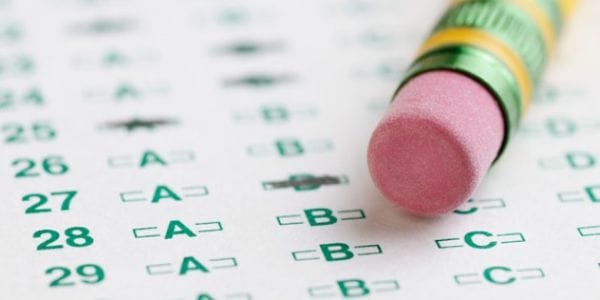
Student achievement is a priority for educators and the government that oversees its schools. Within the conversation of education standards is the discussion of state and federal roles in evaluating school performance. California and the federal government have two different evaluation methods to determine whether a school is meeting certain standards or not. This has caused confusion at the local level.
California uses the Academic Performance Index (API) to evaluate a school's performance. API focuses on accounting for relative gains in school performance and serves as a model for growth. An API score is dependent upon performance from previous years, and awards points for improvement. The API is not an individual tracking system that monitors students, but accounts for an entire campus.
The federal government uses Adequate Yearly Performance (AYP), which is an absolute measurement of student performance from the No Child Left Behind Act. The measurement looks at the three basic aspects of education: Language arts, mathematics, and graduation rate (high schools), and attendance rate (elementary and middle schools).
Schools that do not meet AYP standards two years in a row are subject to corrective actions. The school is then labelled under Program Improvement and needs two consecutive years of meeting AYP standards to exit the probationary measure. After 5 years under the Program Improvement label, schools are subject to chartering and a revamp of school staff.
Local school sites are sometimes caught between making API targets but not AYP goals. The California Department of Education recognizes the possibility of conflicts between the two measurements:
"Many schools reach their Academic Performance Index (API) targets, but not Adequate Yearly Progress (AYP). Few schools do just the opposite. For example, one school may have exceeded the API growth target for all schools along with meeting all the subgroup growth targets, but not met subgroup growth targets for AYP."
California State Superintendent of Public Instruction Tom Torlakson expressed discontent with AYP standards:
"We believe the No Child Left Behind policies are flawed. Despite 20- to 30-point gains , they will be dubbed a failure. It doesn’t make sense."
This rift causes confusion between state and federal standards for educational performance. The conflict between API and AYP scores highlights conflicting roles of government in the United States’ education system. California education leaders want to emphasize the improvements made by students and schools. The federal government wants schools to meet certain standards regardless of relative improvement.
Schools making API growth but not meeting AYP aren't sure if they should pat themselves on the back or fear a federal government intervention.

You Might Also Like