China is an Important Issue for Ohio Voters

 Christina Suttles
Photo: Kevin Dietsch
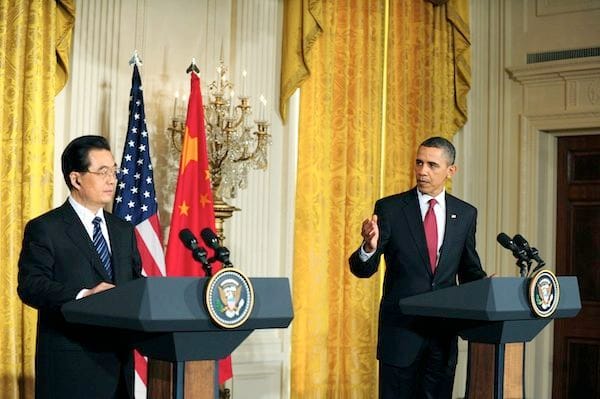
Ohio has become the political focal point of the 2012 election. As the race for the state tightens -- by roughly 5 points in Obama’s favor -- both candidates struggle to resonate with the millions of blue-collar workers who are affected by an idle economy.
Though Ohio’s 7 percent unemployment rate is below the national average, manufacturing jobs have been consistently hit the hardest. More than 2.1 million jobs, or 76.9 percent, of jobs displaced by trade to China between 2001 and 2011 have been in the manufacturing sector. Ohio lost approximately 91,800 jobs from 2001 to 2008 because of swelling trade deficits. As such, China is an important issue for Ohio voters.
China has also been a pivotal talking point for Ohio Democratic Sen. Sherrod Brown, long before the current presidential race. Brown has slammed China’s trade, manufacturing, and currency practices for years, and has criticized President Obama for not being tough enough.
Brown authored the Currency Exchange Rate Oversight Reform Act, which was aimed at cracking down on China’s currency policies, and passed the Senate with bipartisan support.
For its economic implications on manufacturing and for the noise China has created on Capitol Hill, both President Obama and Gov. Mitt Romney have spent a good chunk of their policy discussions on whether or not China’s trade policies are fair.
Gov. Romney, speaking to a crowd in Portsmouth, Ohio, criticized the president’s decision not to label China as a “currency manipulator,” which Romney has vowed to do on his first day in office.
“When a country artificially holds down the value of their currency, it means that the products that they sell to us are artificially cheap. And that means that American companies that are making these same products, they go out of business if their Chinese products are so much cheaper than the real costs behind them.”
Obama, on the other hand, retaliated in a series of ads claiming that during Romney’s time at Bain Capital, the firm outsourced its production of appliances to a Chinese firm called Global-Tech, which profited from the relationship by producing the appliances using sweatshops.
“When Mitt Romney led Bain, they saw Global-Tech as a good investment even knowing that the firm promoted its practice of exploiting low-wage labor to its investors.”
Obama has also responded to Republican criticism by asserting that he will continue to “stand up to China” and its trade practices, and has agreed that China needs stricter trade laws.

Both candidates have fallen victim to fact-checkers on this issue. As PolitiFact points out, Romney did leave Bain Capital in 1999, which is when a majority of the outsourcing took place. However, it’s difficult to gauge if Romney’s influence completely disappeared after he left Bain.
Under President Obama, U.S. exports to China are up nearly 50 percent in value since 2008, with significant increases in soybeans, cars, airplanes, and medicines. The main reason, experts say, for the increase has been an economic boom in China. This boom has led to more expensive Chinese tastes, including an increased appetite for meat and, therefore, demand in soybeans for feed.
There is also much debate about whether or not labeling China a “currency manipulator” would backfire. Some experts say that the label would result in an all out “trade war,” increasing unemployment in both countries and raising interest rates in America.
Considering the value of China's official currency, the renminbi, against the dollar has risen by around 11 percent since President Obama took office, for Romney to make the case to congress that China is, in fact, cheating, may be easier said than done.
You Might Also Like