At the Michigan Capitol, Bipartisanship is a Buzzword

 Ryan McLain
WikiMediaCommons
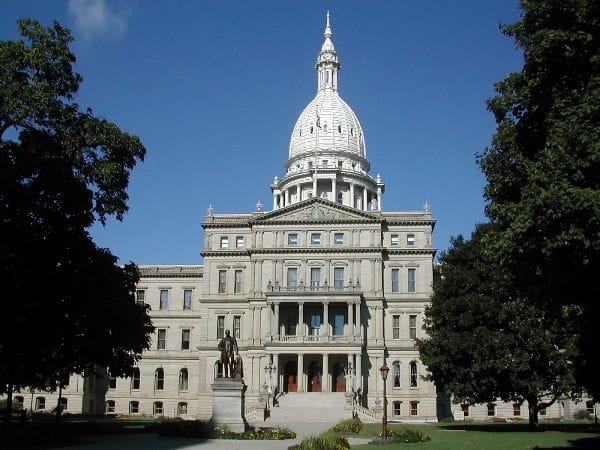
In 2010, Michigan was one of the many states to go red in the mid-term elections. This 96th Congress of Michigan was a hotbed of disagreement that created a plethora of national spotlight worthy laws: the "Right-to-Work" legislation that emerged during the lame duck session, the Emergency Financial Manager program, and the 4-year welfare limit, just to name a few. Following these controversies, the state has felt more divided than ever.
In the November elections, the Republican majority in both houses, while slimmed, was maintained. Despite the recent history of divisiveness and a single-party controlled government, bipartisanship has been a keyword in the state. On the first day of the 97th Congress, both party leaders have made offers of good faith in hopes of a new start.
For the Democrats, this offer was through the voting for the reappointment of House Speaker Jase Bolger. It has been a long standing tradition in Michigan for the minority party to do so unanimously. However, after the "Right-to-Work" bill was passed, the party members talked of breaking the tradition in protest. When it came to voting, only two representatives followed through with this action, resulting in a count of 107-2.
Speaking with the media after the nomination, House Democrat leader Rep. Tim Greimel said:
“It was a very difficult last term – particularly the lame duck portion of that term. And we have been very concerned about the extreme agenda that the Republicans have pushed. It’s clearly the most extreme agenda in the state’s history. But we also recognize that we have an opportunity here with a new term to show our respect for the institution and for the history of this institution by abiding by longstanding practice. And hopefully by extending this olive branch of symbolic bipartisanship, we can find opportunities and occasions when the two parties can find common ground. And that’s what the people of this state deserve – for the parties to do everything we can to find common ground to move this state forward and find solutions to the very real challenges we’re all facing.”
The sentiment was shared by the Speaker during his acceptance speech:
"Disagreeing with someone on a single issue should not taint the discussion of the next issue, or the resolve to deliver results for Michigan. We must seek compromise and improve working relationships with people who disagree on issues or who belong to different political parties... The history of this legislature has not yet been written. Each of us, by working together, can have a positive impact on what happens for the next two years and well into the future."
While it will likely be a long, disagreeable road ahead, the words by both sides seem to have a sense of flexibility and legitimacy. After the turbulent 96th Michigan State Legislature and a "do nothing" 112th Congress that was plagued by partisanship, any signs of compromise are warmly welcome.
You Might Also Like