
Credit: http://patdollard.com/
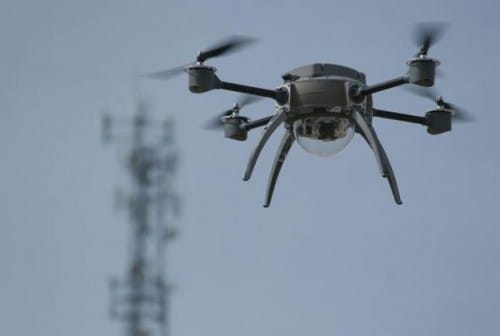
For most, the term 'drone' has come to reflect a dangerous and abused weapon of war capable of targeting enemies from above. The politically charged debate on drone policy has seen a transformation in the last year, however, as the potential for drones to occupy the airspace at home moves to the forefront of the national dialogue.
As with most controversial issues today, the rhetoric surrounding unmanned aerial vehicles (UAVs), or drones, is no longer about the merits and risks involved with the technology. Oversimplification in the media is reflected in the blatant misunderstandings of the reality of drone use domestically.
Instead of talking to each other, proponents and opponents involved are talking at each other, failing to recognize the implications of introducing drones into the U.S. airspace on all aspects of society.
Even the repetition of the word drone, a term that has been buried under the guise of war and death, has distorted the complexities of creating meaningful drone policy, Daniel Rothenberg, professor of practice at the School of Politics and Global Studies at Arizona State University, argues.
"This is why there is an ongoing effort to shift the language of the debate by replacing the popular term 'drone' with one of a number of arguably more accurate -- and less politically loaded -- alternatives including unmanned aerial vehicle (UAV), remotely piloted vehicle (RPV), or remotely piloted aircraft (RPA). Still, 'drone' remains the default term and will be for the foreseeable future," he wrote in a feature for the Future Tense project.
The debate over drone technology and its application in agriculture, wildlife preservation, and law enforcement efforts is multifaceted, consisting of a wide range of nuances differentiating it from the technology's militarized role.
Emerging from the dialogue are rational perspectives, informed advocates, and trained experts engaging in meaningful discussions on the domestic and commercial use of drones, some of whom were invited to join IVN for a tweet chat on drone policy.
The emergence of drone technology within our borders raises an array of concerns because as with most new technology, we are scared of the unknown. Privacy concerns, for instance, have taken center stage. Opponents see gross abuse by law enforcement and individuals owning private drones as a key risk.
"Like most technologies finding the balance between maximizing the benefits of the capabilities and personal privacy will be key," said Steve Howell, Director of American Institute of Aeronautics and Astronautics (AIAA) Public Policy.
A less reported risk, adds Parker Higgens, an activist at the Electronic Frontier Foundation (EFF), is security vulnerabilities in drone software, which is something people should keep in mind when shaping policy.
When asked what regulations should be put in place, Konstantin Kakaes, Bernard Schwartz fellow at the New America Foundation, warned against a "one size fits all" approach.
https://twitter.com/kkakaes/status/332656769040019457
These inherent risks, however, should not undermine the potential for growth, argued MIT Associate Professor of Aeronautics and Astronautics Missy Cummings, citing job creation and efficiency as driving factors in the push for increased use and manufacturing.
https://twitter.com/missy_cummings/status/332650010846056448
"It's because where the technology comes from. Most people's first introduction to drones wasn't exactly heartwarming," Matthew Schroyer, founder of DroneJournalism.org, said.
While there were disagreements throughout the chat, it ended with a general consensus: In order to create meaningful drone policy, education, transparency, and conversations like these are key.