
California Legislation Addresses Medical Marijuana Throughout State

 Blake Bunch
Credit: cpapracticeadvisor.com
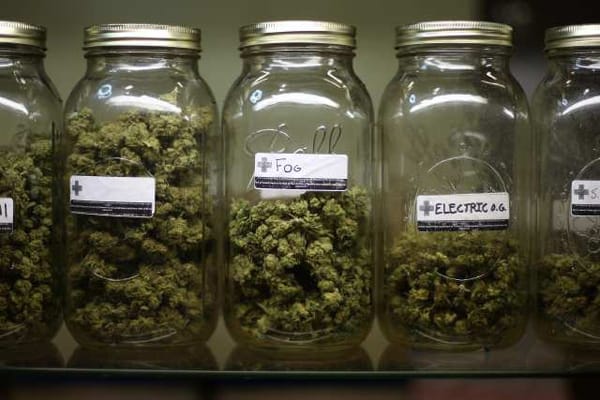
This week, the Supreme Court of California is tasked with making a decision regarding the functionality of medical marijuana dispensaries throughout the state. The court will hear the case of City of Riverside v. Inland Empire Patient's Health and Wellness Center, which should prove a major catalyst in formulating marijuana regulations.
A new bill, AB 473, introduced by Assemblyman Tom Ammiano (D-San Francisco), aims to formulate concrete legislation to which all counties would adhere.
“We thought it was time to implement some standardization around the regulation of medical marijuana,” Ammiano said. “It will protect patient rights and it will give communities clear guidance.”
Ammiano's legislation sets guidelines for what is deemed a "legal" or "illegal" sale of marijuana, but will require a fee schedule by January 1, 2014.
According to a recent Press-Enterprise article, both Riverside and San Bernardino counties prohibit medical marijuana dispensaries. Hemet, Norco, Redlands, San Bernardino, Corona, Murrieta, Temecula, Moreno Valley, and Riverside counties also currently forbid the "storefront sale" of marijuana.
Inland counties are not the only counties in southern California garnering federal attention, as DEA operations recently forced the closure of a marijuana dispensary in downtown San Diego.
San Diego Mayor Bob Filner was "outraged" over the raid on a downtown medical marijuana collective on April 23. The federal action occurred exactly one day after Filner and San Diego City Council had discussed possibilities for dispensary regulation in the county.
“For the sheriff and the DEA to raid a legal dispensary, at this point in time. It just seems to be provocative, it seems to be trying to intimidate people," said Filner at a recent press conference.

Since the end of winter, this has been the state of affairs for medical marijuana dispensaries in Southern California. Though individual counties may allow for dispensaries, collectives, or "wellness centers" to remain operational, federal law still mandates that they are illegal.
The last time California collectively formulated a plan regarding medical marijuana was the Compassionate Use Act in November 1996. Also known as Proposition 215, the law allows those with medical conditions -- with a doctor's prescription -- the ability to legally cultivate and ingest marijuana.
Though President Obama promised to cease Bush-era raids on medical marijuana dispensaries in California, there has not been a reversal in trends. According to a NY Times article from 2012, throughout an eight month period over five hundred dispensaries were forced to close their doors.
With the court's ruling of City of Riverside v. Inland Empire Patient's Health and Wellness Center, California could move in the direction of states like Colorado and Washington state, where recreational use is legal, or clamp down harder on the sale of medical marijuana. Regardless of how this plays out, medical marijuana advocates are likely to continue their push for more lenient regulations in the state of California.
You Might Also Like


