Finance Clause Cripples Arizona Open Primary Initiative

 Kymberly Bays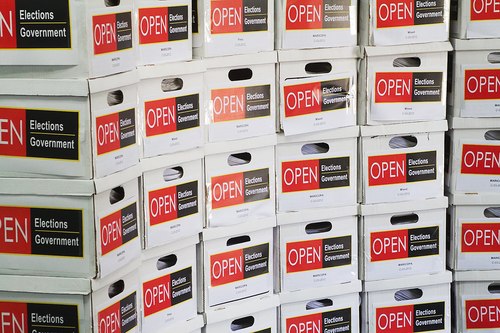
For an Arizona group looking to transition their state to an open primary system, a current court battle over election law may serve as a speed bump towards a long-term electoral solution.
Superior Court Judge Mark Brain ruled the Open Elections/Open Government Act violates the state's one subject constitutional amendment rule and is ineligible to appear on the November ballot.
The Open Elections/Open Government Act aims to institute a top-two open primary scheme in Arizona to replace partisan primary elections. Earlier this year the Open Government Committee announced the coordinated collection of over 300,000 signatures, well over the amount needed to qualify for the November ballot. Organizers were preparing to raise nearly $2 million for a fall campaign push.
In addition, the act states:
"Political parties may establish such procedures as they see fit to elect party officers, endorse or support candidates, or otherwise participate in all elections, but no such procedures shall be paid for or subsidized using public funds."
The language above has come under scrutiny by political parties concerned with protecting their First Amendment rights.
The specific provision did not appear in initial drafts of the measure modeled after California's own open primary ballot measure, Proposition 14. The original section restated the First Amendment rights of political parties and did not mention funding, until late June 2011 revisions added, "but no such procedures shall be paid for or subsidized using public funds."
The addition is problematic given the state's "one subject rule", which states that constitutional amendment proposals must have one subject to avoid "log-rolling", or forcing citizens to vote for something they otherwise wouldn't simply because the two proposals are attached.
On Monday, the Judge Brain ruled the issues of open primary and political party funding were separate and thus violated the Separate Amendment Rule.

"[T]here is no good reason that a vote for or against that topic should be bundled with a vote on an open primary," wrote Brain.
The ruling does not spell good news for Arizona open primary advocates in the immediate short term. While disappointed, organizers plan on appealing the ruling to the Arizona Supreme Court.
"We think we have a very good claim, a very good reason as to why that was essential,'' Paul Johnson, chairman of the Open Government Committee told the East Valley Tribune on Monday. "We'll make that case to the upper court.''
Other organizers of the Open Elections/Open Government Act are not so optimistic, sighting the challenged provision as inherently "problematic" and a "poison pill".
"It's going to be a camel race out here and the camel is short on water," said committee member Ted Downing. "That doesn't mean the drive for a new election scheme is over."
Instead, if the initiative is blocked from the ballot, organizers will continue advocating for a change to Arizona elections, including more voter education and mobilizing a growing independent majority.
Independent voters now make up over 32% of registered voters, according to Arizona's Secretary of State. They are the second-largest bloc of voters, outnumbering Democrats and currently gaining on Republicans. Despite their numbers, Arizona independent voters are disadvantaged in partisan primaries and currently have no representation in state government.
You Might Also Like