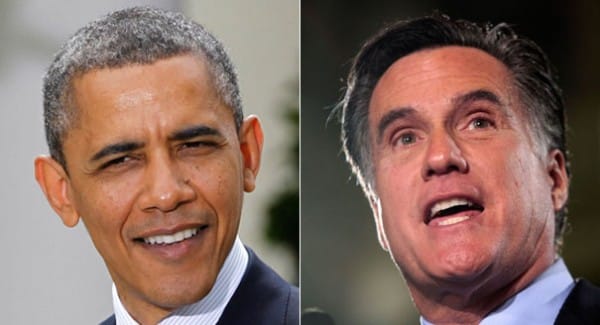
Since John F. Kennedy was elected in 1960, no presidential candidate was ever elected straight from Congress to the White House until Barack Obama in 2008. In the intervening time, men became president from either the vice presidency (Lyndon Johnson, Richard Nixon, Gerald Ford, and George H. W. Bush) or governors' mansions (Jimmy Carter, Ronald Reagan, Bill Clinton, and George W. Bush).
The appeal of governors to the presidency is easy to see. Like the president, a governor is an executive and a person in charge. Plus, coming from state government, a governor can claim to be an outsider. It is both as a business executive and a state executive that Mitt Romney is making his case for the presidency against an incumbent who came into office through the legislature and has at times appeared muddled in his decision-making.
Yet this appeal is short-sighted. While a governor assuming the presidency seems natural it has produced mixed results and arguably works to undermine its appeal.
While every president has his own agenda it is foreign policy where he has the most influence in actually shaping policy. But rare is the president who comes into office with foreign policy credentials. In the last fifty years only Nixon, and possibly George H. W. Bush, could remotely be considered foreign policy mavens upon entry to office. Governors, while they have electoral appeal as executives and decision-makers, typically do not have the necessary knowledge having mostly been consumed by state affairs. Foreign policy simply does not come up for governors.
But is it troublesome, then, that the aspect in which the president has the most influence is the one where he is also the least experienced?
People forget that when George W. Bush became president he was a novice at foreign policy. To compensate this obvious shortcoming he picked former secretary of defense, Dick Cheney, as his vice president. When the terrorist attacks of September 11, 2001 occurred, the Bush presidency was transformed from domestic in nature to one dominated by foreign policy. Was it not a little suspicious when a president who seemed uninterested in foreign policy, and famously could not remember the names of world leaders, suddenly became an expert in the intricacies of Islam and political terrorism?
Herein lies the rub. Governors appeal to voters by presenting themselves as outsiders, but in order to operate in Washington these outsiders are bound to surround themselves with insiders who have more practical experience and knowledge thereby undermining their appeal as outsiders in the first place. It's the reason "outsiders" Ronald Reagan, Bill Clinton, and George W. Bush respectively selected George H. W. Bush, Al Gore, and Dick Cheney as vice presidents. These VPs served as an assurance that the "outsider" can effectively work in and achieve his policy goals in Washington, but the end result has meant that whatever "outsider-ness" a governor brings is overwhelmed by the insiders he is likely to rely upon.
In the case of Bush-Cheney, the subordinate was in reality a proponent of expanded presidential power. This enabled a lethal combination: a novice at the top was guided by a power-wielding Machiavellian for whom a willingness to use force was equated with foreign policy maturity.
Look at Mitt Romney today. Romney is so ignorant about foreign policy that anyone who takes five minutes to examine his statements will discover they are misguided, ridiculous, and dangerous. And still millions of Americans are ready to make him the most powerful person in the world. Yet as president what is he more likely to accomplish, the repeal of ObamaCare without a Republican Senate majority or berating Russia as America's "number one geostrategic threat"?
Over at The American Conservative, columnist Daniel Larison summed up not only Romney's, but many state officials' weaknesses after the presumptive GOP nominee's fundraiser at Cheney's house:
"Romney's foreign policy advisers are drawn heavily from the last administration. That is the normal practice for all inexperienced governors and ex-governors, but the problem is that the foreign policy of the administration to which these advisers belonged was mostly a disaster."
This should be unsurprising. In the GOP foreign policy establishment there are few options for advisers. Many realists from the old school (Brent Scowcroft, Henry Kissinger, Colin Powell) are all either too feeble or out of favor with the party. During the last administration nearly all dissenting viewpoints were purged to the point that only unilateralists and neoconservatives had a voice. This is the well from which Romney draws his advisers.
With this paradigm in place much is likely to remain the same. Unless a candidate has a firm set of principles, the crop of available advisers, with all of their flawed judgments and presuppositions, will inevitably guide him. Frameworks such as these assure that governors can produce little to alter the status quo in foreign policy.