A Conservative Endorsement of Proposition 36
By Grover Norquist on 10/23/2012 in Prisons, Proposition 36, Taxes with 13 CommentsRead Time: 4 - 6 minutes
Credit: kqed.org
One of the few things that government in America should do is punish those who initiate force or fraud against others. The judicial system and our prisons are paid for with tax dollars and run like a government monopoly. While we demand that government be very tough on crime, Reagan Conservatives know that anything run by the government should be carefully watched. Government tends to grow and to expand its power driven by its own needs and wants.
For too long conservatives have failed to focus on the growing costs of prisons and the judicial system. Our skepticism of government promises and our usual demand to look at both costs and benefits was set aside in our understandable anger at crime and criminals. We can no longer afford to look away from growing costs and failure.
On a good day, conservatives are the champions of accountable and effective leadership, defenders of American liberty, and whistleblowers on government waste. Many organizations have noted that, perhaps more than any other area of government, the criminal justice arena is starved for conservative ideas—ideas for reducing crime, restoring victims, reforming offenders, and lowering costs.
This November, conservatives will have the opportunity to put these ideas into action by voting in favor of Proposition 36—a wise and temperate solution to the problems that have plagued the application of California’s “Three Strikes” sentencing law.
For the most part, the Three Strikes Law is a wonderful tool for protecting the public from violent and serious criminals whose very freedom poses a continuing threat to our safety. But the Three Strikes Law has also been applied in a very overbroad and inefficient way that actually threatens public safety and wastes enormous resources for no reason. It needs to be adjusted and Proposition 36 offers a common sense conservative adjustment that maintains all the value of the Three Strikes Law but eliminates its unintended and miscalculated applications.
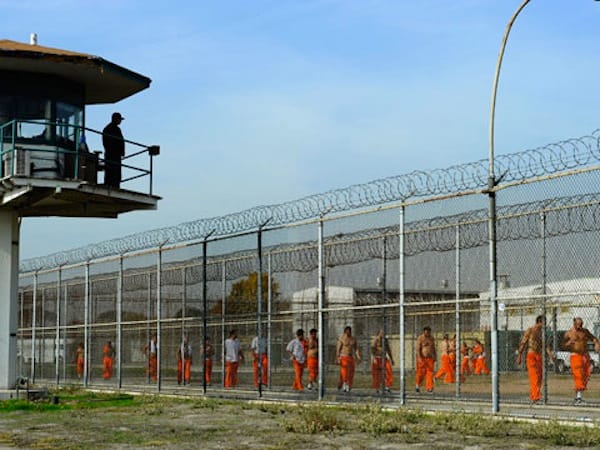
California’s prison system is the costliest, most overcrowded in the county. Rightly or wrongly, the state is being forced by Supreme Court to release inmates early because conditions are deemed inhumane. Which prisoners will be released? As long as the current Three Strikes Law is in place, the State is precluded from releasing many inmates who are serving life sentences for crimes as minor as shoplifting a pair of shoes or stealing a loaf of bread. This means that far more dangerous inmates will be released instead. This is absurd. Proposition 36 will remedy this and allow the States to keep the most serious criminals in prison.
According to the Legislative Analyst’s Office Proposition 36 will also save California taxpayers at least $5 billion over the next twenty years to house inmates sentenced to under the Three Strikes law for nonviolent crimes. Under current law, the state must continue to incarcerate these inmates, and cover their medical costs which will escalate as they age, even though the state’s own crime assessment models say that these nonviolent Three Strikes prisoners are among the least likely to reoffend if released from prison.
In other words, dangerous criminals are being released early, and the costliest, least dangerous offenders remain behind bars. This is big government at its worst.
Prop. 36 was drafted by the Republican District Attorney from Los Angeles, Steve Cooley, and Stanford law professors to ensure that the most dangerous criminals are kept behind bars and that punishments are fairly and consistently meted out. Experience shows that it works. USC Annenberg has reported that counties that have voluntarily implemented the reforms in Proposition 36 have experienced no increases in crime. That’s why the state’s most prominent prosecutors, police chiefs, and criminal justice experts support the reform.
Make no mistake; Proposition 36 is tough on crime. Repeat offenders of serious and violent crimes will continue to get life in prison, as they should. And repeat offenders of nonviolent crimes will continue to get double the ordinary prison term for their crimes, as they should. And aging prisoners who are currently serving life sentences for nonviolent crimes will not receive shorter sentences unless a judge determines that they are no longer a threat to the community.
Proposition 36 also includes other common sense safety provisions to make sure that no truly dangerous criminals, like rapists, murders, or child molesters, can receive any benefit of the initiative, no matter how minor their third offense.
It is unjust and foolhardy to waste precious prison resources on nonviolent individuals who pose no criminal threat to our communities (while releasing violent criminals). These nonviolent offenders should be punished—but conservatives should insist the punishments are fair, effective and efficient. Proposition 36 is a reform all conservatives can and should support.


Leave Your Comment →
13 Comments
Chad Peace
10.23.2012
@Chad_Peace
I should be more up to speed on proposition 36. The prison system is surely an area that is ripe for reform. But so does the judicial system. What are the implications of the measure on a judicial system that is severely overburdened right now?
Jane Susskind
10.23.2012
@jsusskind
I think this is something that should be evaluated when considering Prop 36. On paper, it seems logical to release non-violent offenders, but the process through which they are released is also costly. A study on the effect this will have on the judicial system should be included in the analysis of this initiative.
Jane Susskind
10.23.2012
@jsusskind
This is the type fo dialogue we should be having about Prop 36. A very convincing argument, backed up with statistics, facts, and reports released by Legislative Analyst’s Office and other research groups who are familiar with the Three Strikes law. While reforming the Three Strikes law seems convincing, however, I’m curios to see the cost of the appeals process for these criminals. Prop 36 would allow criminals whose legal appeals were already denied to ask another judge to re-evaluate their case. I am also curious as to what happens to these criminals after they are released. Are they put on parole? Voters already voted AGAINST reforming the Three Strikes law in CA in 2004, 10 years after it was passed. It will be interesting to see how CA voters react, now that 8 years have passed and new studies have been conducted on the crime rates in CA and the risk of these criminals being released.
Matt Metzner
10.23.2012
@mmetzner
Aside from the cost savings associated with Prop 36, the current three strikes law takes discretion out of the hands of judges and forces more inmates into the system. No two cases are similar when multiple crimes are involved. Voting in a sweeping law binding criminal punishment to a particular format was foolish in the first place. Great argument for Prop 36.
Terri Harel
10.23.2012
@tlharel
We should consider anything that reforms our prison system, especially in California where overcrowding is a huge issue. Not only is it costly, but it is also a societal tragedy. More money should be invested in rehabilitation and reentry programs, which is why I think tracking realignment carefully will be important in the next few years. Initiatives like 36 will also be important in making long-term, long-last reform possible.
Frank Courser
10.23.2012
@user1910
Many have two sides to their ideology,and this is one area where both sides can agree. It is fiscally conservative and liberal in it’s fairness. It is an area where we can cut spending and bring fairness and justice to our criminal justice system. Let’s find more! YES on 36
Alex Gauthier
10.23.2012
@alexg
glad to see the two sides can at least agree on something
Lucas Eaves
10.23.2012
@lucaseaves
The prison situation in the US should be way more discussed by politicians. 1 in 4 prisoners in the world is in the US. This prop 36, after reading this article makes total sense and I hope it passes.
Mike Foster
10.23.2012
@fosterca
I do wonder how many prisoners there really are in China. A huge number are either executed or simply unaccounted for.
Johnny Ritchie
10.23.2012
I would not agree to anything Norquist endorses. His cult has hurt our country 1000 times over vs what is good for the people of America during a Great Recession.
Blaz Gutierrez
10.24.2012
@blazgutierrez
Johnny, I have to say that this type of shut-the-door discourse is not helpful. Even if you think that Norquist takes an extreme position on certain measures (I assume you mean his positions on taxes, but I’m not sure). What would be more helpful is if you offer a counter-argument against the points that the author has raised and not a counter-argument against the author.
What’s your opinion on Prop 36?
emil shue
10.24.2012
There are a couple of problems with Norquist’s examination of this proposition. First, conceding the cost issue without at least mentioning the cause of those exorbitant costs, is a bit too white flag for me. Liberals are not great fans of accountability or punishment, which translates to disfavoring such things as new prison construction, the death penalty, and incarceration in general. Their primary method of combating these things is to make them cost prohibitive. The reason we lack adequate prison and jail facilities, and endure an untimely, unwieldy capital punishment system, is that the people who oppose their use have made them much more expensive and time consuming than is necessary to insure adequate amenities and a fair and just outcome. To let them win the cost argument, rather than change the unreasonable standards and regulations that lead to those costs, seems to be a timorous approach which sacrifices public safety.
His next mistake is to cite a single MS case for the overblown proposition that there are thousands of convicts serving undeserved life sentences for petty crimes. For accurate data on this issue, each and every 3 strike lifer’s case would have to be individually reviewed to determine whether or not justice had been done. If such a program were undertaken, liberals would be hard pressed to find any indisputable poster persons to buttress their favorite pseudo argument.
Most of the 3 strikers would qualify for life sentences under the changes that 36 would enact. For those that on the surface would not qualify under 36, a large segment should. There are many legitimate reasons for extensive incarceration of offenders for what some would argue were minor crimes. Al Capone is one historic example. How much more death and misery would he have caused if the tax statutes had mandated probation or a few months in jail? There are a surprising number of “Capones” in CA, dangerous, career criminals who thwart prosecution for their major crimes, and are convicted only on their lesser violations. The key to a successful criminal justice system is to elect fair and reasonable prosecutors and give them the discretionary tools to combat serious criminals, not simply reduce punishment because it costs money.
Once again you have touched upon a subject that stimulates discussion. The previously expressed opinions aside, Prop 36 is not an unreasonable attempt to streamline and improve the quality of justice. I probably won’t vote for it, but will not be distressed if it passes. My primary concern about this line of thinking is that it will be used to support the discredited liberal concept that excessive punishment is one of our criminal justice system’s biggest problems. The truth is the exact opposite. Rehabilitation services should be made available to the extent fiscally possible, but only as an adjunct to the proper sentence, not as a substitute for it.
Monty
11.04.2012
I’m amazed at the analysis. I agree with segments of the conclusion. Very fiscally responsible points raised.