California Proposition 34: Death Penalty Repeal Initiative
By Bob Morris | 10/05/2012 | Ballot Initiatives, California, Featured | 19 Comments
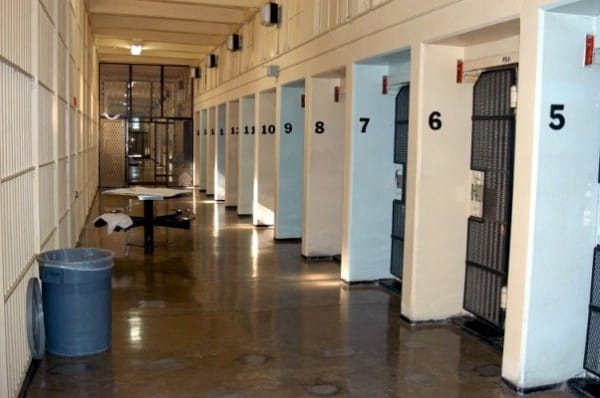
San Quentin death row. Credit: vote29.com
Should those convicted of murder in California continue to be executed or should they given life imprisonment without possibility of parole? Proponents of Prop 34 favor repealing the death penalty. Opponents favor keeping it. The California Proposition 34 death penalty repeal initiative is one of the most visible and controversial propositions on the ballot in November.
In addition to strongly-held views about the death penalty, much of the controversy centers on whether it costs the State of California less to house these inmates for life than it does to execute them, given often lengthy and expensive death penalty appeals. The non-partisan Legislative Analyst’s Office says repealing the death penalty will save about $100 million a year at first and $130 million a year thereafter. Perhaps not unsurprisingly, the Yes on 34 campaign agrees with this estimate. The No on 34 campaign strongly disagrees, saying the data is biased.
- Repeals death penalty as maximum punishment for persons found guilty of murder and replaces it with life imprisonment without possibility of parole.
- Applies retroactively to persons already sentenced to death.
- States that persons found guilty of murder must work while in prison as prescribed by the Department of Corrections and Rehabilitation, with their wages subject to deductions to be applied to any victim restitution fines or orders against them.
- Directs $100 million to law enforcement agencies for investigations of homicide and rape cases.
Prop 34 is retroactive. If passed, then approximately 725 California inmates currently on death row would be re-sentenced to life without parole. They are currently housed in single occupancy cells under special security and are usually handcuffed and escorted by one or two officers when outside their cells. With no death penalty, they would presumably be put back into the general prison population. Some of the estimated savings, $100 million total, would go to law enforcement for use in rape and murder cases.
No on 34 say “Mend it, don’t end it.” They favor adopting a single drug for executions because of continual appeals claiming the current 3-drug method is unconstitutional. They also want to fix the appeals process by constitutional amendment to speed it up, thus cutting costs and saving time.
Yes on 34 agrees that the death penalty in California is broken and advocate ending it. Those given the death penalty receive extra protections guaranteed by the US Constitution and backed by the US Supreme Court. Those receiving life without parole do not get the extra protections, which simplifies and speeds up trial and appeals.
Prop 34 is a hot button, highly emotional issue. Voters should read what both sides have to say.


Leave Your Comment →
19 Comments
Jane Susskind
10.05.2012
@jsusskind
great rundown of Prop 34! I think voters should spend some extra time looking into both sides of this however. The “No on Prop 34″ campaign is not arguing that there should be no death penalty…they are arguing that the current process should be mended. I’m pretty strongly against the death penalty on moral grounds, so think it should be eliminated, not “mended” but still, this is an interesting distinction to make.
Bob Morris
10.05.2012
@Bob_Morris
I think this initiative probably has less undecideds than others, because most have already made their minds up about the death penalty
Matt Metzner
10.05.2012
@mmetzner
I remember reading a few years ago the time a prisoner would have to be incarcerated for to equal the cost of execution and the result was approximately 200 years. Aside from any moral arguments, the death penalty is very expensive for California.
Chad Peace
10.05.2012
@Chad_Peace
For purely economic reasons the death penalty just doesn’t make sense.
dudleysharp
11.02.2012
@dudleysharp
How do you knw?
Lucas Eaves
10.05.2012
@lucaseaves
I am against death penalty on moral grounds but I think the proponents of the YES are doing an intelligent campaign by highlighting the costs. Even someone who is in favor of death penalty might not think its it worth all that money and might vote in favour of the proposition.
dudleysharp
11.02.2012
@dudleysharp
IF
If it is more expensive.
Blaz Gutierrez
10.05.2012
@blazgutierrez
I’ve made this point before in other posts, but I think it’s worth repeating, just because it shows the stagecraft that’s involved with drafting these propositions.
1. The proposition restates existing law on working and paying into a victim’s relief fund. A recent LA Times poll showed that among likely voters the measure would handily fail if not for that provision. This to me seems to indicate that voters are considerate of victims, however…
2. The proposition isn’t victim friendly. It doesn’t provide anything to the victim compensation fund. The proposition provides funds to law enforcement to investigate past homicides, which is a very limited form of relief.
I have every intention of voting in favor of the death penalty repeal. It’s morally and economically nonsensical. I just think the way these propositions is drafted is interesting.
Michael Higham
10.05.2012
@michaelhigham
This is really hard issue to discuss without emotions running high. I like that the NO campaign is at least looking to change the death penalty but you will still hear the “state-sponsored murder” argument. I wonder if the YES campaign has brought up mistaken deaths from the death penalty.
Cassidy Noblejas Bartolomei
10.05.2012
@cassidynb
Would an initiative that aimed to change the death penalty laws by giving those who would be on death row a choice between imprisonment for life without parole or execution ever have any success?
Ian Dawes
10.05.2012
@iandawes
@cassidynb Given the choice to remain on death row or life without parole, I think many prisoners might side with life.
Cassidy Noblejas Bartolomei
10.05.2012
@cassidynb
@iandawes That’s what all the experiences of your life would lead you to assume, but I can’t claim to know if it is likely or unlikely. I just think it may be an interesting way to have the pro-death penalty/ anti-death penalty camps meet in the middle, while involving the interest of the criminal, who, despite whatever crime they committed, may deserve to make this difficult choice themselves…
Bob Morris
10.05.2012
@Bob_Morris
I dunno, if “I turned 21 in prison doing live without parole”, a quick death might seems preferable to dying in prison 60 years later. Or not. The US has much harsher sentences than many European and Latin American countries, some of whom have abolished the life sentences and most of which to do not have 30-40 years sentences for anything.
Alex Gauthier
10.06.2012
@alexg
Really surprising just how much money this prop could save California
Cat Burke
10.07.2012
@Cat Burke
Even more surprising, how many MURDERERS will be released!
Bob Horner
10.18.2012
@Bob Horner
NOBODY will be released. The proposition converts all death sentences to life without parole. LWOP means what it says: the murderer will die in prison.
dudleysharp
11.02.2012
@dudleysharp
It may save none or may cost more.
Martin Aroian
10.10.2012
There are as many reasons to support the death penalty as there are to support ending it. The irony is that if someone is sentenced to death or to life without parole, either way they die in prison. It costs a lot more to actively kill them and it will always beg the question about the morality of it. But one question I have with respect to government and the death penalty that seems to never get asked is driving me: Why, when there the one thing the average citizen agrees on, regardless of party, is that the government cannot be trusted and isn’t respected as efficient, why would we entrust it with the power to kill our citizens?
Mitchell Zimmerman
10.17.2012
The 300th person was recently exonerated by DNA evidence. He had falsely confessed to a crime he didn’t commit, because the police are so effective at getting people to confess — even innocent people! In other cases, eyewitnesses were simply mistaken (or had been manipulated by the police). How many people have been imprisoned and condemned to death, based on similar mistaken evidence, in cases in which there just is no DNA evidence to exonerate them? In addition to this fundamental point, there is the obscene expense of the death penalty system. Our state has spent an additional $4 BILLION on its death penalty system, over what life without parole would cost, since 1978. This comes to more than $300 million per execution. Can anyone really believe we could not have made better use of this money? If we’d put one percent of that money into preventing child abuse, we would have prevented so many acts of violence and murder. These are the reasons why people like the former warden at San Quentin and the former DA of LA County — not people considered bleeding heart liberals — support Proposition 34. End this barbaric, racist, tragic, expensive, dangerous practice now!