A Political Marketplace is Developing for Independent Candidates
By J.C. Adamson | 10/04/2012 | Activism, Ballot Access, Elections 2012, Electoral Reform, Featured, Movements | 45 Comments
Credit: politicsplus.org
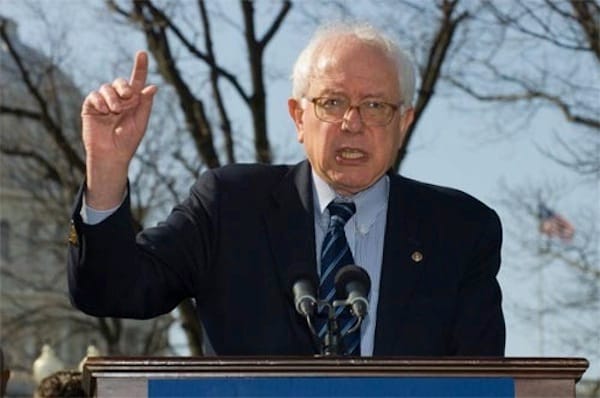
In 2012, at least fifty bona fide independent candidates have run for the US House and Senate. About twenty of those candidates have already withdrawn or been defeated. If half a dozen of the remaining contenders are elected, it would be a remarkable cap to an already extraordinary year for political independents.
Incumbent Bernie Sanders will likely win the Vermont Senate seat, and former Governor Angus King appears to be ahead in the Maine Senate race. Reliable polling for House races is still scarce, but it’s entirely possible that no independents will score House wins.
We’ve been here before. Close to 40% of Americans identify themselves as independent voters, but our Congress is comprised almost entirely of partisans. In recent polls, 90% of voters have said they’re dissatisfied with Congress. Chances are, things won’t change dramatically this year, but a political marketplace is developing for independent candidates.
How Does an Independent Even Get Elected?
In business, statistics that indicate an under-served market lead to the development of products to serve it. The same could be replicated in the political world. But any legitimate independent strategy would have to start with the basics:
- Identify winnable House districts and Senate seats.
- Find and develop electable candidates for those winnable districts
- Create campaign strategies particularly suited to those districts and candidates
- Tactically execute the strategies
1. Winnable Districts & Seats
Longtime House Speaker Tip O’Neill famously taught that “all politics is local.” The adage was true for O’Neill, who spent most of his career as a Democratic leader in the House, and it’s essential for successful independent candidacies.
Independent ‘conspirators’ should identify which of the 435 House districts make victory possible—or even likely—for an independent candidate. A House district that is a safe seat for a Republican running against a Democrat might be anything but safe if a strong independent is added to the mix.
A few possibilities for winnable districts are:
- Geographically compact—a district that lends itself to door-knocking, yard signage and local campaign events
- Significant ethnic or cultural aspects—a large Latino or Jewish population for example, demographics that are becoming increasingly independent.
- Traditionally low voter turnout—a district where voter registration and voter turnout campaigns can have impact
These few ideas are more applicable to House districts than to Senate seats, but are the kinds of characteristics that would make an independent candidacy credible.
2. The Right Candidate
When a potentially winnable district or state has been identified, it must be matched with the right candidate. Some considerations:
- Age, gender and ethnicity—perhaps a young Latina for instance, in a district with significant Hispanic population.
- Popular appeal and name recognition—perhaps a local business leader, or a past city council member
- Appeal across ethnic and cultural lines—a person who has worked successfully in the full community, in previous civic or business efforts
- Eligibility to run under state law—as an independent, and meeting residency requirements
- A fit to local circumstances and issues—perhaps a former G.I. in a military town, or a gay man in a district with significant LGBT population.
Citizens must find a candidate who fits the district. That person might not have gotten up this morning with an ambition to run for Congress—he or she will likely have to be recruited, but the pool is large; the typical House district contains 700,000 people.
3. The Right Strategies
Each campaign will be unique. A winning strategy for a densely populated Manhattan congressional district wouldn’t work in a suburban district in the West, or in a small state with only one congressional representative. Among other things, look at:
- Media opportunities and challenges—in some urban districts, broadcast media may be prohibitively expensive in the early going—but some rural states are dominated by only three or four media markets, and broadcast advertising may be relatively inexpensive.
- Candidate strengths and incumbent weaknesses
- Legal requirements and limitations—typically products of state law
- Existing and potential voter registration and participation
Just as the candidate must fit the district, strategy will need to fit both the district and the candidate.
4. Tactical Execution
Tactics is all about the people—door-knockers, phone-dialers, and the supervisors to lead and motivate them. It’s the ground game and the media game. It’s organization and implementation—logistics, goal-setting and planning. Experience, energy and motivation are essential.
It Starts Early, and Develops Methodically
There is a desperate need for effective politics, the energy, and the political marketplace to implement change, but independent candidates should start early to overcome the institutional hurdles that slow tactical execution. Citizens who want change must find each other now, and begin working together.
*The Author is the founder of GreatReality.com. You can find information on all 2012 independent candidates IndeCan.org.


Leave Your Comment →
45 Comments
Chad Peace
10.04.2012
@Chad_Peace
Any legitimate independent run requires an infrastructure. Hundreds of years of institutionalization has created an enormous advantage for those with a political party: access to ballot, access to media, access to voter files, contact information, sources of funding, name recognition, you name it.
The road for non-partisan candidates is long, but with the internet, there is an opportunity for quick access to traditionally restricted information and an ability to reach voters than no institution can ever match … if the candidate has the right message.
When the absurdity of our political process has been reduced to a shouting match between two parties that beat their chest and proclaim a superior amount of America in their heart compared to the other, there is an increasingly ripe opportunity for someone who doesn’t wear their patriotism on their sleeve to rise above the rhetoric and truly lead.
Jane Susskind
10.04.2012
@jsusskind
I agree with you Chad. With the Internet, independents stand a much better chance going against big money and partisan candidates. The main disadvantage in most independent strategies is a lack of funding. Even if the candidate is better for the district, has the right strategies and follows the 4 steps cited above, money is a huge issue in these campaigns. The internet provides a platform to spread information, target voters, get connected. Independent candidates work twice as hard, and should not be punished bc they don’t have the backing of a party.
Matt Metzner
10.04.2012
@mmetzner
This has been a great year for independents in California. The success of the 2012 candidates should encourage more independents to run in 2014. As the years progress you’ll see better candidates running and utilizing a developing infrastructure. It might be too early to think that independents will have a huge impact on Congress, but after several election cycles they certainly will.
J.C. Adamson
10.04.2012
@themuser
Following up on “great year for indys in CA,” what polling sources are you using there to measure the CA house races involving indys?
Lucas Eaves
10.04.2012
@lucaseaves
A crucial element to have more independent running would be a few independent victories this year that would attract the attention of the media and tell other potential independent candidates that it is possible. But it is a uphill battle and you need to be ready to fight.
Blaz Gutierrez
10.04.2012
@blazgutierrez
I think the point about legal opportunity is the most important foundational requirement for a third party candidate. An independent can’t win if there’s an absolute monopoly held by two political parties. Local election laws need to be reformed in order to make a run viable. Right now third parties are expected to run just for the sake of making a point, not because they expect to actually win. It’s political disenfranchisement.
J.C. Adamson
10.04.2012
@themuser
When citizens shrink from mounting an effort because of ballot laws, money or other limits, the parties win without a contest. Colorado is cited as problematic because an indy candidate has to register as unaffiliated up to 17 months before the election. But 3 indy Congress and several state leg. candidates are on the ballot this year. Citizens who want indy candidates have to work together, learn laws, etc, plan ahead. It can be done.
Michael Higham
10.04.2012
@michaelhigham
Jane and Chad have already said it, but the internet will be an independent candidates number one tool to seek election or make an impact. It’s cost-effective, but I’m not sure how effective online campaigning would be in rural towns. I do agree that the marketplace for independents is growing with partisanship becoming a bigger problem in the eyes of voters.
I see this as a sound strategy guide for effective campaigning for independents. If they were people bound by a party, we could see an explosion of independent success but that is not their nature. Local, close-knit communities could benefit from these guidelines. California is the state to pay attention to this election cycle with all the independents running and the open primary system.
Emma Goda
10.04.2012
@emmagoda
I agree with both Chad, Jane and Michael–the internet is changing how independents are able to been seen and heard now.
J.C. Adamson
10.04.2012
@themuser
Internet creates many opportunities. But House races are won with 60,000 to 125,000 votes. Consistent door-knocking and frequent rallies in parks and community halls, meet-ups, registration drives and things no one has thought of yet can have great impact.
Zachery Abramson
10.04.2012
@zabramso
I think Blaz has a point though, while the internet is a great tool, it still is a limited media. People tune in to what they want to hear. Election reform is going to be a huge hurdle.
J.C. Adamson
10.04.2012
@themuser
Thanks for all the input–everyone. Re election reform: For now, go around that hurdle, not over it. As indys succeed, reform becomes more doable.
Jane Logan
10.04.2012
Need to focus on one key issue-getting the money out of politics.
J.C. Adamson
10.05.2012
@themuser
For thirty years, all efforts to get the money out have failed. Perhaps party dominance has to be defeated first, from the ground up, in one congressional district at a time.
Kevin Hall
10.04.2012
Eliminate congress. Put every proposal up for a referendum vote.
Geoffrey Faubion
10.04.2012
lets not forget Glass steagall measures to prevent banks from looting the public
Johnny Ritchie
10.04.2012
Cash support and a clean record.
Jackie Hayes Skidmore
10.04.2012
Money is what they need Fundraise …they need to tap into the frustrations , Unify for the common good …Leave ego’s out of it. The latter maybe the toughtest of all.
Loren Montgomery
10.04.2012
not classified as an Independent but I too siddatisfied with both the House and Senate. The Repubs have no juevos and the dems have no idea.
Cassidy Noblejas Bartolomei
10.04.2012
Eliminate congress all together, Kevin? How would a referendum vote supplement the US legislative branch?
Bryant Fraser
10.05.2012
FOR PEOPLE TO DO THEIR OWN THINKING AND NOT RELY ON THE PUSH AND PULL OF THE GOVERNMENT DIRECTED MEDIA, VIA POLLS AND OP EDS…AND BAISED NEWS AGENCIES.
Theodore R. Wade Jr.
10.05.2012
The two party system is designed to keep people like us without a voice. We have no choice bur to vote for one of their choices or7 to not be able tp participate. The founding fathers did not create this two party system. It is the creation of big business, the same people that created lobbying (legalized graft to politicians) and the laws that they paid to have passed; loopholes, tax breaks (like Wells Fargo & GE being able to make millions completely tax free), making corporations “people”, and allowing them to pay little in every case, have tax rates of less than 10% while you pay 34% with no loop holes and no voice.
J.C. Adamson
10.05.2012
@themuser
And defeating the 2-party system may be simpler than we realize. Not easy, but simple. Elect enough independents to deny House & Senate majorities to both parties. The changes we need start there.
Ernest Roldan
10.05.2012
Enough with the Obama’s failed policies, it’s time to have a new leader in the Oval Office.
Vote for the Republican party to save this country.
Alex Gauthier
10.05.2012
@alexg
#2 might be the hardest to come by. You can hardly ever find the ‘right’ candidate.
J.C. Adamson
10.05.2012
@themuser
There are 700,000 people in most congressional districts. The right candidates are built, not just found. They are already there as bright, competent leaders, in business, education, local government, non-profits, etc. They will be built collaboratively by involved citizens.
Alex Gauthier
10.15.2012
@alexg
that could be just what the electorate is lacking, collaborative, involved citizens
Jeremiah Warwick
10.05.2012
Regardless of affiliation 48% won’t vote for Romney or Obama. Now if we could direct that it would be an easy win.
Paul Greig
10.05.2012
I believe we are dissatisfied with the inaction of congress!!
Daniel Payne
10.05.2012
We Need A 3RD Party!! For the Right Change For Americans!
J.C. Adamson
10.05.2012
@themuser
Consider electing independents rather than 3rd party. They can come from many ideological perspectives, and only have to agree on unseating Reps & Dems, then changing Congressional rules to distribute power. Also–it begins with Congress, not the presidency.
Shannon Cooper
10.05.2012
Electorial votes will Deside not popular so It most likely bye bye Romney Hello Mr Obama finish off the rest of the country.
Shannon Cooper
10.05.2012
Put me in I Getter Done less than one yr
Edward Theilmann
10.05.2012
The whole political system in the US is broken beyond repair .Time to send it to the scrapyard and build a new one
Dennis Pederson
10.05.2012
Mr. Theilmann is right; the political system at the federal level at least is beyond repair.
We must start thinking about a long term strategy.
Two things come to mind. The first is a protest vote. If even half the dissatisfied voted for an independent or an unlisted write-in, it would be a shot heard ’round the world! If we had the guts to continue that strategy for at least 8 years, something would have to change.
The second is a constitutional amendment eliminating large corporate contributions and Super PAC spending and setting a limit on total campaign spending to something like a million per candidate.
John Weavers
10.05.2012
The laws and procedures put into play over the last 150 years have ensured that our government will remain under the control of the two main parties. We need election reforms.
King Cavalier II
10.05.2012
Censorship or recusion are the choices? Neither will be effective. The problem with 3rd party candidates is that most of them have only a single attractive issue (think Ross Perot or Ron Paul) and then in the crucible of tested ideas their platform becomes only a plank upon which they jump off into the deep water never to be seen or heard from again.
J.C. Adamson
10.05.2012
@themuser
Certainly, 3rd party Pres candidates have tended to be 1-issue. Another huge problem is that a 3rd party Pres couldn’t likely govern if elected, with no congressional party support. Minor party congressional runs are a different matter. But *independent* congressional contenders are more likely to assemble broad enough support to be elected. And if enough indies and minor party candidates can be elected to deny the majority to the Rs and Ds in the House or Senate, the House-Senate rules have to change, along with the dynamics of congressional governance. Right now that would only require 25 House seats or perhaps as few as 3 Senate seats. In 2010, the House swung by 64 seats, so 25 is not unthinkable.
JoAnne L Williams
10.05.2012
“How to Turn Republicans and
Demcorats into Americans,”
JoAnne L Williams
10.05.2012
“Ours is a system focused not on collective problem-solving but on a struggle for power between two private organizations.”
JoAnne L Williams
10.05.2012
Federal Reserve refuses to be audited and no one cares, no one enforces, no one. The Elite, Federal Reserve is a privately owned corperation. The Elite
JoAnne L Williams
10.05.2012
vote for Proposition 14 and against partisan politics
Cathy McMahan
10.05.2012
https://www.facebook.com/ImamuAmaruKhan/posts/3973326699299
Grace Aldridge
10.05.2012
vote for proposition 14
Thomas G. Brown
10.08.2012
@tgbreport
This was a truly great starter article on running for the House as an independent candidate. It’s obvious you have been at this for sometime.