
Photo: Capital Bikeshare
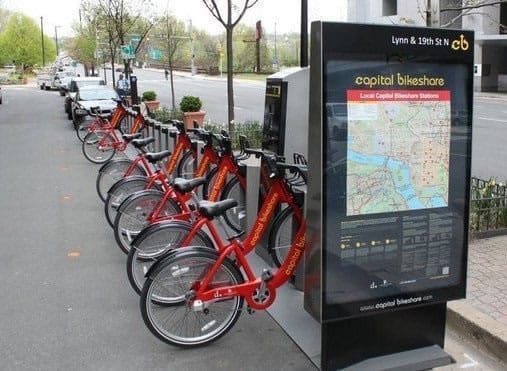
Recent explosions of taxpayer-subsidized bike sharing rental programs are hitting the streets of major US cities such as Chicago, Philadelphia, and Boston. Ranking dubiously low in bicycle commuting and safety, Nashville, TN is the latest city to hop on the “bikewagon.”
According to Nashville Mayor Karl Dean:
“Nashville B-cycle is funded under the Communities Putting Prevention to Work federal grant, which was created to provide greater access to nutritious foods and safe physical activity. The grant is administered by the Metro Public Health Department.“Nashville B-cycle will be managed by the Nashville Downtown Partnership, a private sector nonprofit corporation that focuses on business recruitment and retention, residential and retail development, public space management, access and transportation and communications and marketing.”
B-cycle already operates in more than a dozen cities, and $1.3 million in federal funds will bankroll Nashville’s new program. Set to commence this fall, two hundred bikes will be available for checkout at twenty still to be determined locations for another yet-to-be-determined fee. The most available details on the automated kiosk locations are limited to a vague description of “key destinations and high-density areas in the urban core, all within about a 3-mile radius of downtown [Nashville]” with a same day rental and return policy.
Mayor Dean explained as he geared up for a demonstration on Tuesday, involving a brisk ride around downtown Nashville’s public square in an effort to showcase the bicycles that will be available through the city’s B-cycle program:
“The idea is, if people can use these bikes — whether they’re Nashville residents or visitors to our city — to go destinations not too far off, they can then leave the bike at their destination. They’ll be a charge for that, but it will be relatively minimal fee.”
Alisa Haushalter, bureau director of the Metro Health Department, which is overseeing the project in conjunction with the Nashville Downtown Partnership, also weighed in on the new initiative’s unknown fee structure:
“It’s really just to keep the system maintained and funded, and to generate some revenues to be able to ensure that the bikes are running and to ultimately expand.”
Mayor Dean is utilizing this latest opportunity to continue his efforts as the face of NashVitality, a campaign aimed at promoting healthy, active lifestyles. Dollars for NashVitality stem from the same federal Communities Putting Prevention to Work grant (a creation of the American Recovery and Reinvestment Act of 2009 – commonly referred to as President Obama’s economic “stimulus package”) that made Nashville’s bike-share system possible. The anti-obesity effort even includes a share-the-road safety campaign along with a city bicycle map, The Nashville Groove, which recommends the safest routes.
Metro Public Health Department Director Bill Paul touted the health benefits of Nashville’s bike share program, adding, “The more people see bicycles in Nashville then the more bicycling will be done, the more physical activity, and it’s a healthy thing.”
The lingering question is how healthy will these federally funded programs be for taxpayers’ wallets?
Along with B-cycle, other such programs like Capital Bikeshare already received nearly $16 million in government subsidies. Unlike B-cycle’s health initiatives, Capital Bikeshare’s efforts aim to “address the unique transportation challenges faced by welfare recipients and low-income persons seeking to obtain and maintain employment." Their latest user survey as reported by Reason reveals a hint of irony:
“95 percent of its regular patrons have college degrees, 53 percent have a Masters or Ph.D., and 80 percent are white. Fully 0 percent have only a high school diploma and just 7 percent make less than $25,000 a year. More than 90 percent were employed and 14 percent reported they were college students, suggesting that very few welfare recipients are using the service.”
As Reason’s Kennedy succinctly put it, “Why are affluent, educated, and employed whites riding taxpayer-subsidized bikes?”
http://youtu.be/8rDFBtnotUU