 Chad Peace
A recent Independent Voter News article addressed alarms that the SAVE Act could become a vehicle for banning ranked choice voting nationwide, driven by President Donald Trump’s hostility toward mail voting and RCV and by Republican efforts to attach anti-RCV language to federal legislation.
That concern, outlined on IVN in “Trump Hates Mail Voting & Ranked Choice Voting So Much GOP Adds Bans to SAVE Act”, reflects a broader fear that election reform itself is under threat.
That fear has been amplified by more hyperbolic commentary suggesting Trump could simply cancel elections outright. A recent piece in The Bulwark, “Trump Suggests Canceling 2026 Elections”, treats inflammatory rhetoric as evidence of imminent authoritarian control, rather than political signaling constrained by constitutional law.
What the SAVE Act Actually Does
The Safeguard American Voter Eligibility Act, H.R. 22, amends the National Voter Registration Act to require documentary proof of U.S. citizenship to register for federal elections. It regulates voter eligibility and registration mechanics. It does not regulate ballot design, vote-counting procedures, or electoral systems. There is no language addressing ranked choice voting or any other voting method.
Yes, There Is a Proposed Federal RCV Ban
It is also true that members of Congress have introduced separate legislation that would explicitly ban ranked choice voting in federal elections.
As reported on IVN, main provisions of the SAVE Act were added to the Make Elections Great Again Act, along with bans on universal mail-in voting and alternative voting methods like ranked choice voting. Specifically, the bill bans any voting method that:
- Allows voting for more than one candidate for the same office,
- Allows ranking multiple candidates,
- Reallocates votes from one candidate to another for the same office.
This doesn’t just apply to ranked choice voting, but also includes Approval Voting (which allows people to vote for as many candidates as they want), STAR Voting, and more.
Ballot Access News has also reported that such proposals exist and could theoretically be attached to larger bills like the SAVE Act. That possibility warrants scrutiny, but it does not alter the constitutional limits on federal power.
Why Canceling Elections or Banning RCV Fails Constitutionally
Under the U.S. Constitution, the authority to administer elections is deliberately fragmented. Article I, Section 4, known as the Elections Clause, provides that the “Times, Places and Manner” of congressional elections shall be prescribed by the states, with Congress retaining a limited power to “make or alter” such regulations.
Courts have consistently interpreted this clause to allow Congress to set baseline procedural rules, such as voter eligibility standards or uniform election dates, while preserving state authority over ballot structure and vote-counting methods.
Critically, the Constitution does not grant Congress or the president the power to cancel elections. Federal election dates are fixed by statute, and any attempt to suspend or delay them would require new legislation passed by both chambers of Congress and signed by the president or enacted over a veto.
Even then, such legislation would almost certainly violate constitutional provisions guaranteeing regular elections and representative government, including Article I’s requirement that members of the House be elected every two years and the Seventeenth Amendment’s requirement of popular election of Senators.
Similarly, a federal ban on ranked choice voting would conflict with long-standing judicial precedent recognizing ballot design and vote tabulation as core components of the “manner” of elections reserved to the states. While Congress can regulate access to the ballot and enforce anti-discrimination standards, it has never successfully imposed a nationwide mandate prohibiting a specific vote-counting method.
A categorical ban on RCV, most simply, would never survive legal scrutiny.
Congress can regulate only the procedures needed to enforce electoral uniformity and integrity. But courts have always treated this power as regulatory, not making broad changes to how elections fundamentally work. In fact, it's this same framework that prevents the federal government from imposing any system, such as ranked choice voting.
A federal law that bans ranked choice voting would clearly go beyond procedural regulation into substantive restructuring of how elections are decided, interfering with state control over their own electoral systems and conflicting with the constitutional balance of federal and state authority.
Such a ban would face immediate legal challenges and is unlikely to survive judicial scrutiny precisely because the Constitution does not grant Congress authority to eliminate electoral choice in this way.
The president’s role in this process is even more limited. The executive branch does not administer elections, does not control state election officials, and has no unilateral authority to suspend or alter election laws.
Elections continued throughout the Civil War. They won’t be cancelled now.
A Reality Check on “Cancelled Elections”
In 2024, the Democratic Party eliminated or curtailed competitive presidential primaries in multiple states once President Joseph R. Biden became the presumptive nominee. Voters were left with no meaningful intra-party choice. When Biden later exited the race, party leadership compounded that decision.
Rather than reopening the nominating process or holding a competitive election, Democrats selected Vice President Kamala Harris through internal party mechanisms that bypassed voters entirely.
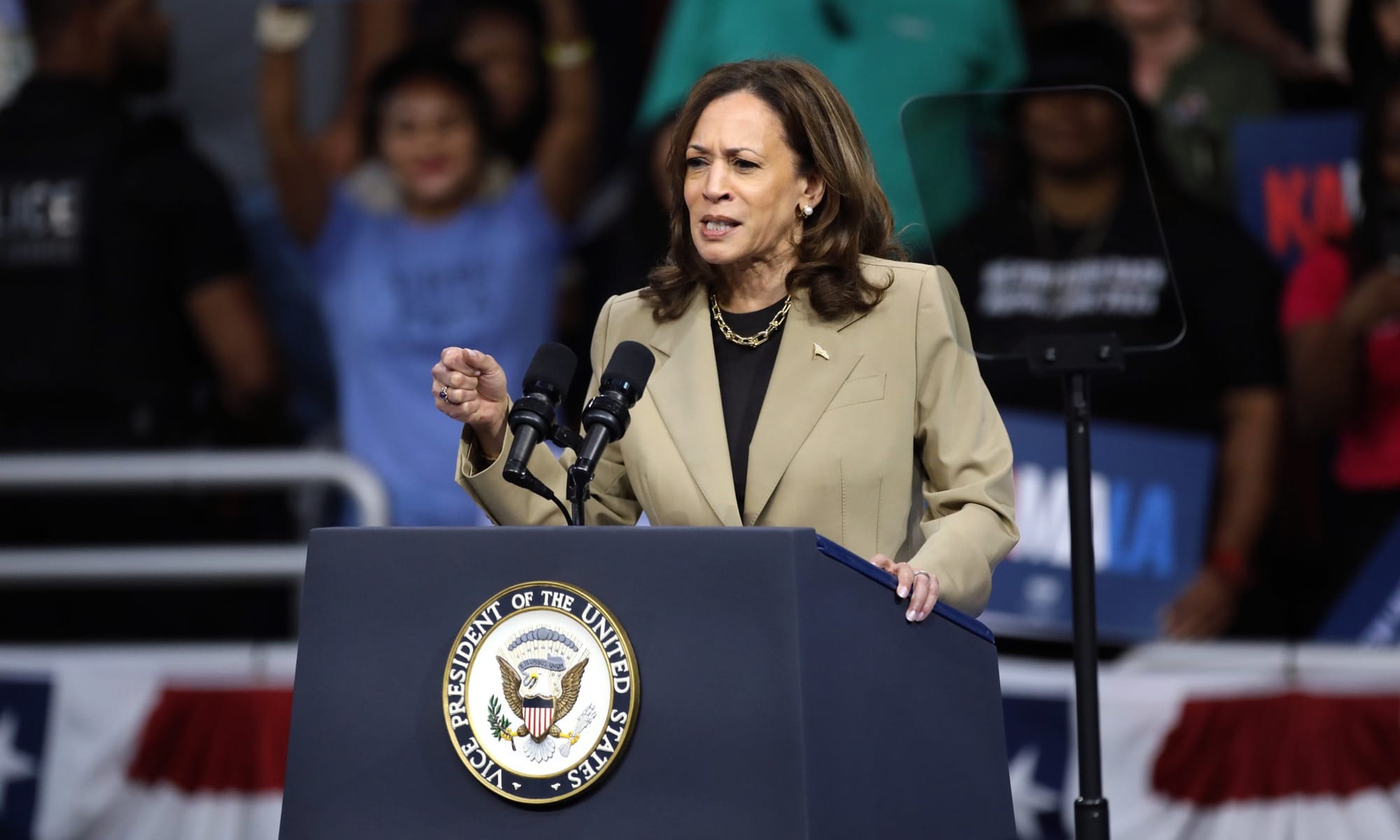
These actions were technically permissible under party rules, but they drew widespread criticism as anti-democratic. As Democratic Erosion notes, the absence of a genuine electoral process amounted to a form of oligarchy by insulating party leadership from voter accountability at a critical moment.
The absence of a real primary contest amounted to a form of disenfranchisement by insulating party leadership from voter accountability. The episode is a reminder that limits on voter choice most often arise from party control, not from unilateral federal action or presidential decree.
Opposition to RCV Is Bipartisan and Strategic
This same institutional incentive explains bipartisan resistance to ranked choice voting.
While it's no secret that Trump and the MAGA base hate ranked choice voting, the Democratic Party leadership has opposed RCV wherever it weakens control over nominations.
California Governor Gavin Newsom’s veto of SB 212 illustrates this dynamic. In his official veto message, Newsom cited voter confusion and ballot length, arguments he later reiterated publicly, as reported by the San Francisco Chronicle.
The Real Limits of Traditional IRV
Ranked choice voting in the United States has most often been implemented using the Instant Runoff Voting (IRV) method. IRV has known limitations that become more pronounced as the number of candidates increases. In cities such as Oakland and San Francisco, crowded municipal races can sometimes produce outcomes where winners lack true majority support among all participating voters. Ballot exhaustion and non-representative outcomes are real concerns with single-round IRV elections.
Why Top-Four and Top-Five Systems with Open Primaries Matter
Dan Howle from Independent Voter Project, and Katherine Gehl from the Institute for Political Innovation have long argued that ranked choice voting may work best when paired with nonpartisan primaries.
A few years before Alaska adopted its Top 4 primary system with ranked choice voting in the general election, Rob Richie from Expand Democracy and Howle made the case for this reform in the San Diego Union-Tribune. This, to the best of our knowledge, is the first time reformers publicly advocated for combining the two reforms.
This is not a theoretical concern. Katherine Gehl and Michael Porter, a former business executive and a Harvard Business School professor respectively, have offered nonpartisan primaries combined with ranked choice voting as the greatest opportunity to disrupt political partisanship.
In their widely cited report, “Why Competition in the Politics Industry Is Failing America”, Gehl and Porter analyze American politics through an economic and systems lens rather than a partisan one. Their central finding is that the two major parties operate as a political monopoly that is structurally insulated from competition, allowing them to prioritize internal incentives over voter outcomes.
According to their research, closed primaries and plurality general elections are the primary mechanisms that protect this monopoly. These systems reward candidates who appeal to narrow, highly partisan electorates and punish those who seek broader consensus. Nonpartisan primaries disrupt this dynamic by forcing candidates to compete for all voters from the outset, not just party loyalists.
Ranked choice voting in the general election then reinforces that competition by requiring candidates to earn majority support rather than simply finishing first in a fragmented field.
Different Ways to Count Ranked Ballots
Instant Runoff Voting (IRV) is the traditional method of counting ranked choice ballots, but is not the only way to count ranked ballots. Condorcet-compatible methods, for example, aim to identify candidates who would win every head-to-head matchup and may better reflect consensus preferences. Organizations such as Better Choices advocate for these consensus-driven approaches. They too, however, introduce different complexities and their own unintended consequences.
Voters Actually Want More Choice
Independents now represent the largest and fastest-growing bloc of voters, yet many remain excluded from primary elections. That dynamic is explained in this short video on independent voters. Polling consistently shows voters want more choices, open primaries, and majority winners, regardless of whether ballots are counted using IRV, Condorcet, or another method.
This demand is reflected in IVN’s reporting, Unite America’s national polling, and multiple California-specific surveys.
Trump Cannot Cancel Elections or Stop Voter from Pursuing More Choice
The SAVE Act does not ban ranked choice voting. Other legislative efforts do exist, but they will not survive any serious constitutional scrutiny. This is the same reason Trump cannot simply “cancel” elections.
Ranked choice voting, particularly when implemented through single-round IRV in crowded elections, can have shortcomings, but studies have shown more positive than negative effects.
Voters, however, are not demanding a specific method of counting ranked choice ballots. They just want more choices and fair outcomes.
Nonpartisan primaries, paired with majority-winner general elections, remain the most legally sound and democratically responsive way to deliver that result.