(Credit: Gage Skidmore)
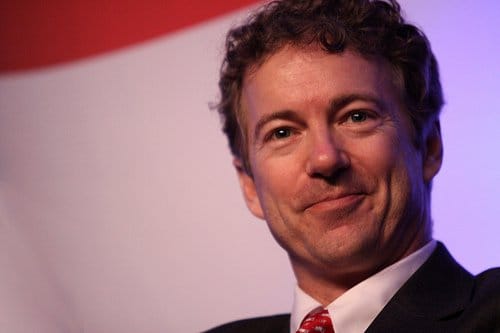
With over two years before any candidates begin announcing for the presidency, Kentucky US Senator Rand Paul is making the fundraising rounds and retrieving a sizable sum.
To top off his numbers, on Monday the Senator also attended a barbecue fundraiser for Republican US Rep. Jeff Duncan in South Carolina, a key primary state. Paul is also scheduled to attend a fundraiser for Iowa Republican governor Terry Branstad next month, the first voting state.
The release of Paul's early 2013 fundraising numbers show that he disclosed raising $1.9 million. This places him in third place among potential 2016 Republican presidential candidates, behind Marco Rubio of Florida and Paul Ryan of Wisconsin. Yet, what makes this fundraising success impressive is that these totals for the first half of 2013 equal what Paul raised in the two previous years of fundraising combined.
Like his father, Ron Paul, Paul has largely received money from individual donors, not corporations. According to the pro-transparency website, Open Secrets, 90% of Paul's contributions have come from individual contributions. 38% of those were small donations of $200 or less. Only 7% came from PACs. However, the nearly $2 million numbers that were just released included his senatorial re-election fund and his PAC.
Paul may be in high fundraising mode because 2016 will be a pivotal year in his political career. Not only will 2016 have a presidential election, but it will also be the end of Paul's first term in the US Senate. However, it presents a dilemma for the Senator: Kentucky law precludes candidates from running for two offices concurrently. Paul will not be allowed to appear on the ballot for re-election to the US Senate and the Republican nomination for president.
If Paul is going to pursue the presidential nomination, he will likely need to be fundraising even more feverishly than he is presently. Altogether in 2012, Ron Paul raised $40 million while fellow challengers Newt Gingrich raised $23 million and Rick Santorum brought in $22 million. Eventual nominee Mitt Romney and President Barack Obama each spent over $1 billion during the general election. For contrast, during his 2010 Senate campaign, Paul spent approximately $8 million.
The freshman Senator has consistently stated that he will not make a decision on 2016 until after the 2014 midterm elections. Money will be a key element of any big political campaign in 2016, but the early Rand Paul fundraising show that he is taking an early initiative to make sure that the funds will be available for his future political plans.