Feds Say Community College Accreditation Commission is Out of Line

 Michael Higham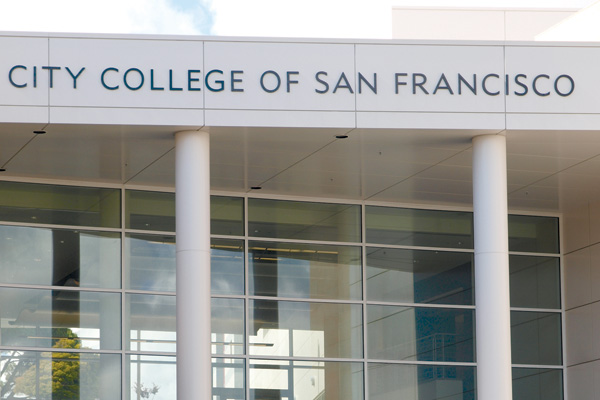
The accreditation crisis taking place at the City College of San Francisco (CCSF) took a turn in favor of campus advocates. The US Department of Education got involved, and sent the Accrediting Commission for Community and Junior Colleges (ACCJC) a notice that it is "out of compliance" with federal regulations.
The ACCJC has forced the CCSF to comply with 14 guidelines within the next year in order to keep its status as an accredited community college. CCSF faced the accreditation problems when its governing board and administration failed to handle its financial accountability and institutional deficiencies.
Losing accreditation means that students' classes would not be recognized by universities and academic certificates would lose value. So, why would students bear the burden of administrative faults? If the campus cannot provide essential student services and handle its finances, then it may not be a place of academic excellence.
Students and teachers have questioned the legitimacy of the ACCJC and its accreditation process and stated that it's not indicative of academic performance. After complaints were filed from several groups, most notably the California Federation of Teachers, the federal government decided to officially question the ACCJC's legitimacy.
Essentially, the ACCJC would lose its own accreditation. In response to the federal government, the ACCJC outlined the four complaints it received:
- Definition of “reasonable representation” of academics and administrators on evaluation teams.
- Added conflict of interest policy language prohibiting spouses of Commission staff or Commissioners from serving on evaluation teams.
- Helping the public and others understand that recommendations provided by the Commission to member institutions stating “in order to improve, the college should take certain actions” are different from recommendations stating “in order to meet the standards, the college should take certain actions.”
- As to the fourth determination that earlier adverse action to terminate accreditation of CCSF was called for, the Commission will give consideration to the Department’s analysis in future reviews of institutions in the Western Region.
Instructors and students such as Kasey Gardner -- chair of the speech department at Los Medanos Community College -- have suggested accreditation should "focus on faculty development, teacher training, overhaul the evaluation process which includes more observations and content review of some curriculum and assignments."
CCSF is the largest community college in California and serves well over 30,000 students every semester. It is still an accredited school, but students and teachers are active in the process of ensuring CCSF stays accredited. It has until July 2014 to meet the ACCJC recommendations for change, unless the federal government supersedes the ACCJC's authority.
You Might Also Like