Accountability Needed for Online Political Participation to Matter

 Jane Susskind
This week, the Internet Association unveiled a redesigned website, equipped with the tools necessary for online political participation in the decision-making process for citizens.
By clicking on the "Leave Your Mark" option under the website's "Take Action" tab, users can add their input on proposed legislation by commenting, editing, or adding suggestions to specific passages of the bill.
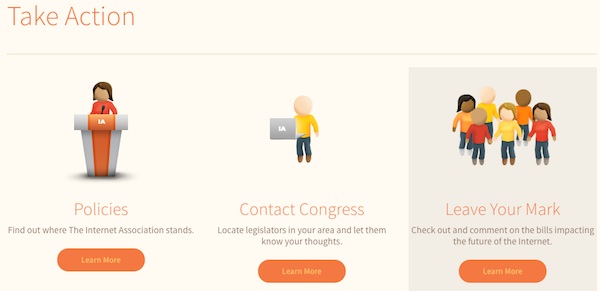 Screenshot from the Internet Association Website, July 18, 2013.
The Internet Association, launched in September 2012, is a trade organization including tech giants such as Google, Facebook, Amazon, and eBay. As the self-proclaimed "unified voice of the Internet economy," the Internet Association's goals range from ensuring Internet freedom, fostering economic growth, and giving users a voice in the legislative process.
"We want to show Congress that the Internet impacts every city, every district, and every state in every economic sector -- from Main Street to rural America. The Internet is not just Silicon Valley," says President & CEO Michael Beckerman.
Their website also provides users with an easily digestible synopsis of the issues of interest to the Internet Association, with categories such as patent reform, global Internet governance, and cyber security.
With the noble goal of creating a "two way conversation…a dialogue," Nika Nour, the Internet Association's digital director, told Mashable that the the organization believes its renovated website will become "a good source for congressional staffers to get the source of information for the issues, and take it back to their boss in an easy to digest way."
The introduction of such a tool, however, raises some important questions applicable to the overarching fight to open up the political process online.
With the growing number of avenues available for engaged citizens to enter the political process online, how do we know if elected officials actually listen? What systems are in place to hold lawmakers accountable to our online chatter -- be it a tweet, a Facebook message, or a comment on the Internet Association's new tool?
Lawmakers pride themselves in their efforts to represent their constituents, their dedication to their democratically-elected positions, and now their responsiveness on social media. But, who is watching over them making sure they dutifully respond to every tweet, read every Facebook message, and take into consideration everyone's comment on proposed legislation?

Ultimately, it is up to the people who call on change, the online users demanding explanation, the users tweeting and messaging their elected officials with questions and demands. Ultimately, it is up to us to hold elected officials accountable to their online promises.
You Might Also Like