Potential Presidential Appointments: Who is Susan Rice?

 Marc Schenker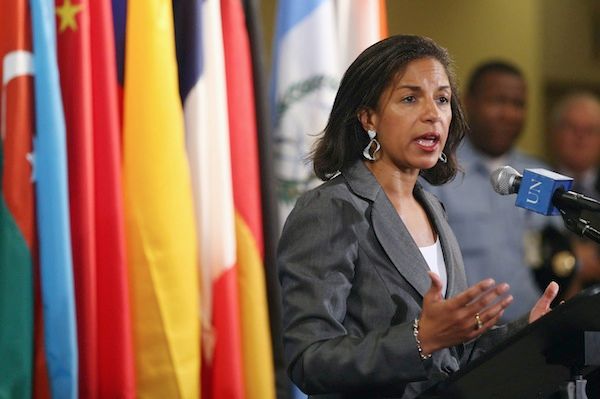
Many Americans associate UN Ambassador Susan Rice with the potential misinformation that she provided about the Benghazi terror attacks on five Sunday talk shows. However, before her recent thrust into national controversy, Rice was a long-serving bureaucrat in the Clinton administration during the 1990s, making her integral to Democrat policies and objectives. Rumored to be a potential candidate as the next Secretary of State, Rice has outraged prominent Republicans like Senator John McCain, who has already pledged to block her potential nomination.
Prior to settling on politics and public policy as her career choice, she was a student at Stanford University, where she was elected to Phi Beta Kappa, an honor society. After graduating from Stanford in 1986 with a B.A. in history, she studied at New College, Oxford, on a Rhodes Scholarship, earning a Doctor of Philosophy in 1990. She married Ian Officer Cameron, an ABC News producer, in 1992.
Long before Benghazi, Rice served in many positions in the Clinton administration. From 1993 to 1997, she served at the National Security Council. From 1993 to 1995, she served as Director for International Organizations and Peacekeeping and, from 1995 to 1997, as Senior Director for African Affairs and Special Assistant to the President.
Her role in the Clinton administration was marked by ups and downs. She had received criticism by prominent figures, including Timothy M. Carney, former Ambassador to Sudan, David Rose, Vanity Fair contributing editor, and Richard Miniter, an investigative journalist. The criticism focused on Rice’s reported central role in rejecting an offer from Sudan to turn over Osama bin Laden to the US in 1996. However, as assistant secretary for African affairs, she developed a detailed and extensive knowledge on Al Qaeda and its African operations, as well as reputation for effective negotiation and communication with other nations.
After George W. Bush came into office in 2001, Rice worked in the private sector; first with Intellibridge, a strategic analysis company, and then with the Brookings Institute in 2002. In 2004, she returned to politics by working as foreign policy advisor to John Kerry’s presidential campaign.
Rice ingratiated herself with then-Senator Barack Obama by working as a foreign policy advisor in the 2008 Obama presidential campaign. After his election, Rice was nominated as UN Ambassador, the position she still holds today. Her possible nomination to Secretary of State, replacing outgoing Secretary Hillary Clinton, is an indication of the high esteem she still holds in the president’s view. Despite the Benghazi controversy, Rice is seen by the president as a reliable choice to replace Clinton because of her years of government service, her Clinton-era post as assistant secretary of state for African Affairs, and her four years as UN ambassador.
You Might Also Like