

Photo: Ariana Weitzman
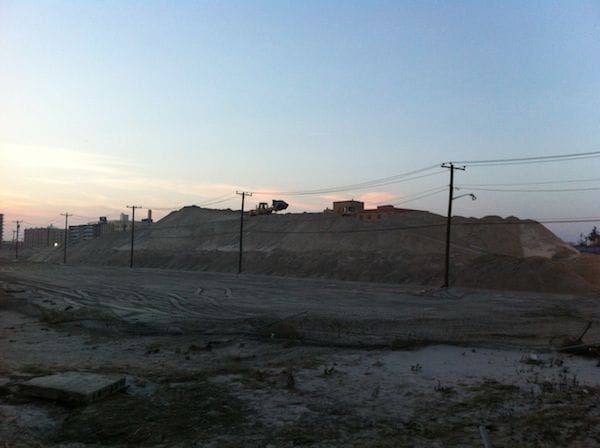
Sand blocks beach view homes on Long Island
Despite forewarned gas and housing shortages, the Federal Emergency Management Agency (FEMA) response to Hurricane Sandy is commended by many as a marked improvement from 2005 Hurricane Katrina efforts. However, the Long Island Power Authority's (LIPA) failure to improve relief services after 2011's Hurricane Irene has received widespread criticism.
Oceanside resident Ariana Weitzman, whose apartment complex was under mandatory evacuation directly after the storm, had a mostly positive experience with FEMA's response to Hurricane Sandy, rating government assistance as "upper adequate to excellent." However, she did note that better coordination and better attention to victims' needs would have been a more effective use of donation money. For instance, the government was providing perishable food to displaced individuals who had nowhere to store it. Shovels, masks, and mold spray would have been much more useful. FEMA quickly offered assistance with ten days worth of hotel costs, but Ariana noted that finding a hotel within a reasonable distance was impossible.
“Where were they the first day?” Ariana implored, frustrated that the government had advanced notice of the hurricane but were not widely present in Long Island until two days after the destruction. She continued, “As New Yorkers, we’re not used to this…we’re used to this happening in third world countries. For us to ask for help is a difficult thing."
Ariana expressed more discontent with the much-scrutinized LIPA. She and her mother went without power for 12 days.
Much of the frustration over relief efforts on Long Island has been directed at LIPA's overall response to Hurricane Sandy. With over 8,000 homes in Nassau, Rockaway, and Suffolk counties reportedly without power for over two weeks to date, the community's dissatisfaction of LIPA is understandable. LIPA released a statement Tuesday, reporting that electricity has been restored to 99 percent of customers who are currently eligible to receive power. According to LIPA, electricity cannot safely be restored to all areas because certain electricity panels were ruined by flooding. Those most affected by the hurricane must first make the necessary repairs to their homes before LIPA can restore power.
A June government review of utility performances revealed much criticism of LIPA's handling of last year's Hurricane Irene. The report was especially critical of LIPA's antiquated emergency technology:
"LIPA and National Grid must update the information technology systems used during an emergency as well as routine work, and they must develop and implement an efficient make-safe process that includes collaboration with emergency responders and public officials."
The widespread customer dissatisfaction with LIPA reveals their apparent failure to make the necessary improvements in time to prepare for Hurricane Sandy. Michael Hervey, COO of LIPA, announced his resignation on Tuesday amid the controversy. Hervey has served as COO of LIPA for 12 years. Given the unpredictable nature of natural disasters, federal and local providers must continually adapt to continually provide the best possible relief services.