Defining the Obama Doctrine: Four Years of Foreign Policy

 Jason Brown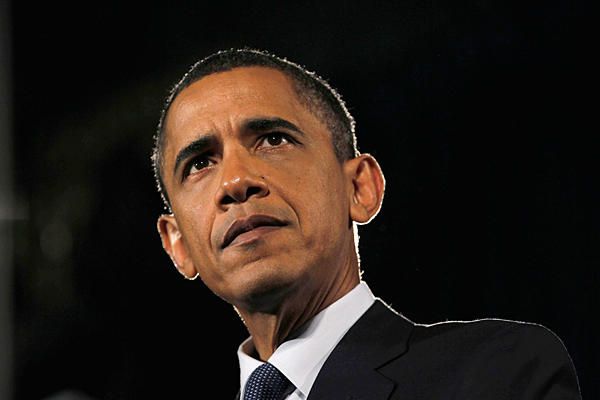
The presidential debate last Monday night featured a pungent performance by President Obama. The candidates went back and forth on defining the Obama Doctrine, although the president dominated the narrative with witty zingers and educated responses, which forced Romney to stay on the defense. Aside from the entertaining rhetoric, the biggest takeaway from the debate was the lack of substance and contrast between the two candidates.
Obama missed an opportunity to illustrate his doctrine in depth, as he rarely divulged significant details of his formidable foreign policy record. Instead, the president repeated his proverbial talking points, including the killing of Bin Laden and the implementation of sanctions on Iran.
Romney was equally vapid in the debate, for he seemingly regurgitated Obama's arguments, and pivoted in an attempt to re-brand himself as the "peace candidate." It became clear that Romney's cogency remains in the realm of domestic economics and big-business.
The vagueness of Obama's discussions, however, seems unwarranted, as his vast experience as Commander in Chief over the last four years has lent him the ability to detail large-scale involvement in foreign affairs and policy making. The "Obama Doctrine" is a rather well-defined amalgamation of American policy abroad.
2009
Obama signs executive orders to close Guantanamo Bay detention center (GITMO), and other secret CIA prisons abroad, within a year. (Note: GITMO has yet to close).
President Obama is awarded the 2009 Nobel Peace Prize, after he aggressively engaged in negotiations to curb climate change and advance the disarmament and proliferation of nuclear weapons.
In December 2009, the president announces his battle plan for the war in Afghanistan. This included boosting aid and cooperation with Pakistan, deploying a surge of 30,000 US troops, and ordering combat withdrawals in Afghanistan to begin by mid-2011.
2010
President Obama signs a renewed Strategic Arms Reduction Treaty (START) with Russian officials, which has both countries agreeing to reduce their nuclear weapons stockpile.

The president declares an end to combat operations in Iraq. Almost all troops are withdrawn by the end of the following year.
The Obama administration sends a diplomatic envoy to Syria after a five-year absence.
The president responds to the deadly North Korean artillery strikes on its South Korean neighbor by conducting joint military operations and naval exercises with South Korean forces.
2011
Working with other members of NATO, Obama orders military intervention in Libya against Muammar Gaddafi’s army. Several months later, the Libyan dictator was killed with the assistance of US drones.
In May, President Obama reports that Osama Bin Laden was killed during a special operation in Pakistan. Later in the year, Obama announces the death of senior Al-Qaeda official Anwar al-Awlaki by a US drone strike in Yemen.
The president deploys a small force of US troops to Africa to assist in the removal of Joseph Kony, the homicidal leader of The Lord’s Resistance Army.
Throughout the year, US-led events within Pakistan caused major friction between the Obama administration and Pakistani leaders.
2012
The Obama administration continues to expand drone programs in Africa. This has been a core component for counter-terrorism operations throughout the region.

President Obama signs an enhanced security agreement with Israel. This sought to further the exchange of intelligence and military cooperation between US and Israeli militaries. However, Obama continues to fall short on leading peace negotiations between Israel and Palestine.
On the anniversary of 9/11, US embassies and consulates were being targeted by fiery anti-American protests in Libya and Egypt, including the terrorist attack on the consulate in Benghazi which caused the deaths of four Americans. President Obama declares that he will seek justice against the assailants, but has been criticized by numerous parties on his handling of instance.
You Might Also Like