

Last week at IVN we had an article detailing how far behind the U.S. is in requiring the labeling of foods containing genetically modified organisms (GMOs). Compared with most other industrialized countries, the United States government has remained largely indifferent to the widely accepted conviction that individuals deserve to know what makes up the foods they consume. The question is, why?
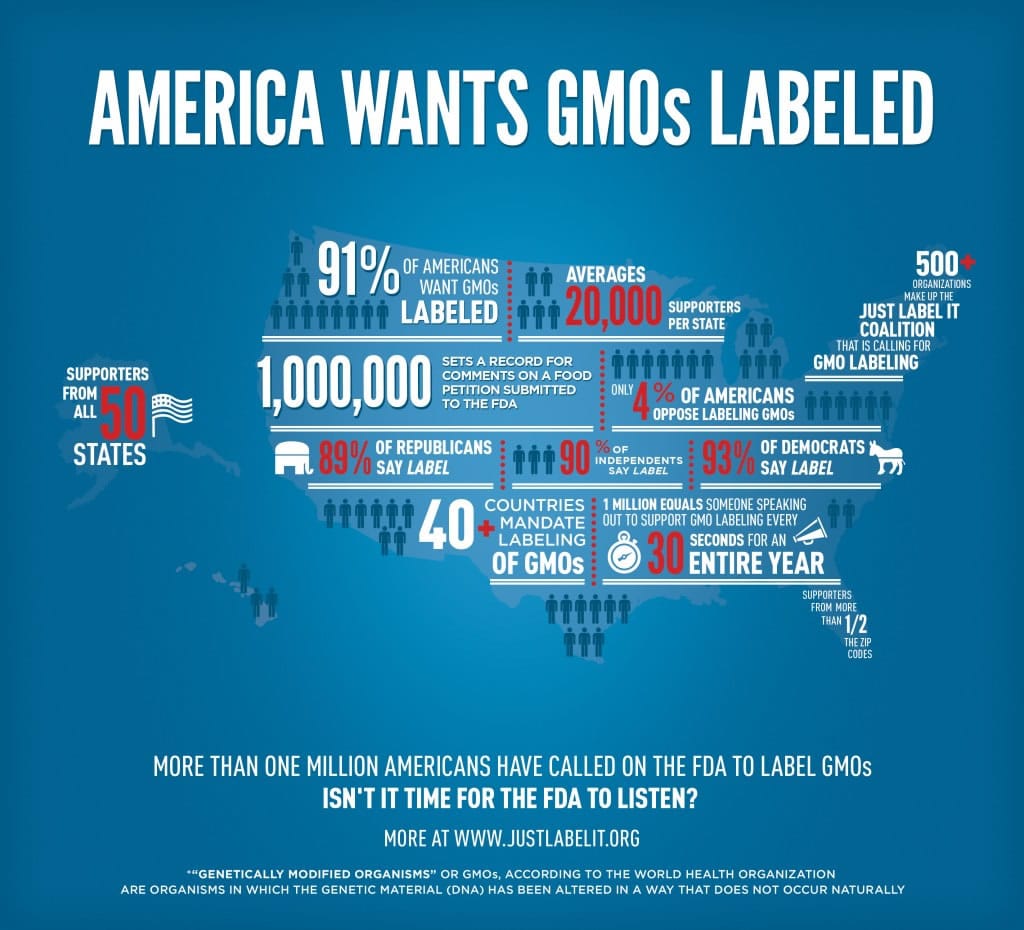
To date, over 1 million Americans have contacted the FDA, asking for the agency's support in GMO labeling. This is far more than any other petition brought to the FDA in history. At the same time, poll after poll has found the majority of Americans in favor of GMO labeling. Despite the demand, the FDA has avoided giving any response. The reason that the American public has gone ignored by the FDA on this issue is twofold. First, Monsanto, the world’s leading producer of genetically engineered seed and fiercely against GMO labeling, runs a large political action committee dedicated to lobbying for its interests in Washington. No surprise here, as countless other corporations do the same. What is disheartening are the political ties enjoyed by Monsanto that likely propel the companies interests more than any PAC.
Monsanto doesn’t boast about the number of political bigwigs involved with the company, and for good reason. If more of the public was aware that the current FDA Deputy Commissioner for Foods, Michael Taylor, is the former Vice President of Monsanto, there might be less confusion with the FDA’s lack of response to demands for GMO labeling.
Why all the opposition to labeling anyway?
Let us pause for a moment and ask why there is so much concern over labeling GMOs in the first place. Nutrition facts inform consumers about how much fat, sugar, protein etc. are in the foods they eat. These labels allow people to decide what is right for them. It seems simple then that a consumer should be informed about whether or not the high fructose corn syrup used in their favorite soda is produced using genetically engineered corn (it most likely is).
Monsanto is opposed to the labeling of its GMOs because the company is worried that consumers will be scared off by the labels and opt for organic alternatives. They have good reason to be concerned because, although GMOs have so far not been proven to cause significant health problems in humans, studies have shown that consumers are far less likely to purchase food labeled as genetically modified. Credit: justlabelit.org
Back to the political ties benefiting Monsanto. Here are a few of the highlights,
-Director of the USDA National Institute of Food and Agriculture, Roger Beachy, is the former director of the Monsanto-funded Danforth Plant Science Center.
-Supreme Court Judge, Clarence Thomas, is a former Monsanto lawyer.
-Former U.S. Secretary of Agriculture, Anne Veneman, was on the Board of Directors of Monsanto's Calgene Corporation.
For a complete list visit the Organic Consumers Association's website.
Special interest PACs are a reality of modern politics. We hope that politicians vote in accord with what their constituents want in favor of political contributions from large corporations. When politicians are employed by the corporations themselves however, the wishes of the American public do not stand a chance.
In November, Californians will have the opportunity to vote on Prop 37, the Right to Know Act. Passage of the initiative will make California the first state in the country to mandate GMO labeling. California has long been one of the most politically progressive states in the union, and as of next year it might be the first state whose residents will know what is in what they are eating. One can only hope that the rest of the country will soon follow suite in requiring GMO labeling.