Open Primary Credited with Success of Underdog Candidate
By Chad Peace on November 28, 2012 in Assembly, Betsy Butler, California, Open Primary, Richard Bloom with 6 CommentsRead Time: 2 - 3 minutes
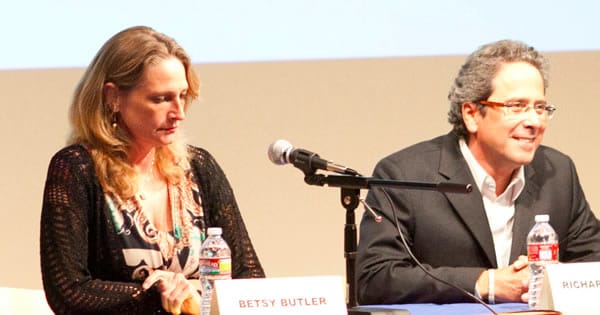
The race for California’s 50th Assembly District is still too close to call, but the underdog candidate is holding on to an 800 vote lead. A study conducted by Andrew Sinclair, a CalTech political science graduate student, concluded that California’s new non-partisan open primary is to blame, or credit. In the general election, Santa Monica Mayor Richard Bloom, the underdog, faced incumbent Assemblywoman Betsy Butler, a liberal Democrat backed by the Democratic party.
The main thing that Sinclair learned is that the top-two primary system in California worked very well for underdog Richard Bloom.
Under the new system, all candidates, regardless of party affiliation, run on a single primary ballot. The top-two vote getters in the primary go on to the general election. This means that in certain cases, like California’s heavily Democratic AD 50, two Democrats (or Republicans) could face off in the general election.
Under the old system, the party-backed incumbent Betsy Butler would have handily defeated Mayor Bloom in the partisan primary. She would have then faced a non-competitive general election against the Republican primary victor because of the heavily liberal make-up of the district.
Sinclair conducted a phone survey of 1,134 voters prior to the election. He concluded that Bloom may have benefitted from not being the Democrat’s party-backed candidate:
“[V]oters saw him as the candidate who was closest to the political middle. While Butler got major support from Democrats in Sinclair’s survey, Bloom got strong backing from Independents, Republicans, and other voters, while also winning over a respectable chunk of Democrats…This is a good example of where the top two makes a difference by giving Bloom an opportunity to make a competitive election…”
Opponents of the top-two open primary argue that the system reduces voter choice be restricting the general election ballot to two candidates. Proponents of the measure have argued that open primary finally gives voters who are not part of a given district’s majority party the first opportunity to have a meaningful vote. In the race for California’s 50th Assembly District, the proponents’ argument, like the underdog, appears to be the winner.


Leave Your Comment →
6 Comments
Lucas Eaves
11.28.2012
@lucaseaves
I think that opponent to the top-two should consider that if it is true that you have less choice on the ballot with only 2 candidates, the reality was that it is extremely rare that anybody other than the 2 main candidates has a chance to win. Be going straight to 2 candidates we leave behind the illusion that the underdog can win in a three person election but has a chance when he the underdog becomes one of the top two candidates. Like this race in the 50th assembly district.
Alex Gauthier
11.28.2012
@alexg
still too close to call? what other races haven’t been called yet?
Cassidy Noblejas Bartolomei
11.28.2012
@cassidynb
That was my reaction too. I was surprised to hear things are still up in the air!
Chad Peace
11.28.2012
@Chad_Peace
It’s under 900 vote separation … recounts and such
Michael Higham
11.29.2012
@michaelhigham
Voters are on the “other-side” of the consistently losing end actually have a chance to change their political representative at least slightly. Having the chance to vote for a more moderate candidate than always seeing the partisan candidate win against your partisan candidate is insanity, doing that same thing over and over and expecting a different result.
Roger Ford
01.03.2013
@roger_ford
The basic rule of allowing the top two vote-getters to enter the general election seems both more democratic and more fair. It is more democratic, in that, at least in the Presidential election years, the two major parties focus more on getting people to support the team or the brand than on what that team might do if elected. This approach is a problem, since the proof of any election comes after it has been lost and won. Yet if voters are cheering for their team, and thus focused on election night as the finish line, they are apt to miss the point of why they voted. They are apt to listen to the sound bites from elected officials, instead of reading about issues and checking voting records and keeping notes about how legislators voted or what the President really sent to Congress.
Voting for the top two vote getters is, of course, fairer to both the candidates and the voters as well. This point may not need so much examination. Still it is possible that it may deter some double filing in small off-year elections, if that thing is a concern. And it might just help voters to elect the person who is best for a job, regardless of whether the local party approves.
Of course, if people fail to run for office, then this sort of primary won’t do much. But that’s another issue, one of general apathy.