Gun Violence in America: Evaluating the Status Quo

By Jason Brown | 12/17/2012 | Headline, Issues, Safety | 16 Comments
This year has been turbulent with gun related homicides; highlighted by the killing sprees in Aurora, Colorado, the Sikh temple in Wisconsin, and now the elementary school shooting in Newtown, Connecticut.
However, arguably more striking is the staggering number of shootings in Chicago this year, which is on course to reach 3,000 before the year’s end. Yet, reforming the nation’s gun policy is considered a taboo topic in Washington, DC.
This was exampled during this year’s second presidential debate, when the presidential candidates lauded for the status quo. Here is what they said after an audience member prompted the topic of US gun policy:
President Obama: “So my belief is that we have to enforce the laws we’ve already got, make sure that we’re keeping guns out of the hands of criminals, those who are mentally ill.”
Governor Romney: “Yeah, I’m not in favor of new pieces of legislation on — on guns and taking guns away or making certain guns illegal.”
The embracement of the status quo, however, is not working. To put this into perspective, consider the number of deaths in war versus the number of gun related homicides in the US.
Since 2001, there have been over 2,000 American troops killed in Afghanistan, but for the past decade the US has averaged 10,000 gun related homicides each year. In Chicago alone, there have been over 5,000 gun related deaths since 2001.
The last time Congress passed any federal legislation on gun policy was during the Clinton Administration. This included the ‘94 Violent Crime Control and Law Enforcement Act which instituted the federal assault weapons ban that expired in 2004, and the ‘93 Brady Handgun Violence Prevention Act which mandated federal background checks for firearm purchases.

According to a recent story in POLITICO, the reason there has not been any firearm legislation is because “over the past two decades, the type of Democrats who might have rushed to embrace new restrictions have been beaten in elections, worn down by the National Rifle Association and now stampede in the opposite direction.”
There is no doubt that lucrative lobbying efforts and partisan politics have hindered a comprehensive strategy for the gun violence problem in the US.
However, this lack of strategy has corresponded with the ongoing epidemic of gun related homicides that are crippling metropolises across the nation.
The US ranks 8th in the world for the number of homicides by firearm, averaging 3.6 homicides for every 100,000 people. That’s twenty times the amount of Japan, Australia, and the United Kingdom.
According to an ABC news report in July, “among the world’s 23 wealthiest countries, 80 percent of all gun deaths are American deaths and 87 percent of all kids killed by guns are American kids.”
Over the past decade, serious gun injuries in the US have increased by twenty percent, and the gun homicide rate has remained the same. These results suggest that the current laws and enforcement are failing.
There are reasonable reforms that Capitol Hill could employ tomorrow, such as:
- Requiring doctors and law enforcement to work together in order to keep mentally unstable individuals from purchasing firearms legally.
- Developing a special committee that researches other nations’ gun policies in order to discover why their firearm homicide rate is lower than ours.
- Instituting more interventionist programs, such as Chicago’s Ceasefire and Baltimore’s Safe Streets, because they have had empirical success reducing gun violence. Ceasefire was shown in a 2009 Northwestern University study that the program reduced shootings and eliminated retaliatory murders. In the case of the Baltimore program, a study published at Johns Hopkins Bloomberg School of Public Health this year revealed that Safe Streets reduced the homicide rate and limited the number of nonfatal shootings.
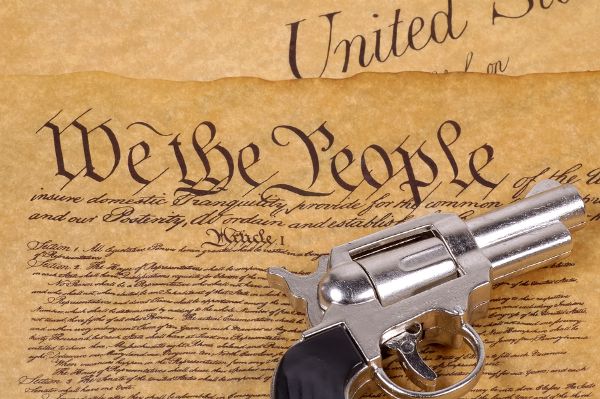
Of course, developing a comprehensive policy is complicated. The Second Amendment is a revered part of US history with traditions that span generations for families that enjoy hunting and shooting.
The right to bear arms has become a unique freedom in America, interpreted differently by each and every citizen. Any perceived infringement on this liberty often draws controversy; thus ending healthy debate on sensible reforms.
Yet, common sense reforms on American gun laws do not contradict Second Amendment rights. Rather, the only cost in this debate is the continuation of inaction.


Leave Your Comment →
16 Comments
Chad Peace
12.17.2012
@Chad_Peace
There is a historic respect for the right to bear arms … which is important to the idea of a free state, but was implemented to secure a free state; in other words, it was not an “individual right,” or “fundamental right” per se, but a necessary right in order to secure a free state … “A well regulated Militia, being necessary to the security of a free State, the right to keep and bear arms shall not be infringed.” We talk about gun rights in terms of individual rights, though its clear the 2nd amendment derives from a need to preserve the state as a whole.
Eric
12.21.2012
Being implemented to secure a free state does in no way imply that it was not also an individual right. The two are not mutually exclusive.
And you conveniently left out a key phrase.
“…the right OF THE PEOPLE to keep and bear arms shall not be infringed”. To interpret that as “the right of the government to keep and bear arms” is illogical. And no, it does not mean the right of the states to keep and bear arms. It’s in the Bill of Rights. To say that any of the other civil rights were only meant for state level governments would get you laughed out of the room and room and rightly so.
Blake Bunch
12.17.2012
@blakebunch
“Of course, developing a comprehensive policy is complicated. The Second Amendment is a revered part of US history with traditions that span generations for families that enjoy hunting and shooting.”
- Definitely the case in areas where people depend on firearms for sustenance or sport. The accessibility to high-powered assault rifles should pose another issue though. No one is going to hunt deer with an AR15, and even though the Federal Assault Weapons ban was passed in ’94, should be revisited.
Lucas Eaves
12.17.2012
@lucaseaves
As a foreigner, the glorification of the second amendment, which was historically justified but is not today in my opinion, remains a mystery that i will never understand it seems. The discussion that I had following friday’s shooting with americans and europeans shows that there is a culture gap that i cannot overcome.
Bruce Mccoy
12.17.2012
@bruce_mccoy
Lucas, here’s the deal; you’re free to live in a culture you think is suitable to your morals, safety, and security, whether that’s in the country or the state/community you live in. Some people actually like Chicago and accept the risks to their safety – but not me; that’s why I live elswhere :)
Cassidy Noblejas Bartolomei
12.17.2012
@cassidynb
The disgusting homicide statistics point to problems in America that run so much deeper than gun control policy. I think your proposals for reforms are quite reasonable, Jason.
Michael Higham
12.17.2012
@michaelhigham
I see the necessity of doctors working with law enforcement to prevent firearms ending up in the wrong hands, but I can also imagine a long bureaucratic process that the NRA would end up fighting.
Owning firearms is almost embedded in American culture, but tragedies involving firearms will always polarize the two sides of the issue.
Ian Dawes
12.17.2012
@iandawes
It’s not just keeping firearms out of the hands of mentally unstable persons, it’s addressing the policy and healthcare resource availability to the mentally ill and their families, which are seriously lacking in this country.
Alex Gauthier
12.17.2012
@alexg
a clinic where i used to volunteer was shut down a couple of years ago because state funds dried up. I’m curious to see if the lack of mental health resources has been contributing to the prevalence of attacks like these.
Bruce Mccoy
12.17.2012
@bruce_mccoy
Alex, I would think there is no doubt. It’s not just budget cuts in the last few years, but the policies in the 70s that emptied the institutions that held mentaly ill patients that ‘weren’t a definite danger to society’ – preventing now the ability to get those needing help (and not a definite danger) from getting it.
Bruce Mccoy
12.17.2012
@bruce_mccoy
If doctors and medical workers are required to report potential abuse to police, they should be able to report mental problems that ‘could’ be dagerous – that would put them on a watch list, not only for gun/ammo purchases but also things like firing ranges.
Ian Dawes
12.18.2012
@iandawes
We need to go beyond having a registry for ‘abusiveness’ records of the mentally ill. The resources for care and treatment and overall understanding about mental illness is non-existent on a scale that this country can embrace. Funding gets cut and, frankly, the average person shies away from encounters or civil discussion about mental disease. Our perceptions on this topic are only a few decades out of 1960s shock treatment and seclusion.
Jason Brown
12.19.2012
@jasonbrown
Bruce,
The restrictions for the purchasing of a firearm come in the form of age or being a convicted felon. Neither age nor being a felon halts one from going to a firing range, for that would be a private property facility. In the cases like in Tuscan, where the shooter Jared Loughner had documented psychiatric problems, he was still allowed to purchase his weapons legally at a local sportsman store. Of course, we can always play the “what if” game in hindsight, but if Loughner had been flagged as a person that could not purchase firearms, maybe pending a psych-test for example, than would that tragic shooting in Tuscan occurred? This is not to say that we are thwarting blame on these shootings to mental illness or on lawful gun ownership, because many of these are crimes against humanity are done with malice and aforethought, but the fewer avenues we give people like Loughner access to guns — I would argue — the better.
Jason Brown
12.19.2012
@jasonbrown
First of all, thank you everyone for your comments, especially from my family here at IVN. I saw where Lucas was trolling the White House’s Google+ Page in regards to the shooting last Friday: thanks Lucas!
I also want to thank Ceasefire, because they plugged my article yesterday on Twitter. It is not mentioned in the article, but they were the subject of an award winning documentary called “The Interrupters”. It is a great film and they have developed a model that is now spreading internationally in order to fight gun violence.
I started writing this piece before the events on Friday, actually I had it ready to publish the day before. The reason why is because we have HAD a gun violence problem in America, not just that tragic happening in Connecticut. I have heard a lot of rhetoric after the massacre Friday, saying ‘this changes everything’, even from members inside staunch pro-gun communities. My thoughts and prayers go out to those afflicted with that tragedy, and I hope this tragedy does change things.
In order to really study this problem, I encourage anyone to go ride along with a Metro city cop or take a community tour of the gun violence havens in America, such as Philadelphia or Chicago – it will change your perspective.
I have been in law enforcement for a long time, and have personally witnessed the impacts gun violence brings to a community. That being said, this issue pulls strings on my heart differently than most others, because as exampled above, the status quo is not working, and I see this with my own eyes.
This issue is multifaceted. This is not a mental health problem, an urban problem, a gun problem – it is an American problem that impacts communities across this nation. There is no magic wand. The only remedy for this issue is in the form of a multiplicity of ingredients, to include sensible gun policy changes, sensible reforms on mental health institutions/funding/treatment/etc., and sensible enforcement mechanisms.
It is important to note that the ‘genie is out of the bottle’, in other words we have proliferated firearms for hundreds of years and logistically, there is no way to (even if the government wanted to) ban or remove guns from society.
We have to think outside the box instead, such as putting higher taxes or bans on certain ammo or certain gun components (like high capacity magazines). I saw where one pundit alluded to the fact that we only have a 2 to 3 year supply of ammo for all of our guns in the US – guns without bullets can’t commit incidents like what happened last Friday.
So, maybe the best solution would be to allow people to buy an AR-15 (even though I’m personally for the assault weapons ban) but make the ammo for it so expensive or so unique that nobody outside the US military could afford it or produce it. This is just an idea, there are probably thousands more like it, but we need healthy debate on this issue in order to move forward, instead of steadily backwards.
Eric
12.21.2012
Jason, thank you for the article. Discussion is good.
I would like to prompt some discussion on your closing paragraph. In your law enforcement experience, what happens when supply is decreased significantly and demand remains high?
There are enough people who believe that “If a law is unjust, a man is not only right to disobey it, he is obligated to do so” that you’re just asking to make criminals out of people who are exercising what they view as a civil right.
I’d also offer to you as an experienced law enforcement professional that a man with a sharpened stick and a burning desire to kill you will do it. The important thing is not to take away the stick, but rather to understand the desire.
Jenny Jo
12.20.2012
I just wanted to comment on this to push a point about how guns are percieved differently in most rural communities (at least in the 4 states I have lived in) as compared to cities, and why wholesale banning or severely limiting restrictions, especially in rural areas, will never work, and an example of how the way a person is brought up can dramatically shift their view of tools, and the safetfy in which they use them..
http://news.blogs.cnn.com/2012/12/20/boys-make-the-right-move-with-loaded-gun-in-theater/?hpt=hp_t3
This is a smaller community in Oregon, certainly not all hill bumpkins, as most people would have you believe of rural folks. They found a gun in a movie theatre, on a class trip. Even had a round chambered.
“It was a gun, a small-caliber, semi-automatic pistol. It was fully loaded with a round in the chamber, Tillamook Police Chief Terry Wright said.
Levi and Kolton didn’t touch the weapon. They alerted a school staffer who was on the field trip, who then alerted police.
Why didn’t the boys pick up the firearm?
“I’m a Boy Scout and Kolton and me took a hunter safety class. One of the rules is that you treat all guns as if they’re loaded,” Levi told KPTV.”
These boys acted exactly as they should have. Mature, responsible, and with safety as a priority, and from the sounds of it, they grew up around guns and had responsible parents.
Most people who grow up around, and depend on weapons and realize their usefulness as a tool, albeit a very dangerous one, will send their children to hunter’s safety courses, as well as stress warnings and cautions to them about always respecting a gun because it a very dangerous tool. Teaching children respect for a firearm and how to properly handle them, rather than simply accosting weapons as “archaic” and to fear them, will promote lessons these boys will be able to utilize for the rest of their lives. From personal experience, I find these people are more responsible, and more able to handle themselves, not only in situations where a gun may be present (either in their hands or used against them), but also in general situations where most people panic, and clear thinking is the difference between life or death.