US and Mexico Sign Landmark Freshwater Treaty

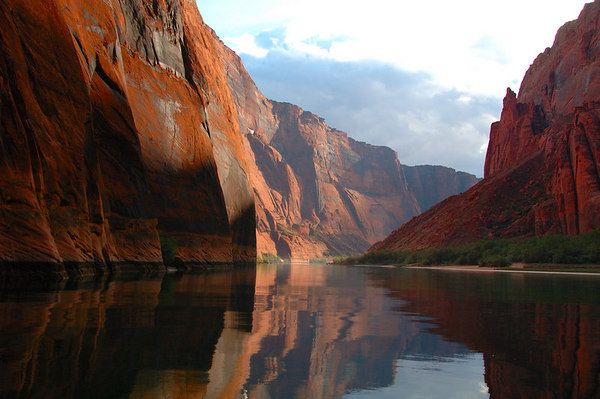
Today, the United States and Mexico will sign a landmark treaty on freshwater resources in the American Southwest and Northern Mexico. California, Arizona, New Mexico, Utah, Wyoming, Colorado, and Nevada, along with the Mexican States of Baja California and Sonora, have approved the treaty that will distribute freshwater from the Colorado River.
The Colorado River supplies freshwater for seven states and Northern Mexico according to allocations made in the Colorado River Compact based on beneficial uses of the water. The new treaty is a governmental response to deteriorating freshwater supply coming from the Colorado River System and increasing demand from water authorities in the seven American States, as well as in Baja California and Sonora.
When the river was originally allocated amongst the seven US states in 1922, the river supplied approximately 17.5 million acre-feet of water, or 5.7 trillion gallons (one acre foot represents the amount of water necessary to cover one acre of land in one foot of water). To divide the resource the states were split into two basins, Upper and Lower. The Upper basin represents many of the river's sources and major tributaries. Colorado, Utah, Wyoming, New Mexico, and a portion of Arizona are beneficiaries of the Upper Basin. The Lower Basin represents the larger consumers of the resource, namely, Nevada, California, and the majority of Arizona.
That supply was divided between the Upper and Lower basins equally. However, recent research shows that 1922 was an especially wet period in the river system, and thus created an over-allocation of freshwater between the basins. Also, the original compact also excluded Mexico, until a 1944 treaty allocated some freshwater resources to Baja California and Sonora.
Now, the Colorado River supplies approximately 14.7 million acre-feet of water to the Upper and Lower Basins. The actual discharge of the Colorado River is the subject of years worth of debate. Measurements are imperfect because they are limited by location, precipitation, tributaries downstream, diversions upstream, depth of measurement, and evaporation.
The difficulty measuring the supply that the river is presenting for use in the Upper and Lower Basins, and Baja or Sonora, make the agreement all the more difficult to craft. Although the parties would ideally have a data set that allows them to allocate the freshwater resources appropriately, an agreed upon number is impossible to apprehend.
The crafters of the freshwater treaty are in a catch-22 situation, where they are compelled to allocate water resources between them, but are uncertain as to how much of the resource will be available for future allocation.
Bearing in mind the consequences of the problem, domestic solutions to over-allocation have been constructed by the Department of the Interior. The allocations shift with the water level in Lake Mead, which stores much of the water for the Lower Basin.

The agreement is all the more complicated by the presence of multiple international parties who have been excluded from negotiation in the past. The new agreement would serve multiple purposes for Mexico. Mexico has stored portions of their water supply in Lake Mead since 2010, when an earthquake damaged their irrigation system. The new agreement extends their ability to do so, as repairs to the irrigation system continue. Additionally, the agreement includes environmental considerations that should replenish the water supply in the Colorado River Delta, which has nearly run dry.

The agreement is a creative solution to meet the demand of southwestern states and Mexico, all of which could suffer severe water shortages in the future. The agreement allows for Mexico to store freshwater supplies in the United States and calls on the US parties to release water to replenish the Colorado River Delta.
The allocations that Mexico receives can be returned to the United States if the states' water agencies invest in infrastructure improvements in Baja California or Sonora. The freshwater savings from the improvements can then be proportionately reallocated to the agency who assisted in the infrastructure improvements.
It is possible that this agreement will serve as a model for international freshwater treaties that will become more prevalent in the future, as independent nations negotiate for a share of the increasingly valuable resource.
Latest articles