Eurozone Crisis Is Still Significant Despite Media Coverage
By Ricky Gandhi | 10/04/2012 | Economy, Headline, Issues | 18 Comments
Credit: Europeword.com
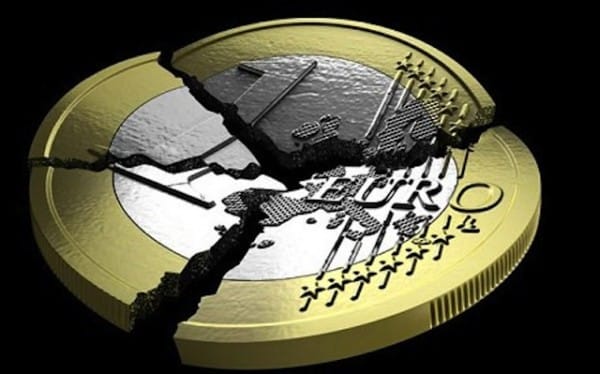
A wide array of topics has surfaced throughout this election, most of which will arise again during the debates. However, one particular topic has received very little public attention. The Eurozone crisis is still significant despite media coverage, which is now laser focused on the U.S. election. The crisis affects all countries using the Euro currency, remains a crucial topic within the global economy, and the consequences of which can significantly impact US recovery.
So far, the Obama administration has indicated the crisis as a “top global priority” and has engaged in frequent private talks with EU leaders. The Romney camp, on the other hand, has severely criticized Obama’s encouragement of a European bailout or stimulus for Spain, Greece, Portugal, and Ireland, stating that Obama’s strategy remains “unwise” and illuminates the “ignorance of the causes of the crisis and of a growth trend in the future.”
The crisis “is one that affects the rest of the world through investments, debt and trade and that is risking serious global economic decline.”
A Euro collapse would have an adverse effect on markets, trades, and stocks, and since many Americans pay little attention to the crisis, they would ”not know where this comes from and blame it on Obama. He’s the one in the driving seat,” says Bruce Stokes of the Pew Research Centre. If the Euro collapses, it has the potential to negatively impact Obama’s presidential campaign. President Obama has asked the Eurozone to keep Greece at least until after the election, most likely to prevent his reelection bid from being effected.
A World On Edge About the Eurozone
Currently, the European Union has taken measures to mitigate the situation by establishing a European Stability Mechanism that ”will cooperate very closely with the International Monetary Fund (IMF) in providing stability support. The active participation of the IMF will be sought, both at technical and financial level. A Euro area Member State requesting financial assistance from the ESM is expected to address, wherever possible, a similar request to the IMF.”
The treaty should, if all goes according to plan, go into effect on January 1, 2013 and will act as a conditional bailout fund. “It is the ‘permanent’ institution that will take over from the temporary fund, the European Financial Stability Facility,” according to Matina Stevis of the Wall Street Journal.
Another treaty, the Fiscal Stability Treaty (formally known as the Treaty on Stability, Coordination and Governance in the Economic and Monetary Union), has also made headlines in Europe.
In a nutshell, it advocates fiscal responsibility. A summary of the treaty explains that nations must agree to “a general government deficit of not more than 0.5% of Gross Domestic Product (GDP) or be working towards that target within time limits specified by the EU (this is sometimes called the ‘deficit brake’).” Additionally, a “general government debt of not more than 60% of GDP; if it is more than 60%, they must be reducing it at the rate of one twentieth each year (this is sometimes called the ‘debt brake’).” This treaty is also set to take effect January 1, 2013.
As of now, 25/27 member states have signed on (the UK and the Czech Republic have not). 11/25 have ratified the treaty, with the German courts confirming the legality of the treaty with respect to their nation on September 12, 2012.
Whatever the outcome, the Euro crisis will have a major impact on the global economy. It serves as a wake up call to nations and citizens in realizing that the economy remains a global, not national or local, entity.


Leave Your Comment →
18 Comments
Jane Susskind
10.04.2012
@jsusskind
It’s interesting we heard no talk of the eurocrisis in last night’s discussion about the economy. We don’t fully understand the implications this will have on the global economy, including the US.
Chad Peace
10.04.2012
@Chad_Peace
The debate was about domestic policy and we didn’t hear about NDAA, Federalism, and only sound bites about health care.
I think the Euro crisis end will follow the US crisis end … which may not happen soon, but I believe it can; its more a matter of confidence than anything … which will come as soon as we have confidence in our government again, which will reduce fear and encourage investment again.
Matt Metzner
10.04.2012
@mmetzner
This should be the center of the upcoming foreign policy debate. It wasn’t particularly strange that the topic wasn’t covered last night as they focused on domestic policy. It’s highly relevant to the talking points both candidates are trying to use in the debate. No Ron Paul, no NDAA/Federalism discussion.
Blaz Gutierrez
10.04.2012
@blazgutierrez
The domestic v foreign line is an old trope that needs to end. What happens in the Europe, the Middle East or China has a day to day effect on the amount that Americans pay for simple items like produce or gasoline. Divorcing the subject matter is an unrealistic view of how economics works imho. Neither candidate really brought that point home last night.
Ricky Gandhi
10.04.2012
@rgandhi
I completely agree. The only mention of Europe I hear is “we don’t want to end up like Greece/Spain.” I feel that criticizes our allies in Europe rather than promote a genuine response aimed at helping Europe recover. “Togetherness” has been absent in American politics as of late.
Michael Higham
10.04.2012
@michaelhigham
I suppose at some point, there has to be an institution that oversees Europe’s financing. It’s hard to think that governments with so much power can be irresponsible with a country’s finances. This will hit the US economy but I feel like it won’t get significant attention. It’ll be easier for the citizens to blame the president for a stagnant economy, especially when media coverage does not explain its significance.
Lucas Eaves
10.04.2012
@lucaseaves
Thank you Obama for caring about Greece until the election. But from a broader perspective, ignoring what is happening on the other side of the Atlantic will not benefit the US. The Europe Union is the US a major trade partner, the US do lot a investment in europe and europe in the US. If the crisis continue, everybody will lose. Romney should not disregard that and I hope that subject will be brought up at one point in the debates.
Emma Goda
10.04.2012
@emmagoda
We heard nothing about this in last nights debate and I agree with Jane about not understanding the full impact this will have on the US.
Brandon Fallon
10.04.2012
@bfallon
Foreign economies do play a role in domestic economic productivity. When discussing jobs, Romney mentioned China briefly “if and when” they act up in trade and currency disputes. The EU is a major trade partner for the US and if it goes down, that will hurt US trade and jobs here at home.
Mareike Lucht
10.04.2012
@malu
Obama’s attempt to help the economy back on its feet by promoting tax abatement and an economic stimulus plan failed mainly due to deadlock in consensus with the conservatives. Every setback in Europe threatens to destroy growth in the U.S. However, the nexus between those two continents does not seem to be a great concern for most people within the U.S. and it indeed seems that a setback would be interpreted as Obama’s failure without further investigation of the issues. On the other hand, foreign policy does not seem to be the door opener into the White House.
Manuel Ducret
10.04.2012
Google or Yahoo the Lewis Powell Manifesto and you will see why the economy is how it is.And the U.S. Chamber of Commerce paid for it and Nixon made him a Supreme Court judge!
Wes Lawhorne
10.04.2012
We need to focus on America right now!
Leann Lamb-Vines
10.04.2012
Last night’s debate was on domestic policy.
Jane Susskind
10.04.2012
@jsusskind
Yes, but half of the debate was dedicated to the economy. US economy is affected by the global economy. No one seems to want to talk about this.
Johnny Phuchough
10.04.2012
It has taken 12 years to get into this mess, how is talking about it for 90 minutes sufficient enough time to cover all the angles?
Ricky Gandhi
10.04.2012
If the domestic policy includes the economy, then Europe’s economy (as well as Asia, the Middle East, etc.) should be discussed as they play a role in our economy as well.
Heidi Hammon-Turano
10.04.2012
Whatever happens globally especially in Europe effects us in a big way. In the past we were isolated but no more. We have to stand together with Europe. We cannot forget that we stand for freedom here and globally.
We need to reelect Obama to continue to clean up the messes from 8 years of Bush. Do not forget. He took 8 years to eliminate a surplus and put us in two wars, and an economic meltdown. Obama can perform the impossible but you need to vote him in and get the crazy republicans out of Washington. Enough is enough with the crazy tea party as well as everyone else in Congress who can’t seat down and negotiate. The time is now.
Alex Gauthier
10.05.2012
@alexg
This issue is so complex and nuanced, it’s no surprise the media has little time to look at it seriously.