
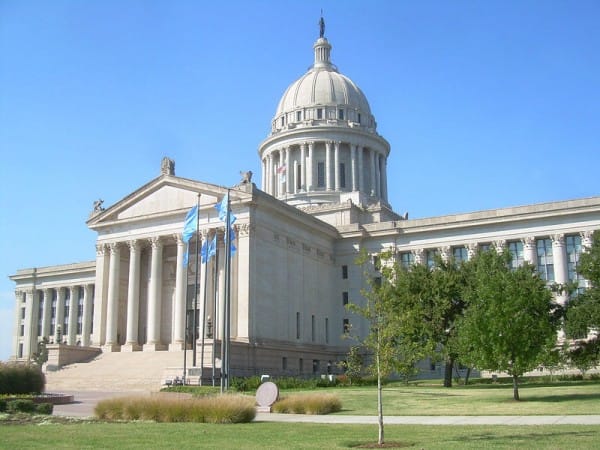
Photo: © Caleb Long
This November, Gary Johnson will appear on the ballot in forty-seven states as the Libertarian Party presidential nominee. Oklahoma will not be among those states. Last week, the Oklahoma Supreme Court denied Gary Johnson ballot access under the Americans Elect Party.
When the Libertarian Party failed in its attempt to gain the necessary amount of signatures in Oklahoma, the state’s Americans Elect chapter nominated Johnson as its party’s candidate. One day prior to nominating Johnson, however, Americans Elect dissolved as a national party.
Due to the party’s national dissolution, the Oklahoma Supreme Court justices unanimously agreed that, “Petitioners were never authorized to act on behalf of Americans Elect, the national party recognized by the Oklahoma Board of Elections…”
Gary Johnson’s struggle for ballot access in Oklahoma is the most recent, but it is not his first. Johnson’s aspirations for ballot access have been challenged in DC, Iowa, Michigan, Ohio, Pennsylvania, and Washington. In response to state challenges, Ron Nielson, senior adviser to Johnson stated:
"In states across the nation, Republican operatives, lawyers, and in some cases, elected officials, are filing frivolous challenges to Governor Johnson’s ballot status. They know that even if their challenges fail, fending them off is a drain on our resources and a distraction from the real issues in this campaign."
Each state sets its own rules for the number of signatures a candidate needs to gather in order to be placed on the election ballot. Oklahoma requires 5% "of the votes cast for the office at the top of the previous ticket," which equates to 51,739 signatures this year, within 90 days.
Often, third party candidates struggle to receive the finances and media exposure that are available to the two largest parties, which can hinder a candidate's ability to hire paid signature gatherers.
Currently, Green Party presidential candidates, Jill Stein and Cheri Honkala will appear on thirty-eight states' ballots, and as write-ins in five states. Like Johnson's ticket, they too are striving for ballot access in six states.
Despite challenges to his campaign, Johnson has remained optimistic, telling The Guardian:
"These challenges against me are just railroad jobs: it's straight out of the Wild West. I think it's a testament to the strength of our campaign that they are going to these lengths."
Early last week, in a CNN/ORC poll, 4% of those surveyed responded that they would vote for Johnson.