Should the Presidential Debates Include Third Parties?
By Taylor Tyler | 09/15/2012 | Activism, Elections 2012, Featured, President | 62 Comments
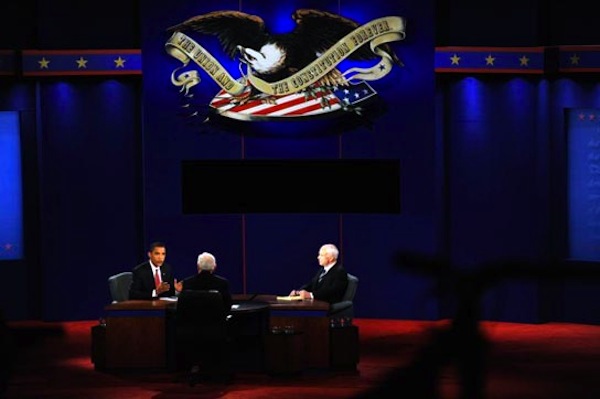
Credit: debates.org
The Commission on Presidential Debates (CPD) was started in 1987 by the Democratic and Republican parties to organize and host presidential election debates in the United States.
Reportedly nonpartisan, CPD is a non-profit 501(c)(3) corporation headed by former RNC chairman Frank J. Fahrenkopf, Jr. and former Clinton press secretary Michael D. McCurry. The organization hosts debates that are sponsored by contributions from corporations and foundations.
Prior to 1987, the League of Women Voters moderated the debates, but withdrew their participation, refusing to become “an accessory to the hoodwinking of the American public.”
The CPD’s mission statement is as follows:
”The Commission on Presidential Debates (CPD) was established in 1987 to ensure that debates, as a permanent part of every general election, provide the best possible information to viewers and listeners. Its primary purpose is to sponsor and produce debates for the United States presidential and vice presidential candidates and to undertake research and educational activities relating to the debates. The organization, which is a nonprofit, nonpartisan, 501(c)(3) corporation, sponsored all the presidential debates in 1988, 1992, 1996, 2000,2004 and 2008.”
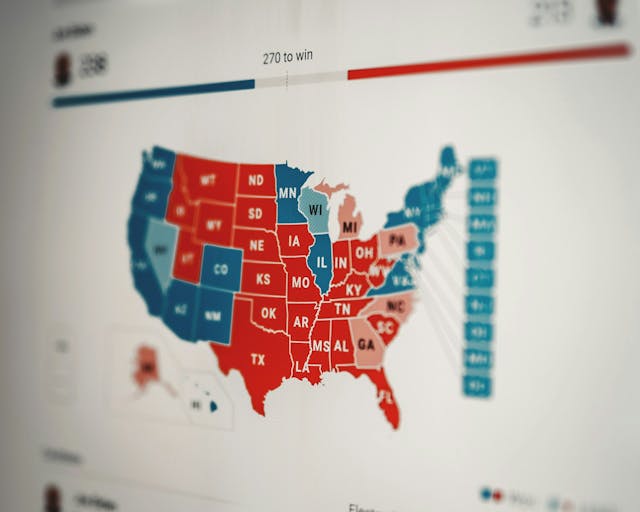
For the CPD to successfully complete their mission of providing the best possible information to viewers and listeners, they must invite every candidate who has a mathematical chance of winning the presidential election. That is to say, a candidate must be listed on the ballot in enough states to be able to win 270 electoral votes.
There are currently four candidates who meet this requirement: Barack Obama, Gary Johnson, Mitt Romney, and Jill Stein. These four candidate also each receive matching FEC funds, which are paid for through the one dollar check off on individual income tax returns.
Since each of these candidates have varying opinions on the issues being debated, and each have different information to provide, they must be invited to participate in the debates. Failing to invite Gary Johnson and Jill Stein is failing to provide a large portion of information to the viewers and listeners.
Some have considered the failure of the Commission to consistently invite eligible third parties a violation of section 501(c)(3) of the Internal Revenue Code, and others have filed complaints with the Federal Elections Commission.

With a record high percentage of U.S. voters identifying as independent from the Democratic and Republican parties, one would think that the Commission would feel obligated to invite candidates from outside the two-party system.
A poll released by Gallup on Sept. 12 asked, “Do the Republican and Democratic parties do an adequate job of representing the American people, or do they do such a poor job that a major third party is needed?” The results showed that 46 percent of Americans believe a third party is needed.
Ross Perot has been the only third party candidate invited to participate by the Commission when he was invited in 1992.
The Commission requires candidates meet a set of “nonpartisan selection criteria” to receive invitations to the debates. The first and second criteria are that a candidate must have evidence of constitutional eligibility and evidence of ballot access.
The third and most controversial rule has been highly contested:
“The CPD’s third criterion requires that the candidate have a level of support of at least 15% (fifteen percent) of the national electorate as determined by five selected national public opinion polling organizations, using the average of those organizations’ most recent publicly-reported results at the time of the determination.”
Libertarian Party candidate Gary Johnson referred to the 15 percent rule in a letter he sent to the Commission stating, “this polling performance criterion is entirely arbitrary and based, frankly, on nothing other than an apparent attempt to limit participation to the Democrat and the Republican.”
“In all due respect, it is not the proper role of an non-elected, private, and tax-exempt organization to narrow the voters’ choices to only the two major party candidates,” said Johnson.
Jill Stein, Green Party candidate, answered questions in a Reddit AMA Sept. 12 where she said, “We haven’t thrown in the towel on this. In fact we haven’t begun to fight. Fight we will because the American people deserve a real debate. The idea that a private corporation – the Commission on Presidential Debates (CPD) – controlled by the Democratic and Republican Parties is being allowed to silence opposition voices is anti-democratic and unacceptable.”
The Commission has not yet sent debate invitations and Executive Director Janet Brown said in July, “those lobbying to get Johnson in the debates are making assumptions about something that has not happened.”


Leave Your Comment →
62 Comments
Eliza
09.15.2012
Here is a list of the sponsors for the 2012 Presidential Debates run by the Commission on Presidential Debates. Contact them and let them know that as a sponsor, and you as a consumer, that the lack of inclusion of third party candidate will be reflected in the PR these companies will receive and possible boycotts of their products and services should third party candidates be unjustly excluded. Feel free to leave a message on their Facebook Pages or Tweet them about how you want Gary Johnson and Stein included in the debates.
Anheuser-Busch Companies
BBH New York
The Howard G. Buffet Foundation
Sheldon S. Cohen, Esq.
Crowell & Moring LLP
International Bottled Water Association (IBWA)
The Kovler Fund
Philips Electronics North America
Southwest Airlines
YWCA USA
russell kirksey
09.16.2012
The biggest reason Gary Johnson would not be allowed in the debates is Anheuser-Busch Companies influence. They do not want pro marijuana debate because they know the American people will see the truth. If legalized their profits will be hurt. The rest on the list have similar interests in stifling the truth on other subjects.
Chijioke Nduwuisi
09.15.2012
Presidential debates should include 3rd 4th and 5th parties. I’ll most likely be voting for Obama this year but that would be less assured if I and other Americans could see Jill Stein on the national stage present her policies against that of Obama and Romney
Justin Renquist
09.15.2012
Yes. Absolutely. We are tired of 2 points of view that barely differ on economic policy, and 2 parties who refuse to address important, critical issues such as military industrial complex gobbling up over 1 trillion dollars per year, rapidly increasing poverty and income, qualiy of life inequality etc.
Paul Griffin
09.15.2012
YES!!!!!!
Rich Kluender
09.15.2012
Yes
Reta Sanden
09.15.2012
Yes they should!!!! We need to quit believing in a rotted 2 party system!!!
Jackie Freeman
09.15.2012
Hell yes!
Nan DeBaun
09.15.2012
The media only believe in one party. Not likely they would allow a third.
Jay Turley
09.15.2012
They should have been there from the start and never disallowed.
Beverly Farmer Price
09.15.2012
Yes.
Eric Nordstrom
09.15.2012
I think first we need to have debates with a second party.
Kevin Hall
09.15.2012
A third party = 1/3 more of the exact same mess. What we really need is to get the money out of politics, and overturn citizens united.
Steven Costanzo
09.15.2012
No.
Julie Fielder
09.15.2012
If there are others,that are on the ballots,then they should be included in the debates.
Diane Overcash
09.15.2012
Yes.
Lana Gail Osborne Dearing
09.15.2012
YES ABSOLUTELY
Ginger Woods
09.15.2012
yes. and 4th parties and 5th and 6 if need be until people of all views are properly “REPRESENTED” since that is specifically how the government claims to get its authority. If they cant represent my views then they do not represent ME and so I revoke my consent of being governed by incompetent fools.
Deb Smuda Hoard
09.15.2012
Yes, since the 2 are at such extreme ends of their platforms.
Debrah Leonard
09.15.2012
why not?
Dennis Little
09.15.2012
Hell yes, why not !!!!
Pam Allison Kraemer
09.15.2012
Yes
Anne Ward
09.15.2012
Yes!!!
Allen Harvey
09.15.2012
I think any serious candidate should be allowed to participate. We need to break the monopoly that the two parties hold on the office of the presidency!
Fred Gollatz
09.15.2012
By all means, absolutely. The more the better.
Karen VanWinkle
09.15.2012
Yes yes yes
Honda Guy
09.15.2012
yes they shoul
La'Dene Bean
09.15.2012
yes
LIBIntOrg
09.16.2012
@LIBIntOrg
Thanks for the article. For info on people using voluntary Libertarian tools on similar and other issues, please see the non-partisan Libertarian International Organization @ http://www.Libertarian-International.org ….
Glen
09.19.2012
YES!!!
Cathy Petree Conrad
09.26.2012
@Cathy Petree Conrad
I think that 3rd parties should have an invitation to debate! All voices should be heard!! Maybe divide up times and places but everyone should have the opportunity to speak regardless weather or not they have a lot of money. I think that those with corporate sponsorship are beholden to those sponsors and without that we would have a more honest approach to solve the problems at hand!
Lucas Eaves
10.02.2012
@lucaseaves
The requirement of the 15% in the polls is even more difficult to get that most national poll agencies do not include third party candidates in their research.
Alex Gauthier
10.02.2012
@alexg
“hoodwinking of the American public.” Thats a great way to put it.
Anthony Stott
10.02.2012
The debates don’t include third parties because Democrats and Republicans are COWARDS who know that they would get TRASHED by the third party candidates….
Jaime Jimenez
10.02.2012
Yes
Dennis Williams
10.02.2012
Got kind of distracting 20 years ago when Ross Perot came out using cliches that made sense only to himself and Admiral Stockdale forgot to turn on his hearing aid and missed half of the VP debate.
John Conley
10.02.2012
For: Usually a third party candidate is a blend of things.
Against: People usually vote ideology and not facts thus lack of funding which in turn usually splits the vote either to the left or to the right.
Jane Susskind
10.02.2012
@jsusskind
Your argument against assumes that the only reason a candidate would enter the debate is to win the election. While that is the end goal, it’s not always just about the end result. Wouldn’t a third party candidate in the debates challenge the presidential candidates to defend their ideology, making for a more informed electorate? Even if he or she didn’t have the funding to win the election, it would be a step in the right direction.
Jessica Lee
10.02.2012
Stupid question….of course.Johnson should be given a chance to debate….
Damon Tompkins
10.02.2012
Uhhh… F#CK YES!!!
William Daniel Mcdonald
10.02.2012
yeah, who wants to see two liberal democrats. just one is richer than the other and is in the closet
Maureen Farrell
10.02.2012
It s the only way to get real information/insights and not just rehearsed stock answers! Think both parties learned their lesson with Ross Perot, though.
Mike Liberto
10.02.2012
A third party candidate, especially Johnson, would blow apart the illusion that we actually have a legitimate choice in this election.
Carlton Berry
10.02.2012
Neither Obama nor Romney want to debate Johnson because he doesn’t have much to hide. They don’t want the American public to know there is an alternative to warmongering, high unemployment and deficit spending.
Malou C. Mariano
10.02.2012
Simplify life – let the two candidates dish it out ….
Melo Malo Paulino
10.02.2012
we need more choices
Rick Costolo
10.02.2012
No they shouldn’t include a third party! I mean… how else could we pretend we are a 2 party system if a third party was put before a nation. It would shake up democracy as we know it if a third party, especially one who promotes peace, liberty, and sound currency, was brought to the attention of the masses who only watch major T.V. networks. Freedom would burn if people knew there were more options than the ones we’ve been spoonfed for generations!
… wait… what?
Jeff Egan
10.02.2012
Monopolistic practices are frowned upon in this country. Except in the presidential races. More competition is needed.
Audric De Castro
10.02.2012
Definitely.
Kevin Whitbeck
10.02.2012
They have no chance of winning and draw votes away
Dionesio C Grava
10.02.2012
I hope the debate will not be judged on how well a candidate orates (shysters and fraudsters excel in this) but on how meaty is the argument; whether or not his agenda for government is sensible; whether or not he is capable and has the integrity, sincerity and love for the country and people to really follow up with that plan and other campaign promises.
Megan Jett
10.02.2012
Most definitely have third party candidates debate! The only way we’ll ever change this stupid two party system is to bring awareness. There is a better option and the general public needs to know.
Gregory Moohn
10.02.2012
Lets get ready for the next election. This one is already set.
Keith Pyron
10.02.2012
YES! Libertarians at least.
Dino Sanfilippo
10.02.2012
ABSOLUTELY! We need someone other than establishment politicians who sign contracts with eachother (undisclosed to the American people) that limit what can and cannot be discussed! That is why 3 of the 10 largest donors pulled funding from the presidential debates in protest.
Bertha Stiles
10.02.2012
and create more confusion than there all ready is??? I’m an Independent voter and that means I make up my.. OWN .. mind and vote for either one I feel best for the job .. it isn’t fair I don’t get to vote on other issues because I am independent.
Kevin Hall
10.02.2012
They will have no pull and the GOP will walk all over them. It would be the end of the world.
Joe Neale
10.02.2012
The third party candidates have ideas different from what the major parties have been talking about. A lot of them are good ideas and will work.
Lana Gail Osborne Dearing
10.02.2012
Definitely yes. Its the constitutionally correct thing to do. We deserve to hear others ideas
Chelsea Perera
10.04.2012
@cmperera
yes! with the increasing number of people identifying themselves, they must represent our candidate in the presidential debates to not only to present independent party views but to also inform people about the party itself!
Brent Perkins
10.12.2012
The third party candidate movement proposes several ways to more fully involve multiple agendas and ideas into presidential elections. Among these is full participation in presidential debates. The proposal is egalitarian and has the ring of participatory democracy. In real world operation however the proposal would, at least as I see it, almost certainly subject the country to one party rule thus creating a much more authoritarian governance.
While it is true that there would be more voices on stage speaking to a wider variety of agendas, historical analysis of voting patterns has shown the result would more likely be a split in the vote between the two parties whose agendas are most closely aligned thereby establishing de facto one party rule. The key to making this one party rule nearly inevitable is that viable third parties usually (at least in the last forty years) arise from a conservative sentiment. The American Party and Ross Perot’s Reform Party are examples. This does not preclude liberal third parties from arising, and they have, but viable liberal third parties have been less successful in term of membership, fundraising, and media coverage. Regardless of their political agendas, third parties in the United States can and likely will result in a liberty suppressing vote-split at least as much as they will be used introduce a wider presentation of new agendas.
While I am not opposed to the idea of third parties in concept, institutionalizing them as a part of the American political scene carries with it serval dangers to liberty and governance.
Ronald Stratton
10.24.2012
@ronald_stratton
yes.how many parties did america allow to debate in iraq or afganistan