Competition in the Age of Frenemies

 Indy
IndyCredit: lib.utexas.edu
Ideology is being replaced by realpolitik in the world political arena, with competition and cooperation between frenemies perhaps becoming the norm. The war on terror began on September 11, 2001 in New York City and Washington DC, where teams of terrorists professing a militant brand of Sunni Islamism killed thousands of Americans using commercial airliners, brought down the World Trade Center, damaged the Pentagon and caused roughly $100 billion in direct and indirect economic damage and possibly $2 trillion in subsequent expenditures on military operations and security.
Counting the value of lives lost as well as property damage and lost production of goods and services, losses already exceed $100 billion. Including the loss in stock market wealth -- the market's own estimate arising from expectations of lower corporate profits and higher discount rates for economic volatility -- the price tag approaches $2 trillion.
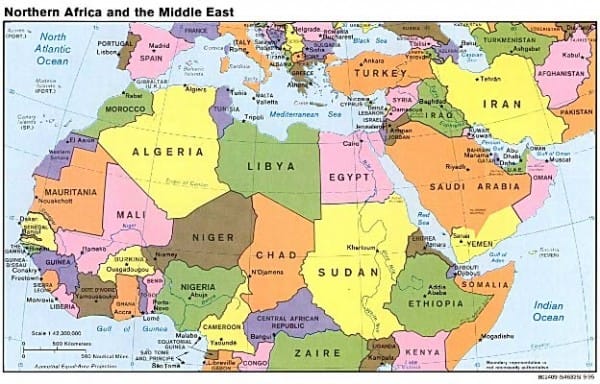
By 2012, the global picture has drastically changed. Osama bin Laden is dead and his fanatical followers are able to operate freely only in the poorest, most remote or desolate regions of the earth - northern deserts of Mali, the lawless hinterlands of Yemen, Pakistan's wild tribal belt and ruined villages in war-torn Syria. Instead of a laser-like focus on al Qaida, the next President will have to worry more about economic collapse in Europe, China bullying it's neighbors over the South China Sea, civil wars in Mexico and Syria and Iran's quest for the nuclear bomb.
The shift we are seeing is the world returning to a geopolitical situation that has not prevailed since 1914 - an unstable arena of great powers who are trading partners and rivals governed more by interests than ideology, pursuing profits in preference to principles. Radical Islamism is the last in a long line of revolutionary ideologies and it is tired and unpopular in Iran, rejected by voters in Libya,
Iranian regimeLibyans
Iraq's quasi-democracy remains stubbornly secular as does Turkey and even Egypt under its new Islamist president, Mohammed Morsi . Islamism has failed outright in Afghanistan, Sudan and Algeria. If modern jihadi terrorism goes the way of 19th century anarchist terrorism into the rubbish heap of history,then the 21st century may become an era of realpolitik.
You Might Also Like