JPMorgan Investigated for Gaming California Energy Market
By Bob Morris | 08/01/2012 | Energy and Water, Featured, Issues | 4 Comments
Credit: commons.wikimedia.org
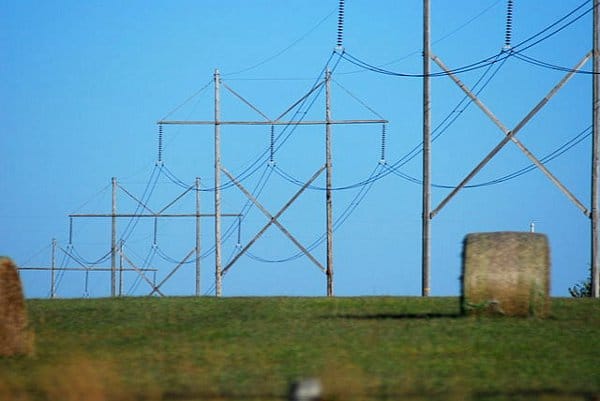
California has recovered $20 million of $73 million in profits that JPMorgan made by exploiting loopholes in the California energy market and seeks to recover the remaining $53 million. The Federal Energy Rregulatory Commission (FERC) is now investigating for the state. JPMorgan said they did nothing wrong. The current system is supposed to provide free and open competition for energy purchases and sales. Yet it clearly can be manipulated and gamed. But that’s not supposed to happen with transparent and open marketplaces.
The California Independent Service Operator (CAISO) runs the state-wide transmission grid and provides an electronic marketplace for energy. It sells power one day in advance in the “day ahead” market as well as selling it in a separate market for immediate use. JPMorgan has a subsidiary that had contracts with energy providers. They would sell deliberately electricity cheaply in the day-ahead market while raising the price high in the spot market so few would buy. They profited from with “make-whole” agreements whereby power generators are paid to remain on a standby basis.
One of the techniques described in CAISO’s complaint to FERC, which doesn’t directly mention JPMorgan (even though FERC confirmed the bank was the party in question), showed how the bid-cost recovery mechanism was gamed in a way so as to trigger overpayments in excess of 50%. The bid-cost recovery mechanism is supposed to provide make-whole payments that cover start-up and minimum load costs for parties requesting electric energy.
This gaming of the system results in higher energy costs for end users of energy. That means you and I pay more for electricity when the system is exploited.
JPMorgan is refusing to turn over 25 emails to FERC related to the energy market gaming, claiming they are privileged as they contain advice from lawyers. Yet they earlier turned over 28 other related emails after initially claiming the same privilege.
JPMorgan made identical attorney-client privilege claims for 28 other e-mails that were later turned over to regulators. Some of the earlier e-mails that JPMorgan claimed contained legal advice were messages that said “Great job compliance,” “Are you being sarcastic?” and “Plse call ASAP,” according to the filing.
The free market energy system is supposed to be transparent and encourage competition. But situations like these more resemble the action of parasites than of capitalist competition. JPMorgan’s actions in this case extracted value for them with no concern for the system as a whole, and gave nothing in return.
The best way to handle situations like these is to ban offending entities from participating in CAISO for several years.


Leave Your Comment →
4 Comments
Craig D. Schlesinger
08.01.2012
@craigschlesinger
Woah, woah, woah – wait there just a minute! A bank exploiting people? That’s just not possible.
Seriously though, manipulation of the derivative markets is one of my huge beefs with the system. Actually, the majority of derivative markets themselves are artificial and an abomination to a market economy. Markets are supposed to exist organically.
In studying finance and econ in school (and thereafter), we learned that derivative securities are the end result of a bunch of investment bankers getting together with mathematicians to create these new securities and exchanges. There are LEGITIMATE uses for derivatives, such as hedging against risk – whether it’s an agricultural product, currency, or interest rate.
However, these banks created a new game that is controlled and played by a very elite few, while the effects are felt by the common many. You need to bet on margin (credit) to play in these markets. You also need a TON of it. Most derivative exchanges require a minimum of $1MM in margin. Already you’re dealing with a relatively illiquid market with insanely large barriers to entry – meaning no competition and no incentive to keep the game honest. So what ends up happening are leveraged bets on top of leveraged bets on top of leveraged bets.
But capitalism requires CAPITAL to function. Instead it’s just a house of cards. This is where I end up fighting (sometimes) with my fellow free marketeers. Markets are never free if they are held hostage by any faction – be it government or corporate oligopoly.
Good report Bob!
Bob Morris
08.01.2012
@Bob_Morris
Thanks for the compliment, I appreciate it!
High Frequency Trading is even more insane. Zillions of trades in tiny fractions of a second. I think Zero Hedge originally broke that story and the related hidden markets where market makers can see incoming trades and trade on them.
Securitization was a primary driver of the real estate boom (then bust.) Mortgages were packaged together, sliced and diced into tranches, then sold. This is what Karl Marx called “fictitious capital” as kit creates nothing of value and is money based on based,
Craig D. Schlesinger
08.02.2012
@craigschlesinger
Your welcome, my pleasure. Two of the culprits we need to direct our acrimony towards are the Gramm–Leach–Bliley Act (GLB), also known as the Financial Services Modernization Act of 1999 and The Commodity Futures Modernization Act of 2000 (CFMA). Both bills were passed by a Republican Congress and signed into law by President Clinton, a Democrat. Perhaps it’s time for some Independent Voting…
Matt Metzner
08.01.2012
@mmetzner
Interesting story, it will be interesting to see if there is anything valuable contained in the correspondence for the investigation.