The Sad State of State Primaries

Credit: websterstyle.wordpress.com
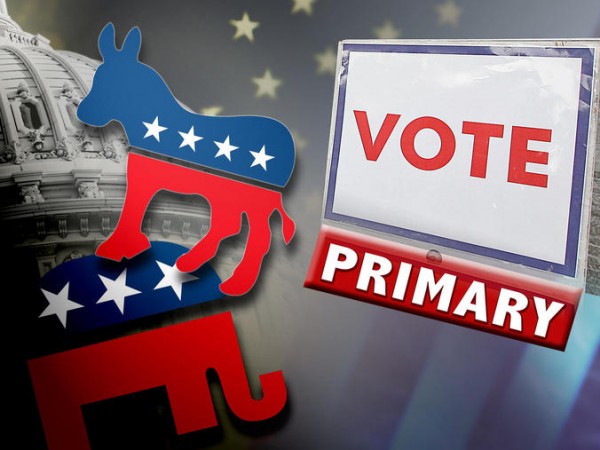
State primaries are in a sad state. Many voters don’t understand the importance of primaries. Voter turnout is generally far lower than in general elections. Primaries defeat the principle of representative democracy. Primaries give incumbents a big advantage over challengers. Next Tuesday, New York, Colorado, Oklahoma and Utah have primaries. And, the beat goes on.
One reason for poor turnout is that voters are often ignorant of the importance of primaries. For any office that is safe for a particular party, whoever wins the primary office contest has, in effect, already won the office. The office contest in the November general election is virtually meaningless. In the District of Columbia, almost all of the elected officials are Democrats. The primary election literally determines the DC government. The November DC election is a waste of time and money. Unfortunately many voters are unaware of this, and, by not showing up for the primary, they simply have no say in the selection of the candidate(s) who will represent them.
A second reason for poor turnout is that voters don’t understand primaries and are intimidated by them. Each State can hold a primary election in numerous ways. And, each State has its own rules in the actual execution of its primary. For voters, this makes for a confusing mess. They don’t know what party primary they can vote in. They don’t know how many different ballots there will be. They don’t know what party ballot(s) they can request. They don’t know what will be on the ballot(s). They don’t know what party identification they need. They simply don’t know what is going to happen when they show up at the polls. Worst of all, they can’t even get answers to these questions in advance on the State’s election website. I challenge you to try!
In the case of next Tuesday, New York and Oklahoma will conduct ‘closed’ primaries. Voters may vote only if they are registered member of that party. Independent and non-partisan voters cannot participate. Colorado, however, will conduct a ‘semi-closed’ primary. Registered party members and unaffiliated voters can vote only in a party's primary. Independents choose a party. But, Utah takes the prize. It will hold a ‘closed’ primary for registered Republicans but will hold ‘open’ primaries for Democrats and Constitution party members. Is it any wonder that voters are turned off by the whole business.
Next Tuesday, all four states will have a separate ballot for each political party. But, that is not the case in all State primaries. Some States use a single ballot for all parties. The voter must choose on the ballot itself which political party's candidates the voter will select for a contested office. Voters of one party can cross over and vote in another party’s contest, effectively allowing a voter to help choose the opposition's weakest candidate. Hmmmm!
It is so confusing that formal definitions have been given to the six different ways a primary election can be held, called primary types. Rather than explaining each here, I have added an addendum to this article with the commonly accepted definitions of primary types.
And, what a voter might see on a ballot differs from State to State. In the Tuesday Colorado primary, if there is only one candidate for an office contest, he or she will still appear on ballots. For the other three States, if there is only one candidate for an office, the office contest will not even appear on ballots. Need I go on?

Finally, primaries are a stacked deck in favor of the incumbents. Primaries are supposed to be the vehicle to get new blood into politics. But, just the opposite is the case. When an incumbent is opposed by more than one challenger in a primary, the anti-incumbent vote will be split. This gives the incumbent a big advantage. This flaw in the primary system is one of the reasons why over 95% of incumbents retain their offices.
As a case in point, consider New York’s primary contest for the 13th District U.S. House seat. Charlie Rangel is being opposed by four very strong and competent challengers. Charlie is 82 has been in the U.S. House since 1971. That’s 41 years folks. He was censured by the U.S. House for 11 counts of misconduct and paid a $23,000 civil penalty. Many voters in the 13th District strongly oppose his reelection. But, the anti-Rangel vote will be split between his four challengers and he will most likely win. The 13th District is a safe Democratic district. Welcome back Charlie!
But, there is hope. At least one state, California, has solved the primary problem and is doing it right. It adopted a “Top Two Candidates Open Primary.” All registered voters may vote in the primary, with or without any party affiliation. A voter will be presented with a single ballot containing all the candidates from all of the parties and any independents. The candidates can choose whether or not to list their party preference on the primary ballots. The top two overall vote-getters will move on to the general election. The top two vote getters can be in the same party. Hence, two candidates from the same party can appear on the ballot in the general election. Voters will be afforded the opportunity to choose between the two strongest candidates, regardless of party.
As usual, the golden state is leading the way.
Check out California’s recent primary at Vote-CA.org.
________________________________________
Addendum - Primary Election Types
Closed Primary: Voters may vote in a party's primary only if they are registered members of that party. Independent and non-partisan voters cannot participate.
Semi-closed Primary: Registered party members and unaffiliated voters can vote only in a party's primary. Independents either make their choice of party primary privately, inside the voting booth, or publicly, by registering with any party on Election Day.
Multiple Ballot Open Primary: A registered voter may vote in any party primary regardless of his own party affiliation. A voter will be presented with the party ballot the voter requests. Voters of one party can cross over and vote in the primary of another party, effectively allowing a party to help choose its opposition's weakest candidate.
Single Ballot Open Primary: A registered voter may vote in any party primary regardless of his own party affiliation. A voter will be presented with a single ballot and the voter must choose on the ballot itself which political party's candidates the voter will select for a contested office. Voters of one party can cross over and vote in the primary of another party, effectively allowing a party to help choose its opposition's weakest candidate.
Multiple Ballot Semi-open Primary: A registered voter may vote in any party primary regardless of his own party affiliation. A voter identifies his or her party choice in a public declaration in front of an election official and requests a specific party's ballot. Voters of one party can cross over and vote in the primary of another party, effectively allowing a party to help choose its opposition's weakest candidate.
Top Two Candidates Open Primary: All registered voters may vote in the primary, with or without any party affiliation. A voter will be presented with a single ballot containing all the candidates from all parties and independents. The top two overall vote-getters – not the top vote-getter from each qualified political party – will move on to the general election. The candidates can choose whether or not to list their party preference on the primary and general election ballots. In essence, political parties can no longer nominate their candidates for these offices and two candidates from the same party can appear on the ballot of the general election.
Latest articles